What a cover is supposed to do, and what it can do wrong
A boat cover has one main job: keep sun, rain, dust, pollen and bird droppings off the surfaces underneath. In strong sun, that can slow oxidation and protect upholstery, teak and canvas from fading. It also keeps the cockpit and deck cleaner between uses.
But a cover is also a layer of fabric sitting on top of your boat, and fabric can cause trouble. If it moves in the wind, it can rub against gelcoat and paint. If it traps humid air or holds rainwater, it can create a damp environment that encourages mildew. If it is dirty on the inside, the grit scratches. If it presses against hot surfaces, it can leave marks.
In South Florida the humidity is high for most of the year, and boats can sweat inside a cover even on a clear day. Without airflow, moisture builds up on every surface and the boat smells musty by the time the cover comes off. This is one of the most common complaints from owners who store boats for long periods.
The right approach is to choose a suitable cover, fit it properly, clean the boat before covering it, provide ventilation, and inspect it regularly. The sections below go through each step.
How covers rub and what the marks look like
Cover rub happens when fabric moves against a surface. Wind makes the cover flap or shift slightly, and the contact points, usually corners, edges, rails, rub rails, hardtop edges and anything that sticks out, take the wear. Over time this can dull the gelcoat or paint in a pattern that follows the cover's seams and straps.
Dirt makes it worse. Dust and grit on the boat or inside the cover act like fine sandpaper under motion. A boat covered while dirty will rub faster than a boat washed first. Salt is highly abrasive when it dries into crystals on a surface.
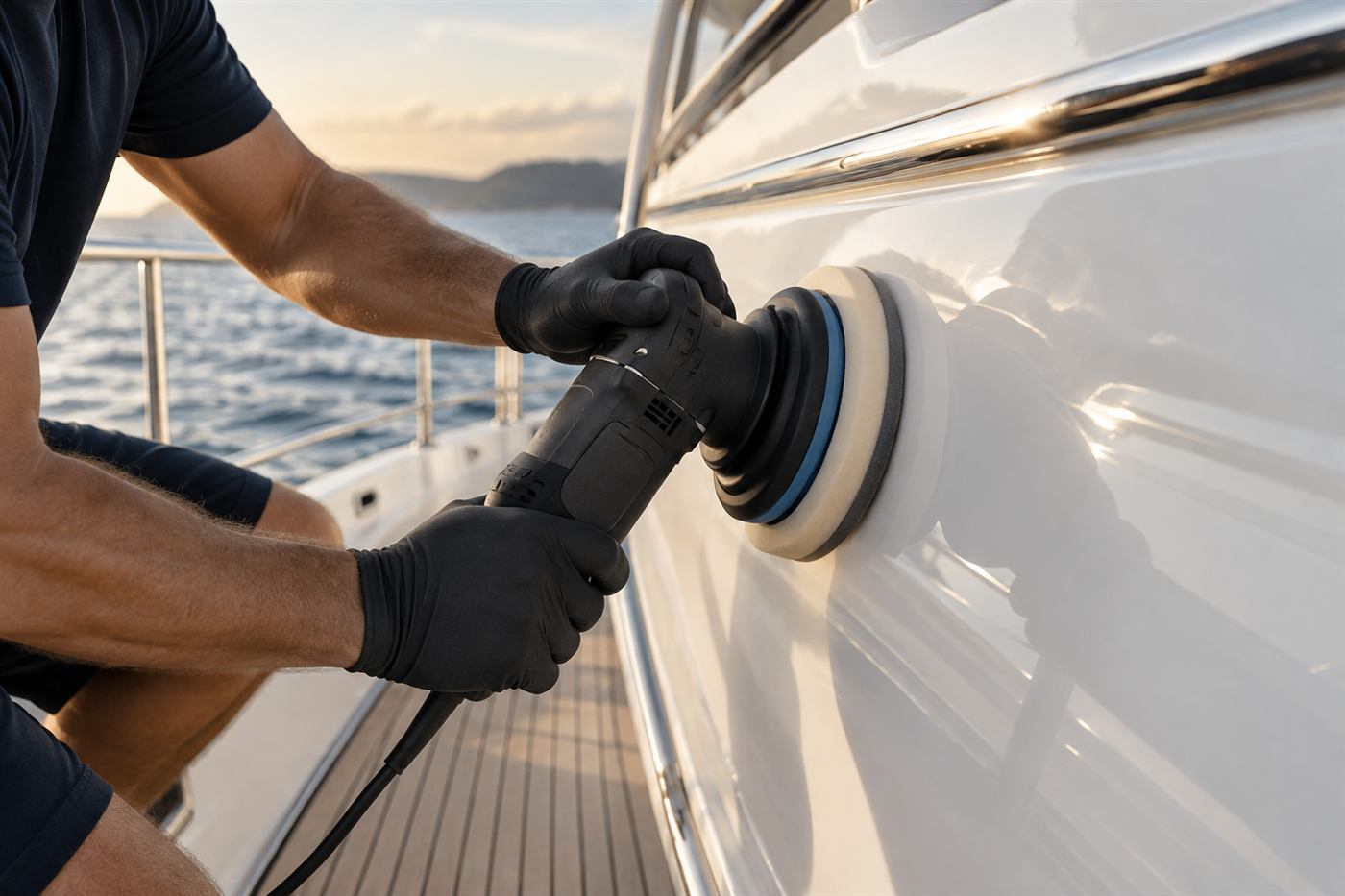
Rub marks often appear as hazy streaks, dull bands or fine scratches. In some cases the cover itself leaves a color transfer, notably dark fabric on a light finish or a new cover that has not been rinsed. Some marks polish out with the right compound, and others need more work depending on how deep they are.
Prevention is easier than correction. A snug fit, padding at contact points, straps or tie-downs that prevent flapping and a clean surface underneath all reduce rub. Our page on protecting canvas and enclosures covers related fabric care.
- Corners, rails, hardtop edges and rub rails take the most wear
- Wind movement is the main cause of rub
- Dirt and dried salt under a cover act like fine grit
- Dark or new fabric can transfer color to light finishes
- A snug fit with padding at contact points reduces rubbing
Moisture, mildew and why boats smell after covering
Mildew needs three things: moisture, organic matter to feed on and moderate temperatures. A closed-up boat in a warm climate has all three. Skin oils, dust, food crumbs and the natural fibers in cushions and carpet are food. Humid air and condensation provide the moisture.
A cover can make this worse by reducing airflow. Moist air inside a cabin or under a cover cools at night, condenses on surfaces and stays damp until the sun heats it the next day. Repeated daily, that dampness feeds mildew on vinyl, canvas, cushions, headliners, carpets and teak.
The smell owners notice when they open a closed boat is the result of mildew and stale, moist air. It is not necessarily dangerous, but it is a sign that moisture has not been managed. Mildew can stain vinyl and canvas permanently if left long enough, and it can set into porous materials.
Our guide on interior humidity control and our service page on interior mildew treatment describe what to do about it. The key point for storage is to start clean, start dry and keep air moving.
Choosing a cover that suits a humid climate
Not all covers behave alike. Heavy waterproof tarps and plastic sheeting shed rain but trap moisture almost completely. In a humid climate they can turn a boat into a greenhouse. Breathable fabrics let water vapor pass through while resisting rain, which helps reduce condensation, though they are not a cure-all.
Fit matters as much as fabric. A cover that is too loose flaps and rubs. A cover that is too tight strains seams and may press against surfaces. A custom or well-fitted cover with proper tie-downs and support poles or frames to keep it off the surface performs better than a generic one.
Support is important. A cover that rests directly on the deck can collect water in pools, which then soaks through and sits against the surface. Frames or supports shed water and keep air gaps. Padding or sleeves at rail ends and corners reduce wear.
Color and material can also matter. Light-colored covers reflect heat. Some fabrics are treated to resist mildew themselves, though they still need cleaning. Ask the maker or supplier about breathability, UV resistance and care, and read their instructions rather than assuming.
Cleaning the boat before it is covered
The most useful single step is to wash and dry the boat before covering it. Salt, sunscreen, food residue and grime left on surfaces will grow mildew, stain and rub while the cover is on. A clean boat stays cleaner underneath.
Start with a fresh water rinse and a mild soap wash, then rinse again and dry the surfaces as fully as you can. Pay attention to cockpit corners, seams, vinyl creases and the areas where cushions meet hard surfaces. Wipe down stainless and glass. If the boat has teak, make sure it is clean and dry as well.
Inside, clean the galley and heads, empty and clean the refrigerator and leave its door propped, remove food and anything perishable, and wash or air cushions. Open lockers and drawers where practical to allow air movement. Remove damp towels and clothing.
If the boat will be stored for a long time, consider a protective coat on the exterior before covering, because the surface will be shielded from washing for a while. A fresh sealant or wax holds up better under a cover than bare, oxidized gelcoat. Our guide on preparing your yacht for detailing lists useful steps.
- Rinse with fresh water to remove salt and grit
- Wash with mild boat soap and rinse again
- Dry surfaces as fully as you can, including seams and corners
- Clean and dry the interior, remove perishables and damp items
- Prop the refrigerator door and open lockers where practical
- Apply protection if the boat will be covered for a long period
- Fit the cover snugly, with supports and padding where needed
Ventilation, drying and humidity control in storage
Airflow is the antidote to mildew. Passive ventilation, such as vents in the cover or cabin, solar-powered fans and slightly cracked hatches, keeps air moving. Where shore power is available, a dehumidifier on a safe setting or a small fan can make a big difference in a closed cabin. Use equipment that is rated for marine use and follow safe electrical practice.
Moisture absorbers, such as desiccant products designed for enclosed spaces, can help in small areas like lockers and closets. They need monitoring and emptying or replacing, and they are best used as a supplement.
Check that cushions are propped to allow air behind them, and consider storing them on edge rather than flat against a damp surface. Lift carpets or mats if they trap moisture. Do not seal up wet items in lockers.
A regular visit helps. Someone who opens the boat every week or two, airs it, checks for leaks and smells, and empties any dehumidifier tray catches problems early. If the boat sits for months without a visit, issues can grow unchecked. For a boat that is not in use, a regular wash and inspection service is often a sensible investment.
Storage settings compared
Where the boat is stored changes the details. A wet slip, a lift, a dry stack rack, a covered slip and a trailer all bring different exposure and different risks. The table below sketches the main points. It is a general guide, and your marina's rules and layout may differ.
Whatever the setting, the basics are the same: start clean and dry, keep air moving, protect the finish, and check the boat regularly.
| Storage setting | Main benefit | Main watch-outs |
|---|---|---|
| Wet slip, uncovered | Easy access, quick use | Full sun, salt mist, bird droppings, waterline growth |
| Boat lift | Hull out of the water, less waterline growth | Salt mist, rain spots, cover rub, humidity inside |
| Covered slip or shed | Shade and rain protection | Trapped humidity, limited airflow, dust |
| Dry stack rack | Hull stays dry, protected from growth | Handling marks, stored closed, humidity inside |
| Trailer or yard | Flexible location | Dust, pollen, wasps and pests, cover rub on exposed surfaces |
Pests, birds and other storage surprises
A covered boat looks like a safe shelter, and some creatures agree. Mice and rats can enter through small gaps and nest in cushions, lockers and engine spaces, chewing wiring and fabric. Wasps and mud daubers build nests in vents, rod holders and the folds of a cover. Spiders and other insects settle into corners and tracks. In some areas, geckos and lizards leave droppings that stain.
Birds are a separate issue. Droppings are acidic and, if left on gelcoat in the sun, can etch the surface and leave a permanent mark. A cover keeps birds off the boat, but birds perch on top and droppings run down seams and over edges. Rinse them off promptly. Our page on bird droppings on boats explains why speed matters.
Reduce pest problems by keeping food and anything edible off the boat, sealing gaps where practical, keeping the cabin clean, and checking regularly. Some owners use deterrents or traps. Choose methods that are safe for people, pets and the boat, and follow product labels. Avoid anything that leaves residue on surfaces or creates fumes in a closed cabin.
Check under the cover for nests before you start up the boat or use ventilation openings. A wasp nest in a vent or a rodent nest near wiring is easier to remove before the boat goes back into use. If you find signs of chewing on wiring, have it checked by a qualified marine technician, because damaged wiring is a safety concern.
Weather, storms and tie-downs
Covers meet the weather head on, and in South Florida that includes strong wind and tropical storms. A cover that is secured loosely can tear, flap violently and damage the finish. A cover that is secured too tightly can strain fittings. The balance is a snug, even fit with strong, well-placed ties, and a plan for what to do when a storm is forecast.
Many owners remove covers entirely ahead of a hurricane or strong storm, because a flailing cover can cause damage and add windage. Marinas often have rules about preparation, and insurers may have requirements. Check your marina's procedures and your policy, and follow local guidance. Our guide on hurricane season yacht preparation and cleaning describes the cleaning side of storm planning.
After a storm, inspect the cover and the boat. Look for tears, loosened ties, rub marks and water that has pooled. Salt spray and debris may have landed on surfaces, so rinse the boat promptly. Our guide on after a storm yacht cleaning covers what to do.
Keep spare ties and a basic repair kit on hand, and replace worn straps before the season starts. A cover that has been mended and re-tied each year lasts longer than one left to fray.
Inspecting under the cover and what to look for
Every so often, remove or lift the cover and look. Check the finish at contact points for dulling or marks. Look for water pooling on the cover and for damp spots on the deck. Check the inside of the cover for mildew, dirt or insect nests. Check for leaks around hatches, windows and fittings.
Look at the interior: smell, check cushions, headliners, carpets and lockers, and run your hand along walls and corners. Check the bilge for water and any change in condition. Look at fabric and canvas for spotting. Look for signs of pests, which can chew wiring and nest in covers.
If you find problems early, they are usually easy to address: wipe, dry, air out and adjust the cover or ventilation. If mildew has spread across cushions or headliners, or if stains have set, professional treatment may be needed.
Document what you find with photos and notes. They help you see whether things are improving or worsening and they help a detailer plan the work. Our guide on signs your yacht needs detailing lists things to watch for.
Cleaning after the cover comes off
When the cover comes off, expect some dust, pollen and maybe mildew spots. Do not wipe dry surfaces with a dry cloth, because dust and grit scratch. Rinse first with fresh water, then wash with a mild boat soap and a soft mitt, working top down. Dry with clean towels.
Check for cover rub marks and judge whether they are cosmetic. Light dulling can often be improved by polishing, followed by protection. If marks are heavy or the finish is thin, ask a detailer to assess before using aggressive products.
Inside, air the boat, wipe surfaces and check for mildew. Light mildew on hard surfaces can be cleaned with an appropriate marine cleaner according to its label. On cushions, canvas and carpet, mildew may need a more thorough treatment. Be careful with strong chemicals in a closed cabin, ventilate well and follow label instructions.
Clean the cover itself as well. A cover left dirty will shed dirt onto the boat next time. Follow the maker's care instructions, rinse thoroughly and let it dry completely before folding or reinstalling.
When to bring in a detailer, and how the call goes
A detailer can help before storage, by washing, polishing and protecting the boat, and after storage, by cleaning, correcting cover rub, treating mildew and refreshing teak, vinyl and canvas. Some owners arrange a service that checks, airs and washes the boat while it is stored.
Quotes for this work are given by phone. The scope depends on the boat's size, condition and what you want done. Larger or more complicated jobs may call for an on-site visit first, and there is a service call charge that is explained on the phone before dispatch.
To make the call easy, have ready the boat type and length, the marina or storage location, how long it has been or will be covered, what you see or smell, and any deadline. Daylight photos of rub marks, mildew or stains help.
If your boat is going into storage, or has just come out and does not look or smell right, call the number on this page and describe the situation. A short conversation is the fastest way to find out what is needed.
Questions people ask
Why does my boat smell musty after being covered?
Mildew thrives on moisture and organic matter, and a closed boat in a humid climate has both. Covers can reduce airflow, so condensation stays on surfaces. Starting clean and dry, ventilating, using a dehumidifier where safe and visiting regularly all help. Existing mildew may need treatment on cushions, canvas and carpet.
Can a boat cover damage the finish?
Yes. A loose cover moves in the wind and rubs the finish, mostly at corners, rails and edges, and dirt or dried salt under it acts like fine grit. A snug fit, padding, supports and a clean boat reduce the risk. Light rub marks can often be polished, depending on depth.
Is a waterproof tarp a good boat cover?
Usually not in a humid climate. Waterproof tarps and plastic trap moisture and encourage mildew. Breathable fabrics let vapor escape while resisting rain, and a good fit with supports prevents pooling and rubbing. Check the maker's guidance for the fabric and your conditions.
Should I wash the boat before covering it?
Yes. Salt, sunscreen, food residue and grime left on surfaces cause stains and mildew and increase rubbing under a cover. Rinse, wash with mild soap, dry as fully as you can, and clean and air the interior. A protective coat before long storage helps the finish.
How often should I check a boat that is in storage?
A visit every week or two is a sensible rhythm for a closed boat in a humid climate. Air the cabin, check for leaks and smells, empty any dehumidifier tray and look under the cover. Longer gaps allow problems to grow unnoticed, so a check service can be worthwhile.
How do I get a quote for pre-storage or post-storage detailing?
Quotes are given by phone after a short conversation about your boat, its storage setup and condition. Larger or more complicated jobs may need an on-site visit first, and any service call charge is explained on the phone before a technician is dispatched. Call the number on this page with details and photos ready.
Describe the situation by phone and we will tell you what the job involves. Quotes are given by phone. Jobs that cannot be quoted without seeing them need a technician on site, and the service call charge is explained on the phone before anyone is dispatched.
(954) 719-3572