What makes an express cruiser its own kind of boat
Express cruisers sit between a day boat and a full motor yacht. They usually have an open cockpit and helm at the back, a cabin forward with a berth, a head and a small galley, and engines tucked beneath the cockpit sole or a large hatch. Many have a windshield with a stainless or aluminum frame, a hardtop or a canvas bimini, and a swim platform at the stern. The layout packs a lot of different materials into a small footprint.
That compactness shapes the detail. A technician cannot treat the cockpit as a separate world from the cabin, because the same sun, salt and sunscreen move between them. Upholstery is close to gelcoat, glass is close to metal, and the engine hatch opens directly onto the cockpit. Cleaning products that are fine on one surface might splash onto another, so the work is sequenced to protect nearby materials as it goes.
Express cruisers are also heavily used. They are weekend favorites on the Intracoastal and out to the sandbars, which means swimmers, sunscreen, food, drinks and wet feet. Wear patterns tend to concentrate in the cockpit seating, the swim platform, the helm and the walkways to the bow. A good plan puts attention where the use is heaviest.
The windshield and helm glass
The windshield is the most visible surface on an express cruiser and the one that most affects safe visibility. Salt spray dries into a film, and mineral deposits from hard water and sprinklers etch into the surface if left. Many windshields are tempered glass in a stainless or aluminum frame, but some are acrylic or polycarbonate, and those scratch more easily and react to certain cleaners. Always say which you have.
A careful glass cleaning uses clean, damp microfiber and a product suited to marine glass, working with the surface wet so that dried salt does not drag like sandpaper. Technicians avoid ammonia-based household sprays on plastic windows, which can haze them over time. Frames get their own treatment: stainless is cleaned and polished separately, anodized aluminum is washed and protected, and gaskets and seams are cleaned without pushing water into places it should not go.
Stubborn water spotting can sometimes be improved with a mild polish or an etch-removing product, and a coating or sealant on the glass helps water sheet off afterward. Deep etching, however, is a permanent change to the glass, and a technician should tell you honestly what is and is not likely to improve. See the page on marine window and glass cleaning for more detail.
Cockpit upholstery and vinyl
Cockpit seating takes a beating. Sunscreen, tanning oil, spilled drinks, bait or sand, damp swimsuits and constant UV all work on marine vinyl. Over time you may see yellowing, dark stains along seams, mildew in stitching and a chalky or sticky surface where the protective topcoat has broken down.
Cleaning begins by identifying the stain. Sunscreen and oil stains need a different approach than mildew or ink transfer from dark clothing. A soft brush and a marine vinyl cleaner lift most surface soil. Seams and stitching often need gentle agitation with a small brush so that the thread is not damaged. After cleaning, a UV protectant helps the vinyl resist the next round of sun, though protectants should be chosen carefully because some leave a slippery or glossy finish that you will not want on a seat.
Older vinyl that has lost its flexibility or begun to crack is beyond what cleaning can repair. A reputable technician will say so and suggest an upholstery shop instead of overworking the surface. See vinyl upholstery cleaning and faded vinyl seats for what can and cannot be restored.
- Tell the technician about sunscreen use aboard, because it affects the cleaner chosen.
- Keep dark towels and clothing off light seats, since dye transfer can stain.
- Rinse seats with fresh water after saltwater use and let them dry before covering.
- Point out cracks or split seams before the visit so they are not made worse.
Hardtops, biminis and canvas
Many express cruisers carry a hardtop, a fixed top with a fiberglass or composite shell, or a bimini top in canvas or vinyl-coated fabric. The hardtop collects bird droppings, salt and dirt on its upper surface, and these are often invisible from the dock. Underneath there may be a headliner, lighting and speakers. Cleaning the underside takes care, because moisture and cleaners should not be driven into wiring or electronics.
Canvas and isinglass need gentler handling than gelcoat. Fabric can be cleaned with a soft brush and a cleaner approved for marine canvas. Aggressive scrubbing or hot pressure water can damage stitching and strip water repellent. Clear vinyl windows scratch and cloud with the wrong cloth or chemical, and they should not be wiped dry when dusty. For more, read the pages on canvas and isinglass cleaning and protecting canvas and enclosures.
If your canvas is already tearing, the zippers are failing or the stitching is rotting, a canvas shop is the right call. Cleaning an old top can make it look better for a while but will not fix a structural failure.
Gelcoat on the topsides and deck
Express cruisers are generally gelcoat boats, and the white or light-colored finish shows everything. Black streaks run from fittings and rub rails, yellowing creeps in around the waterline and chines, and the top of the deck loses its gloss to UV. The upper surfaces, such as the foredeck, the engine hatch cover and the transom top, get the most sun and oxidize first.
A standard visit starts with a thorough wash to remove salt and loose soil. If the gelcoat feels rough or looks chalky, it may need machine polishing to cut away the oxidized layer, followed by a wax or sealant. The right level of abrasiveness is chosen after testing a small area, since overly aggressive compounding wears down gelcoat that cannot be replaced. Read the explanation of gelcoat compounding before you decide how far to go.
Non-skid areas, such as the foredeck and the swim platform, need a stiff brush and a cleaner designed for textured surfaces. They collect dirt in the pattern, and a standard mop will pass over it. See non-skid deck cleaning for how that is handled.
The engine hatch and what a detailer will and will not touch
On an express cruiser the engine compartment sits close to where people sit, and a clean, tidy engine space signals a boat that is looked after. Cleaning the engine hatch, the visible surfaces of the engine compartment and the bilge area helps you notice leaks and corrosion early. It is not mechanical service.
A detailer can wipe down the hatch and its seals, clean the compartment's painted or gelcoated surfaces, degrease light oil film and remove loose debris. They do not adjust, repair or replace engine components, and they take care not to spray water and cleaner near electrical connections, air intakes or sensitive equipment. If a technician notices a fuel smell, a fluid leak or frayed wiring, they will mention it and leave the repair to a mechanic.
Never ask anyone to work in an engine space with the engines running or with fuel vapors present. If you smell fuel, ventilate the boat and contact a qualified marine mechanic before any cleaning begins. For more detail see the pages on engine room cleaning and bilge cleaning.
The cabin, head and galley below deck
The cabin on an express cruiser is compact, and it often sits closed up between trips. A closed small space in a warm humid climate is an ideal place for mildew and musty smells. Berth cushions, the head compartment, the galley counter and the carpet or sole all need attention. Because the space is tight, it takes fewer products and less water to do a good job, and drying is easier if air can move through.
Interior detailing here means vacuuming, wiping surfaces, cleaning the head and galley, treating mildew in typical trouble spots and addressing odor. If you leave the boat shut for long stretches, a small dehumidifier or a moisture absorber can make a visible difference. Open hatches when it is dry and safe to do so.
Check out the pages on interior detailing and musty smells below deck if your cabin has become a problem.
Protecting an express cruiser between details
The easiest way to keep an express cruiser looking good is a short routine. Rinse with fresh water after saltwater use, wipe glass and metal before the salt dries, put on covers when the boat will sit, and keep sunscreen and spills off upholstery. A regular wash costs less effort than a restoration, and it prevents the kind of grime that needs aggressive compounds later.
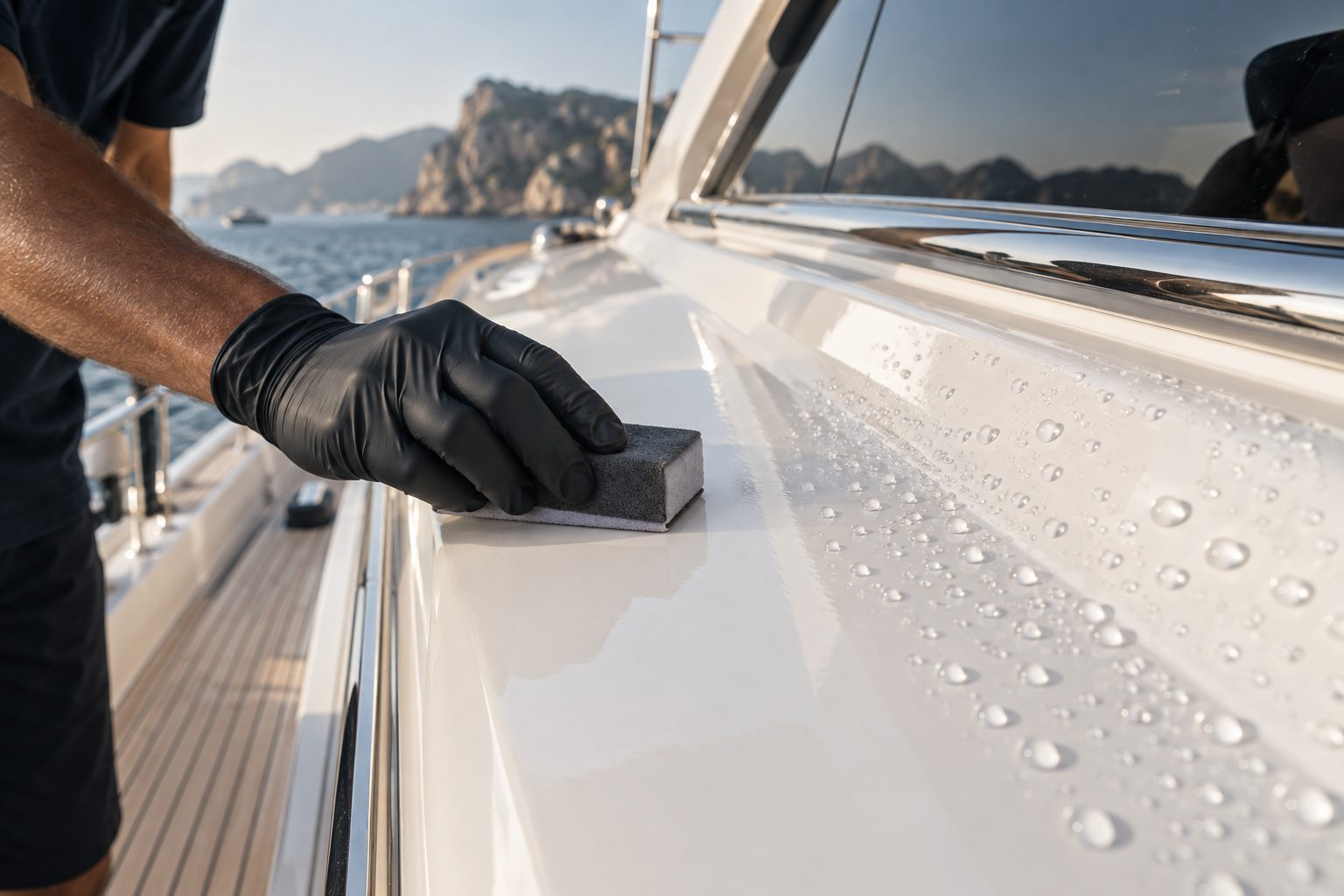
Protection products such as wax, sealant and ceramic coatings each have a place. A wax is easy to apply and give a warm gloss for a modest period. A sealant lasts longer and handles heat well. A ceramic coating bonds more firmly and resists staining and UV for a long time, but it still needs proper washing. Compare them in the guide on wax, sealant and ceramic, and see the page on ceramic coating if you want to go that way.
The sun is the biggest enemy on an open boat in South Florida. A cover over the helm and cockpit, closed canvas and a habit of wiping down vinyl all help. Heat also matters, because hot decks can make some products flash dry and leave streaks. Technicians pick shaded times and work in sections for this reason.
Swim platform, transom and stern details
The stern of an express cruiser is where the boat meets the water and the people. The swim platform takes wet feet, sunscreen, rope and the scrape of dinghies and tenders. The transom collects exhaust soot and black streaks, and the gelcoat around the engine exhausts can yellow. Platform teak or composite decking needs its own cleaner, and stainless ladders and cleats pick up tea staining within weeks in salt air.
A thorough stern clean covers each of these in turn. Non-skid is scrubbed, platform decking is cleaned according to its material, stainless is polished and the transom is washed and, where the gelcoat allows, polished. Black streaks that run from the rub rail and fittings are often removed with a suitable cleaner before any polishing is attempted. Read the pages on swim platform cleaning and exhaust soot stains to see how those problems are treated.
Owners can help by raising and rinsing the ladder, removing loose lines and mats and telling the technician if a swim platform is teak. Teak should never be treated with the wrong brightener, and it is easy to ruin.
Scheduling, access and how the call goes
Most express cruisers are kept at a wet slip, on a lift, or in dry stack storage. Where the boat sits affects the work. A boat on a lift is easy to reach from all sides, while a boat in a tight wet slip may have limited access along one side. Dry stack boats must be launched or lowered first, and the marina may have rules about when and where work can be done. Mention how your boat is stored, and read about dry stack marinas if that applies.
When you call, be ready to describe the boat's make or approximate length, the marina or dock, the main concerns and any delicate materials such as polycarbonate windows or older vinyl. Quotes are given only by phone. A simple job can be quoted on the call. A bigger or more involved job may need an on-site visit first, and there is a service call charge that is explained on the phone before anyone is sent out.
Have shore power and fresh water available if you can, and clear personal items from the cockpit and cabin. When you are ready, call and tell us about your express cruiser and what you want it to look like at the end of the visit.
Questions people ask
Can you detail an express cruiser on a lift or in dry stack?
Often yes, depending on the marina's rules. A boat on a private lift is straightforward. Dry stack boats usually need to be launched or lowered first, and some facilities have their own policies about outside detailers. Tell us where the boat is kept so we can plan around access.
Will you clean the engine compartment?
A detailer can clean visible surfaces, the hatch and seals, and light film in the engine space, taking care around electrical parts and air intakes. Mechanical work is not part of it. If a technician sees a leak or fuel smell, they will tell you and recommend a marine mechanic.
My windshield has water spots that will not wipe off. Can they be removed?
Often they can be improved with a suitable cleaner or polish, but deep mineral etching is a permanent change to the glass. A technician can test a small area and tell you honestly how much improvement to expect before doing the whole windshield.
How do you clean vinyl without damaging it?
With a soft brush and a marine vinyl cleaner, working seams gently and rinsing thoroughly. Harsh solvents and stiff brushes can strip the topcoat and damage stitching. If vinyl is already cracking or brittle, cleaning will help its look but not repair it, and an upholstery shop may be the better route.
Do I need ceramic coating on an express cruiser?
Not necessarily. Wax, sealant and ceramic coatings all protect gelcoat to different degrees and with different upkeep. The right choice depends on how the boat is used, stored and maintained. A conversation on the phone can help you weigh them before you decide.
How is a quote given for an express cruiser?
Quotes are given only by phone, based on size, condition and scope. Straightforward jobs can be quoted on the call. More involved work may need an on-site visit first, and a service call charge applies, which is explained before anyone is dispatched.
Describe the situation by phone and we will tell you what the job involves. Quotes are given by phone. Jobs that cannot be quoted without seeing them need a technician on site, and the service call charge is explained on the phone before anyone is dispatched.
(954) 719-3572Related pages
Reading the helm console and dash before the water comes out
The helm of an express cruiser packs a lot of electronics into a small space, so the first thing we do is look at it carefully before anything wet comes near. Screens, switch panels, gauges, stereo heads and trim controls are all close together, and water or strong cleaner behind a bezel can cause trouble that does not show up until later. We use lightly dampened microfiber for most surfaces, avoid spraying anything directly at the dash, and keep our liquids away from seams and vents where they can be drawn inside. If a switch or gauge looks loose, cracked or already fogged, we tell you rather than test it.
Dash vinyl and the sun face the same enemy in South Florida: heat and ultraviolet light. Surfaces that look fine from a distance may have fine cracks or a sticky feel that reacts badly to harsh products. We start with a gentle cleaner, work in small areas, and watch how the material responds before moving to the next section. Glare from a shiny dash can bother a driver, so we avoid leaving heavy residue, and we are careful with anything that leaves a slick film on a surface the captain will be looking across all day.
Around the wheel and throttle, the work is more about hands than appearance. Grime from sunscreen, bait, fuel and sweat builds on the wheel rim and shift handle, and it can make controls feel different. We clean those areas thoroughly but gently, without disturbing the settings. The scope is explained before we start, including anything we will not touch such as the electronics themselves. If you want a specific area left alone, mention it when we talk, and we will mark it in our plan before the first cloth gets wet.