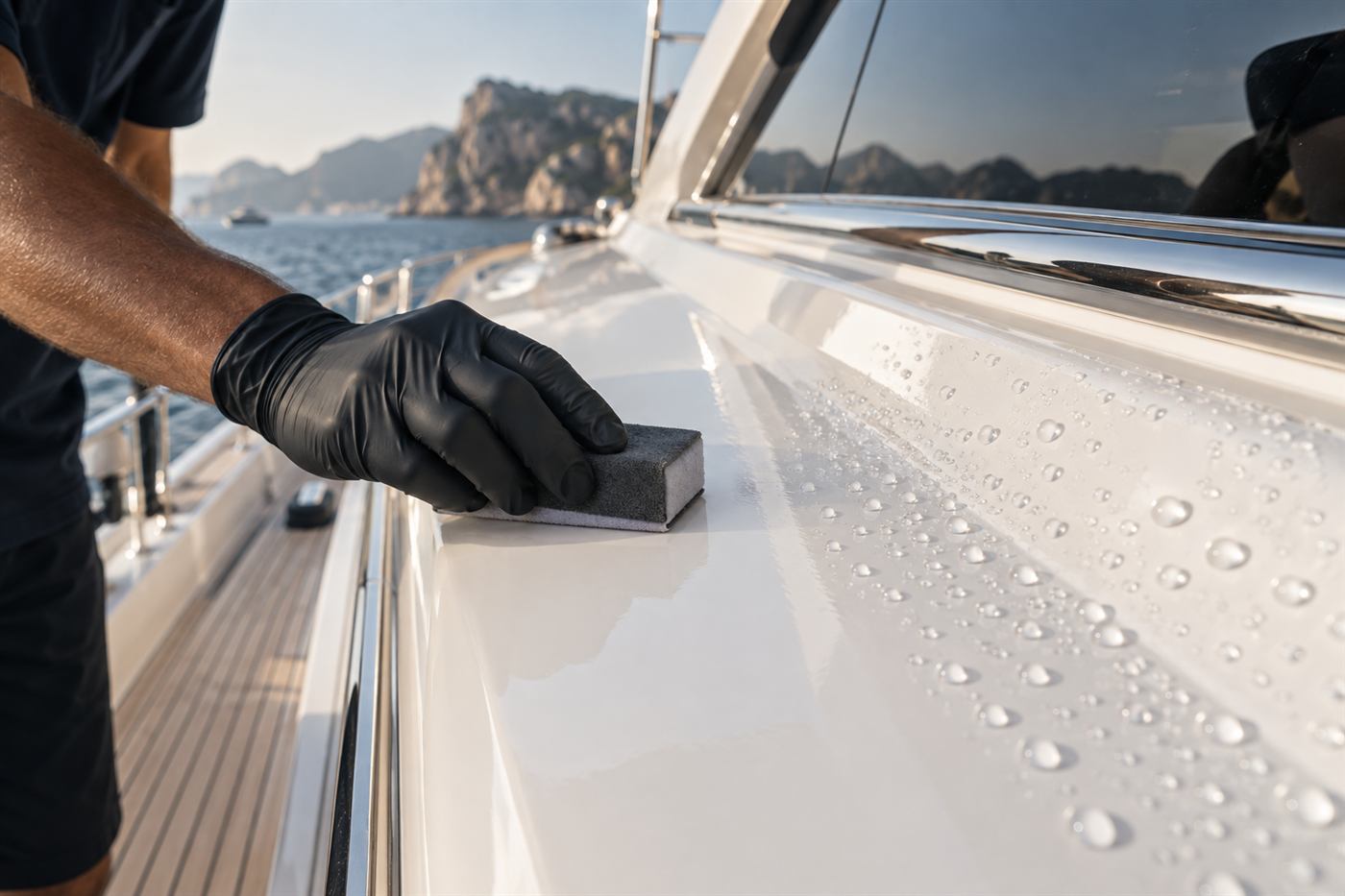
What yacht care looks like near Bal Harbour
Bal Harbour is a small, tightly built village on a thin strip of land between the ocean and the waterway behind it. The streets are lined with high-rise condominium towers, and many of those towers have a bay-side or Intracoastal-side dock behind them. Other boats in the area are kept at nearby marinas and brought up to the village for the day. Either way, the yacht lives within a few hundred yards of open Atlantic air, and that single fact shapes almost every cleaning decision we make here.
Owners in this area tend to use their boats for short, frequent trips: out through Haulover Inlet for a few hours offshore, a run up the Intracoastal to a restaurant dock, a weekend at anchor and back. That pattern means the boat gets wet with salt often but is also washed down often, and the finish is rarely neglected for months. What tends to go wrong is not neglect. It is small, repeated mistakes: a wash with the wrong soap, a fresh-water rinse that leaves spots because it dried in direct sun, or a polish applied over a surface that still holds salt crystals in the pores.
A good detail near Bal Harbour is therefore less about dramatic rescue work and more about keeping an already decent finish in good shape, and about catching the early signs of oxidation, pitting and canvas wear before they turn into larger jobs. Our visits are planned around the vessel, the dock and the owner's use, not around a one-size routine.
Haulover Inlet and what it puts on a hull
Haulover Inlet is the cut that connects the Intracoastal Waterway to the ocean just south of Bal Harbour. Water moves through it with the tide, sometimes quickly, and it carries sand, fine silt and floating organic matter with it. A boat that passes through the inlet regularly, or that sits in the stretch of waterway close to it, collects a thin brown film along the waterline and on the lower hull. It looks like a dirty ring, and on a light gelcoat it can set into a yellow-brown stain if it is left through a few weeks of hot sun.
The film is mostly organic and mineral material, and it usually lifts with a proper marine hull cleaner and a soft pad if it is caught early. Left alone, it traps oils and exhaust residue and starts to bond with the gelcoat. Our detailers test a small area first, because the right product depends on whether the surface is gelcoat, painted aluminum or a coated hull. Strong acids that remove waterline stain quickly can also dull a finish or attack metal fittings nearby, so we choose the gentlest product that works.
If your boat has a ceramic coating, the waterline film is generally easier to remove because the coating reduces how well the material grips. That is one reason owners who run the inlet often ask us about coatings. For a plain explanation of how coatings and traditional wax compare, see our page on wax, sealant and ceramic compared.
Ocean-facing exposure and salt in the air
Anywhere in South Florida has salt in the air, but a boat docked close to the oceanfront gets more of it than one tucked deep into a canal system. Wind from the east carries a fine salt aerosol across the island, and it settles on everything: windows, rails, hardware, canvas and the gelcoat itself. You will often see a faint white haze on the glass of a boat that has not left the dock for a few days. That is dried salt, and it is not harmless. It holds moisture against metal and slowly roughens polished surfaces.
The practical answer is regular, correct rinsing and washing. A fresh-water rinse after use helps, but it only works if the water is clean and the surface is not hot enough to spot-dry. Many owners are surprised to learn that a quick rinse in midday sun can leave behind mineral spots that are harder to remove than the salt was. Our crews work in shade where the dock allows it, or shift the schedule to early or late hours, and we dry glass and polished metal by hand.
Where the boat sits in a covered slip or under a lift canopy, salt exposure is lower but humidity can be higher. Both matter, and a technician will look at which one is doing more work on your particular vessel.
Condo docks, building rules and access
Many boats near Bal Harbour sit behind residential buildings, and that brings a set of practical rules that do not exist at a public marina. Buildings often require vendors to check in with the front desk or property manager, sometimes with proof of insurance. Parking may be limited, so a detailing crew arriving with equipment needs to know where to unload. Some associations restrict hours for noisy work such as compounding or power washing, and some limit which products can be used near the water.
We ask about these things on the phone so there are no surprises on the day. If your building requires a vendor form, tell us when you call and we will work through it. If your dock is shared with other owners, we will keep hoses, cords and equipment clear of walkways and neighbors' lines. We also avoid sending wash water, polish residue or rinse runoff into the waterway. Our approach to this is described on our page about environmental practices in yacht detailing.
If you manage a building or serve on a dock committee and want to understand how a detailing visit works before approving a vendor, we are glad to explain the process by phone in plain terms.
Stainless, brightwork and metal in a salt-rich setting
Stainless steel on a boat is not stainless in the way a kitchen sink is. Marine stainless resists rust but does not make it impossible, and in a salt-heavy environment you will often see tea-colored staining around rails, cleats, hinges and fasteners. That brown surface bloom is mostly cosmetic at first, but if it is ignored it can lead to pitting, and pitting is much harder to reverse than a stain.
Our technicians clean and polish stainless with products matched to the metal and its condition. We do not use harsh abrasives on fittings that are thin or already pitted, and we do not use household metal polish, which can leave residue in crevices. Near the ocean it is also worth treating polished metal with a protective layer after cleaning, because that layer is what slows the return of staining between visits. You can read more about the problem on our page about tea staining on stainless and about stainless hardware cleaning.
Aluminum, chrome and anodized parts are different again. White powdery corrosion on aluminum, for example, needs a different approach than rust on steel. A technician will identify the metal before choosing the product.
Gelcoat, oxidation and sun on an open exposure
Open exposure also means a lot of direct sun, and ultraviolet light is what slowly turns glossy gelcoat into a dull, chalky surface. Dark hulls show it first, but white and light-colored boats oxidize too. Early oxidation looks like a loss of depth in the color. Later it feels rough or powdery when you run a hand across it, and a white residue comes off on a cloth.
Oxidation is removed by compounding and polishing, which take off a very thin layer of the damaged surface. That is a skilled job because gelcoat is only so thick, and over-aggressive machine work can burn through it or leave swirl marks that show in raking light. We assess the thickness and condition first, begin with the least aggressive combination that works, and move up only if needed. See gelcoat oxidation removal and compound and polish for the full process.
After correction, a sealant or coating gives the surface a protective layer so the next season starts from a better place. Which protection fits depends on how you use the boat and how often it is washed.
Teak, canvas and upholstery near the water
Teak decks and trim take a beating from sun and salt, and the temptation is to scrub them hard. Hard scrubbing across the grain wears away the soft wood between the harder grain lines and leaves the surface ridged. We clean teak gently, with the grain, and we explain the difference between cleaning, brightening and sealing so you can decide what level of care suits the boat. Our pages on teak deck care and gray weathered teak go into detail.
Canvas, isinglass and enclosure panels near the ocean are exposed to constant salt, wind and sun. Mildew shows up as dark or pink spots, and clear panels can cloud if they are wiped dry or cleaned with the wrong product. We clean canvas with soft brushes and marine-safe cleaners, rinse it thoroughly, and handle clear vinyl with a damp, non-abrasive approach. Read more at canvas and isinglass cleaning.
Upholstery needs attention for a different reason: sunscreen, body oils and salt. Vinyl seats can stain and crack if those residues are left in place, so regular cleaning with a gentle product matters more than occasional heavy scrubbing.
Scheduling around inlet runs and weekend use
Boats near Bal Harbour are often used on weekends and holidays, and those are also the days when marinas and docks are busiest. We schedule detailing visits for weekdays where possible so the boat is clean and ready before you go out, and so the crew is not working among people loading coolers and guests. If you plan a trip, tell us the day you want to be on the water and we will work back from there.
It also helps to plan around weather. South Florida's afternoon storms in the warm months can interrupt outdoor work and spoil a fresh polish before it has set. A technician may suggest an earlier start, or splitting the work across two visits so that the most weather-sensitive steps, such as applying a sealant or coating, happen on a dry day.
For the busiest part of the boating season, planning ahead makes a difference. Our page on the South Florida boating season explains how demand moves through the year and when the best windows tend to be for larger jobs.
What a technician checks on a first visit
On a first visit we do not start with a polisher. We walk the boat with you or with your captain and look at the finish in different light. We check the hull sides and topsides for oxidation, scratches and stains. We check the deck for non-skid wear and algae growth. We look at metal for pitting and corrosion, canvas for mildew and seam wear, and glass for etching and mineral deposits. We also note where water collects and where odors are coming from below.
From that walk-through we explain what we see and what we recommend, in plain terms, including what can wait and what should not. Some boats need only a thorough wash and protection. Others benefit from correction work first. We would rather tell you a boat does not need something than sell you work that will not help.
Pricing is not posted on this site. Quotes are given by phone after we have described the boat and the work, and larger or more complex jobs need an on-site visit first. If a service call charge applies, we explain it on the phone before anyone is dispatched.
What to have ready when you call
The call goes faster when you can tell us a few things. The boat's length and type, whether it is gelcoat or painted, and where it is kept are the basics. A short description of what concerns you helps, whether that is oxidation, a waterline stain, mildew on canvas, or a boat that simply needs a full seasonal detail. If you have photos, mention that and we can use them to prepare, though a visit may still be needed for anything involved.
Have the building or dock details ready if you are in a condominium: the manager's contact, any vendor requirements and any restrictions on hours. If a captain or crew member looks after the boat, include their contact so we can coordinate access. If you are weighing a regular program rather than a single visit, our page on recurring maintenance plans explains how that works.
When you are ready, call the number on this page. We will talk through the boat, the dock and the timing, and then set up the next step. A short conversation now can save you from a larger repair bill later.
Questions people ask
Do you work on boats at condo docks in Bal Harbour?
Yes, where the building allows vendors on the dock. Many condominiums ask for a vendor form, proof of insurance or a check-in at the front desk, and some limit working hours. Tell us about your building when you call and we will plan around its rules, keep walkways clear and avoid sending wash water or residue into the waterway.
Why does my boat get a brown line near the waterline?
A brown film along the waterline is common on boats that sit near an inlet. Tidal flow carries silt and organic matter that settles on the lower hull and bonds under sun. It usually lifts with a marine hull cleaner if caught early. A technician will test a small area first, because the right product depends on the finish.
Is a fresh-water rinse enough to protect against salt?
A rinse helps, but only when the water is clean and the surface is not hot enough to spot-dry. In direct sun, a rinse can leave mineral spots that are harder to remove than the salt. Regular washing with a marine soap, hand drying of glass and polished metal, and a protective layer all work better together than rinsing alone.
How do I know if my gelcoat is oxidized?
Oxidized gelcoat loses depth of color and looks dull or chalky. Run a clean dark cloth over a small area: if white or colored residue comes off, the surface is breaking down. A technician can confirm this and measure how much correction is safe. Gelcoat is only so thick, so assessment should come before any machine polishing.
Do you give prices on this page or by text?
No. Quotes are given only by phone, after we have heard about the boat, the dock and the work you want. Complex jobs need an on-site visit first. If a service call charge applies, we explain it on the phone before a technician is dispatched, so you know the terms before anything is scheduled.
Can you detail the boat while I am away?
Often yes, if we have a clear contact for dock access and a captain, manager or trusted person who can sign off. We take photographs of the work and send them, and we flag anything we find, such as damaged canvas or a leaking hatch, so you hear about it promptly. Arrange the details by phone first.
Describe the situation by phone and we will tell you what the job involves. Quotes are given by phone. Jobs that cannot be quoted without seeing them need a technician on site, and the service call charge is explained on the phone before anyone is dispatched.
(954) 719-3572