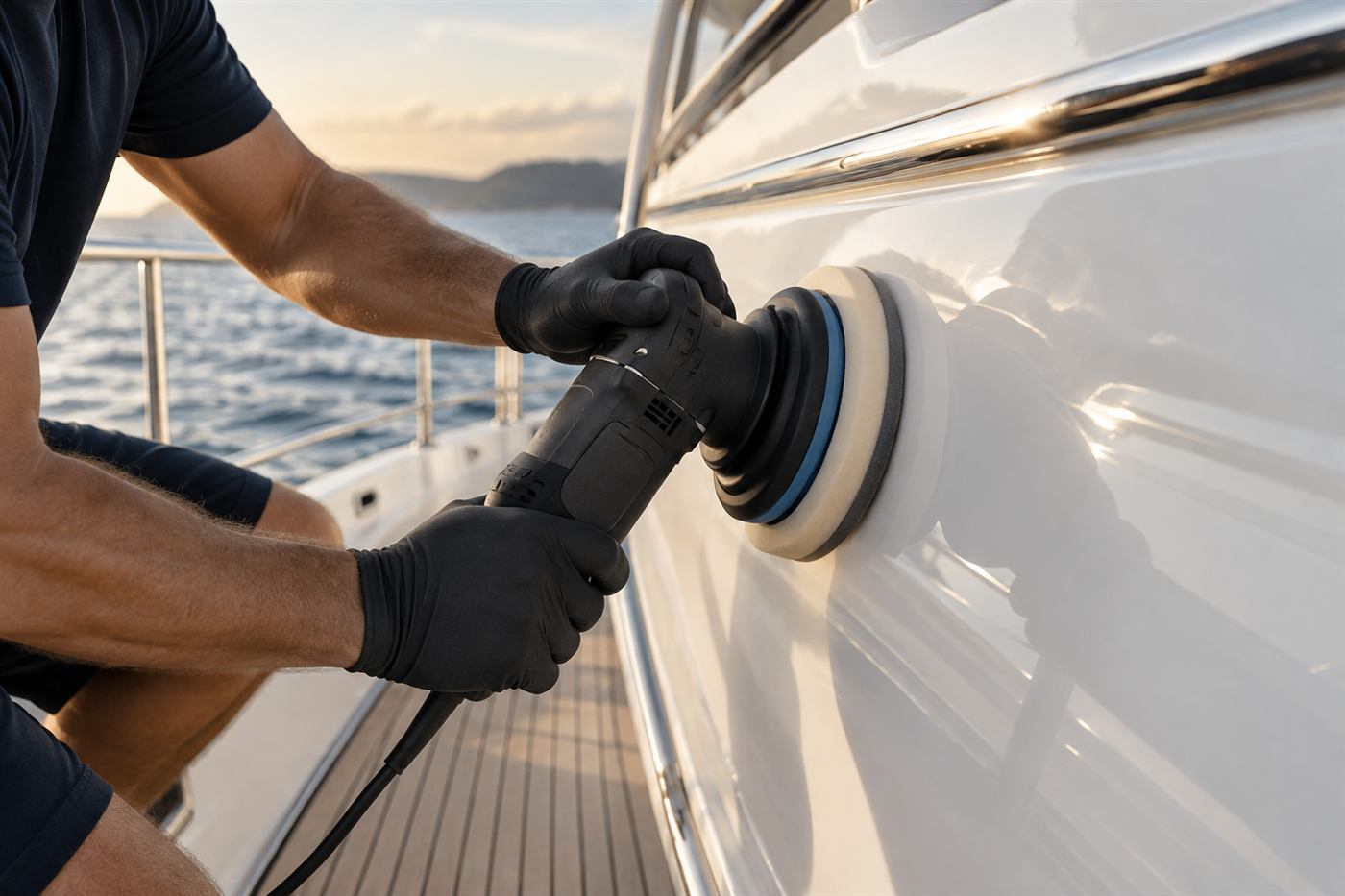
Why humidity is the problem below deck
A boat is a small, closed volume surrounded by water. In South Florida, the air is warm and moist for much of the year, and any closed space on or near the water soaks up that moisture. Fabrics, carpet, wood, cushions and insulation absorb it. Surfaces that are cooler than the air, such as hull sides, chilled lines and metal fittings, cause condensation. Warm, moist, still air with a little dirt or organic material is exactly what mildew needs to grow.
The signs appear gradually. A faint musty smell when you open the boat. A tacky feel on cushions. Spots on the underside of a headliner. White or green bloom on leather, wood trim or the back of a locker door. Damp towels that never quite dry. By the time visible growth appears, the conditions that allowed it have been in place for some time.
The good news is that humidity is manageable. A boat with steady air movement, controlled moisture and a few sensible habits can stay fresh in the same conditions where a closed, unattended boat gets musty. This guide explains the options and what each can and cannot do. It does not promise results from any equipment, and each vessel and berth is different.
Where moisture comes from
To control humidity, it helps to know where the moisture is entering. The first source is the air itself, which comes in through vents, open ports, doors and the gaps around them. The second is people. Breathing, cooking, showering and wet clothing release a surprising amount of moisture into a small cabin. The third is wet items brought on board, such as damp towels, swimwear, life jackets, wet shoes and fenders.
The fourth is leaks. Rain getting in through a hatch seal, a window gasket, a deck fitting or a cracked sealant line brings in water that can sit in a headliner or behind a panel for a long time. The fifth is the bilge. Water in the bilge evaporates into the boat's air, and a bilge that is damp or holds standing water adds steadily to the humidity. The sixth is condensation, which forms on cold surfaces when warm, moist air meets them, such as around air conditioning ducts and on hull sides in some conditions.
Identifying the sources helps you decide what to fix and what to manage. Leaks must be fixed by the right trade, since no amount of dehumidifying keeps up with a continuing leak. Wet items can be kept out or dried before storage. Air can be dried and moved. A mix of fixing and managing is usually needed.
- Humid outside air entering through vents, ports and doors.
- Moisture from people, cooking, showers and wet clothing.
- Wet towels, swimwear, life jackets and shoes stored aboard.
- Leaks at hatches, windows, deck fittings and sealant lines.
- Damp bilges and condensation on cold surfaces.
Air conditioning: the first line of defense
For a boat on shore power, air conditioning is usually the most effective humidity control, because cooling air also removes moisture from it. The coil condenses water out of the air, and the drain carries it away. Running the air conditioning regularly, even at a moderate setting, keeps the interior drier than leaving the boat closed and idle. Many owners and captains run the system on a schedule, particularly in the humid months.
There are limits. Air conditioning needs working equipment, adequate cooling water flow, reliable shore power and a boat that is reasonably sealed. A system that is oversized for the space may cool quickly without running long enough to dehumidify well. A system with a poorly draining pan or a clogged condensate line can itself become a source of moisture and mildew. Service and cleaning of the air handlers, filters, drains and ducts are for the appropriate marine technician.
Marina rules and costs also matter. Some marinas meter shore power, and some restrict running equipment while an owner is away. Talk to your captain, manager or marina about what is allowed and what is sensible, and make sure the system is safe to leave running. Never leave a system running if you have any doubt about its condition, because an unattended failure on a boat can cause bigger problems than musty air.
Dehumidifiers: what they do and what to watch
A dehumidifier pulls moisture out of the air and collects it in a tank or drains it away. For a boat, the options include small portable units that stand in the cabin and larger permanently installed systems. Some marine-oriented units are designed for the low-profile, vibration and power conditions on a vessel. They can be very effective, especially when the boat is closed up and the air conditioning is not running.
A few cautions apply. A portable unit with a tank must be emptied, and one that is left running with a full tank stops working. A unit that drains through a hose needs a proper route, and a hose that kinks, falls out or drains into the wrong place causes more trouble than it solves. Dehumidifiers also draw power and produce heat, and they must be placed where they cannot tip over, overheat or be a hazard in a seaway. They should be plugged into a suitable, safe supply, never overloaded onto a questionable circuit.
Choose a size that suits the space, and run it with doors and lockers closed enough for it to work, but open enough that air reaches the problem spots. In a cabin with many closed lockers, moisture trapped inside will not be reached. Remember that a dehumidifier removes moisture from the air, not from a source that keeps adding it. A leak or a damp bilge will outrun it.
Ventilation: moving air matters as much as drying it
Still air is the friend of mildew. Even a boat that is not particularly humid can develop spots in corners, lockers and behind cushions where air does not move. Ventilation, whether natural or from fans, keeps surfaces drying and prevents moisture from sitting. Small fans, solar vents and cabin fans can all help, depending on the boat's setup and safety considerations.
When the boat is occupied and conditions allow, opening hatches and ports lets moist air out and fresh air in. When it is unattended, the question is more complicated, because open hatches let in rain, birds, insects and security risks. Many owners use solar-powered vents or low-draw fans, or leave locker doors cracked open, to keep a gentle flow without leaving the boat open. Whatever you choose should be safe, secure and suited to the weather.
Look at the places air does not reach. Behind cushions, inside lockers, under bunks, behind panels, in hanging lockers and around the bilge access are usual trouble spots. Propping doors, using louvered fronts and leaving a little space between cushions and bulkheads improve circulation. Avoid packing lockers tightly with fabric or stored items, which blocks airflow and traps moisture.
Shore power, battery and safety
Most humidity control equipment relies on electricity, and on a boat that means shore power or onboard generation, with the safety that goes with it. Use equipment rated for marine use or suitable for the environment, plug it into a properly protected circuit and keep cords and connections dry and tidy. Never run extension cords through wet areas or leave them in the bilge or in standing water.
Fire and electrical safety are real concerns in an unattended boat. A heater, dehumidifier or fan that fails or overheats while no one is aboard can cause serious damage. Keep equipment away from fabrics, check that cords and plugs are in good condition and ask a qualified marine electrician about your boat's circuits if you are unsure. If you have any doubt about a system, do not leave it running unattended.
A detailer does not install, test or service electrical equipment, and cleaning staff should not be asked to rewire or adjust shore power connections. Decisions about what equipment to run, and when, belong to the owner, the captain and the marina. We can tell you what we see on board from a cleaning standpoint, such as musty areas, damp surfaces and signs of past moisture, and you can pass that on to the right technician.
Habits that make the biggest difference
Equipment helps, but habits do much of the work. Bring wet towels, swimwear and life jackets home to dry, or hang them in the open air on deck before storing. Do not leave damp clothing or bedding in lockers. Wipe up spills and condensation promptly. Dry the shower and the head compartment after use, and leave the door open. Run the exhaust fan while cooking and showering where the boat has one.
Keep the bilge dry and clean. A bilge that holds standing water, oil or debris contributes to humidity and odor. If you find water where it should not be, find the cause, and have the right technician fix it. Make sure drains are clear, including cockpit drains, shower sump and air conditioning condensate lines. Our service page on bilge cleaning describes how we handle bilge cleaning when the cause has been addressed.
Set a routine. A regular visit to open the boat, run the air, check lockers and look for damp spots catches issues early. If the boat sits for long periods, ask the captain or a manager to visit on a schedule. A short check every week or two beats a long cleanup after months of neglect. Where a visit is not practical, a combination of air conditioning on a timer or a dehumidifier with a drain hose is often the best compromise.
- Dry and remove wet towels, swimwear and life jackets after each use.
- Wipe condensation and spills promptly.
- Leave locker doors and shower doors ajar when the boat is idle.
- Check drains, condensate lines and the bilge for blockage or water.
- Visit on a regular schedule and look for damp spots or odor.
Soft goods: cushions, carpet, headliners and bedding
Fabrics soak up moisture and hold it. Cushions, mattresses, carpet, headliners, curtains and bedding are the surfaces most likely to develop mildew, and they are also the hardest to dry once wet. Foam inside cushions can stay damp for a long time after a surface looks dry. A cushion that feels cool, heavy or smells musty has probably absorbed moisture.
To protect them, keep them off damp surfaces, allow air to flow around them and avoid storing them tightly packed in closed lockers. Rotate and turn cushions, and open them to the air on dry days if possible. Where mildew has already started, a cleaning and drying process is needed, and for deeply affected foam, replacement may be the realistic answer. Our service pages on interior mildew treatment and carpet and headliner cleaning describe what we do.
Be careful with scented sprays and fragrance to hide odor. They cover the smell for a short time but do not remove its cause, and they can irritate sensitive people. A smell that returns quickly is a sign that the source of moisture has not been solved, and that is a better lead to follow than a stronger fragrance.
When odor or mildew is already there
If the boat already smells musty or shows mildew, humidity control alone will not clear it. The growth has to be cleaned and the materials dried, and then conditions kept dry to prevent a return. Light surface mildew on hard surfaces can often be cleaned with marine-appropriate products. Mildew in carpet, upholstery or headliner may need professional cleaning and sometimes replacement of heavily affected material.
Be careful about your own health. Mold and mildew can irritate eyes, skin and airways, and anyone with asthma, allergies or a weakened immune system should avoid disturbing it. Large areas of growth call for protective equipment and a cautious approach. Detailers clean surfaces and do not diagnose health problems, and nothing here is medical advice. If anyone in your household is concerned about mold exposure, they should speak to a doctor.
A persistent musty smell with no visible source may point to moisture trapped behind panels, in insulation or in a damp bilge. That is a job for the right marine technician to investigate, and a cleaning crew should not tear panels off a boat to look. Our page on odor removal explains how we work with causes, not just symptoms.
Putting a plan together and calling for help
A good humidity plan combines a few elements. Fix leaks. Keep the air moving. Use air conditioning or a dehumidifier suited to your berth and power arrangements. Keep wet items out of the boat. Check on it regularly. And clean away any mildew early, before it becomes embedded. The details differ by boat, so start with the biggest source of moisture and work down the list.
If your boat already has musty areas, we can clean the surfaces, treat mildew where it is on surfaces we can reach and tell you what we see that might need another trade, such as a leaking hatch or a damp bilge. We do not install or service air conditioning, dehumidifiers or electrical systems. When you call, have the basics ready: the type and size of the boat, where it is berthed, what you have noticed and whether it is regularly occupied.
Quotes are given by phone. For larger or more complicated jobs, we may suggest an on-site visit first, and there is a service call charge, explained on the phone before anyone is dispatched. Call when you are ready to talk through your boat, and we will help you work out the right next step.
Questions people ask
Is air conditioning enough to control humidity on a yacht?
Often it is the most effective single tool when the boat is on shore power, since cooling air also dries it. It has limits: the system must be in good order with working drains, power must be reliable and the boat reasonably sealed. A leak or damp bilge can still overwhelm it, and servicing belongs to a marine technician.
Should I leave a dehumidifier running when I am away?
Only if it is suitable for the boat, plugged into a safe, protected circuit, draining properly and checked by someone who knows your setup. A full tank stops it working, and an unattended electrical device is a risk. Discuss it with your captain, manager, marina and, if needed, a marine electrician.
Why does my boat smell musty even after I clean it?
A smell that returns quickly usually means moisture is still present, such as a leak, a damp bilge, wet foam in cushions, a blocked drain or a carpet that has not dried. Cleaning removes surface growth but cannot keep it away if the moisture source remains. Finding and fixing the source is the key step.
Do scented sprays or odor bombs solve musty smells?
They mask odor for a short time without removing its cause, and some people react to strong fragrance. A smell that comes back is a clue that moisture is still the problem. A better approach is to clean affected surfaces, dry the area, improve airflow and have any leaks or damp bilges addressed.
Can you clean mildew inside my boat?
Yes, on surfaces we can safely reach, such as hard surfaces, carpet, upholstery and headliners, using methods suited to the material. Heavily affected foam or materials may need replacement, and mildew caused by a continuing leak will return until the leak is fixed. We do not diagnose health concerns, and anyone sensitive to mold should stay clear.
How do I get a quote for interior mildew or odor work?
Call us. Quotes are given by phone after we ask about the vessel, the affected areas, what you have noticed and where it is berthed. Larger or more complicated jobs may need an on-site visit, and there is a service call charge, which is explained on the phone before dispatch. We will tell you plainly what can be done.
Describe the situation by phone and we will tell you what the job involves. Quotes are given by phone. Jobs that cannot be quoted without seeing them need a technician on site, and the service call charge is explained on the phone before anyone is dispatched.
(954) 719-3572