Searching for yacht detailing near me at Bahia Mar Marina? Best Yacht sends a real detailer dockside with before-and-after photos on every job. See our yacht detailing near me page for full marina coverage.
Bahia Mar's mix of live-aboards and transient vessels means flexible scheduling around whoever's actually at the dock that week.
Exterior wash-down, compound and polish, ceramic coating, bright work, interior detail, and teak and deck care, scheduled dockside. Call (954) 719-3572.
How a dockside job runs
Assess the vessel
Size, gelcoat condition and scope confirmed before a price is quoted.
Flat price agreed
Quoted before we schedule, not adjusted dockside.
Work the vessel dockside
At Bahia Mar, coordinated around your schedule.
Walk-through and sign-off
Reviewed with you before we consider the job done.
Servicing Bahia Mar, part of Fort Lauderdale
We work directly with boat owners and captains docked at Bahia Mar, most jobs done dockside without the vessel leaving its berth. For marina rules, gate access or dockage, check with Fort Lauderdale's marina office directly; we handle the detailing.
A deep-water basin facing the open Atlantic.
Bahia Mar sits on the barrier island side of the Intracoastal Waterway, directly across from Fort Lauderdale's beach strip, and it's one of the most exposed marina addresses on this whole stretch of coast. Unlike a canal-front dock tucked behind a row of buildings, Bahia Mar's slips face open water with a straight line of sight to the Atlantic beyond the barrier island, which means the wind and salt aerosol that roll in off the ocean reach these boats with almost nothing to slow them down first. That exposure is part of what makes the marina attractive to larger vessels needing genuine deep-water access, and it's also exactly why boats here need a tighter, more disciplined wash schedule than a comparable vessel sitting in a sheltered canal a few miles inland.
The marina has long served as a stopover point for vessels moving along the Eastern Seaboard and the Bahamas, which means the boats docked here at any given time are a genuine mix, long-term live-aboards who know every quirk of their slip, and transient crews passing through for a few days or a week who need a fast, thorough job scheduled around a departure date rather than a leisurely maintenance rhythm. Both situations come up constantly at this address, and both get planned for differently from the first phone call.
Live-aboards, transients, and the boat show calendar.
Bahia Mar's proximity to Fort Lauderdale's beach corridor and its history as a marquee marina address means the vessel size here skews larger than average for this coast, sportfishing convertibles, larger motor yachts and the occasional superyacht taking advantage of the deep water and the marina's berthing capacity. A boat this size means a detailing visit is measured in hours across a full day rather than a quick morning wash, and staging the work, which side gets tackled first, when the crew breaks for the tide or for marina traffic, matters more here than at a marina full of smaller vessels.
Fort Lauderdale's boat show season brings a surge of demand to this exact stretch of waterfront, since Bahia Mar has historically hosted show-related activity and the surrounding docks fill with vessels being prepped for public viewing. Owners and captains planning to show a boat, or simply docked here during that stretch of the calendar, tend to book detailing further in advance than usual, since demand across the whole marina spikes at once and scheduling flexibility narrows. Outside of show season, the transient dock still turns over regularly enough that same-week scheduling is usually workable for a standard wash-down or a pre-departure detail.
Correction, coating and metals in a fully exposed slip.
Gelcoat on a Bahia Mar boat that's gone a season or more without attention tends to show heavier, more even oxidation than a comparable hull in a sheltered canal, precisely because there's no building or seawall breaking the UV and salt load on any side of the vessel. That evenness is actually a small mercy from a correction standpoint, staged compounding here is less about chasing an uneven sun pattern and more about matching the cut to how long the boat has genuinely gone since its last real correction. A ceramic coating applied after a proper compound holds up better against this kind of constant, unbroken exposure than a seasonal wax would, which is why we talk through coating as a real option with owners planning to keep a boat at this address long-term rather than passing through.
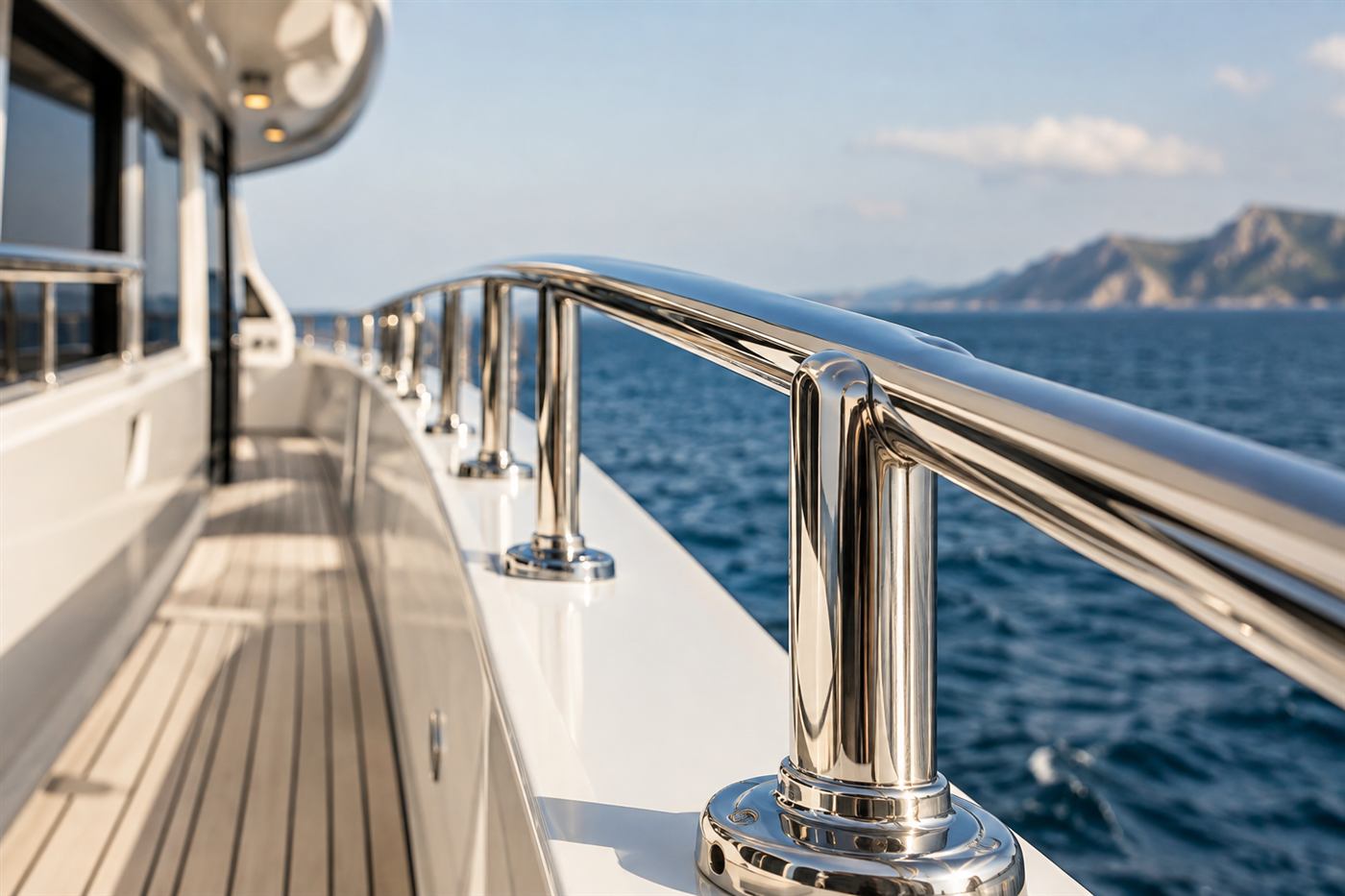
Stainless and bright work take the brunt of this exposure too. Rails, hardware and tower fittings on an open-water slip like this see salt spray more directly and more often than equivalent fittings on a sheltered dock, and the crevice corrosion that starts around fasteners and weld seams develops faster here as a direct result. A bright work pass on a Bahia Mar boat gets the same careful attention to those hidden corrosion points as anywhere else on this coast, but the interval between passes generally needs to be shorter to keep ahead of it. Teak on flybridge and cockpit areas facing straight into the wind sees a heavier, more constant salt film too, and benefits from a slightly tighter cleaning cadence than teak on a more sheltered vessel.
Flexible timing for boats passing through.
A transient vessel at Bahia Mar for a few days before continuing on to the Bahamas or further up the coast doesn't have the luxury of a leisurely maintenance schedule, the work has to happen in whatever window exists between arrival and departure, often coordinated directly with a captain rather than an owner who may not even be aboard. We treat these calls with real urgency, confirming scope quickly over the phone and working around fueling, provisioning and other departure-prep that's happening on the same tight timeline. A captain calling ahead, even a day or two before arrival, gives the best shot at a same-visit turnaround once the boat is actually at the dock.
Live-aboard owners at this marina, by contrast, are usually working from a standing relationship and a recurring schedule, which lets us plan around the marina's own rhythms, fuel dock traffic, transient turnover, marina events, without the same time pressure. Either way, the underlying work is the same, an honest assessment, a scope that matches the vessel's actual condition, and dockside execution that respects the marina's own rules about access and water use.
Can you work with a captain instead of the owner directly?
Yes, this is common for transient and crewed vessels. We'll coordinate scope and scheduling with whoever is aboard and authorized to make that call.
How much notice do you need for a boat only in port a few days?
As much as you can give us, but a same-day or next-day call for a straightforward wash-down is often workable depending on the marina's current traffic.
Does the boat show calendar affect availability?
Yes, demand across this marina spikes during show season, so booking further ahead than usual is worth doing if your visit falls near that stretch of the calendar.
Is ceramic coating worth it for a boat that stays here full time?
Given how exposed this slip is to open-water salt and UV, a properly applied coating over corrected gelcoat tends to hold up noticeably better here than wax alone, and we're glad to walk through the tradeoffs for your specific vessel.
What the wind actually does at this address.
A slip with a clear line to open water isn't only a salt problem, it's a wind problem, and wind changes how quickly canvas, cushions and deck hardware age even before salt gets factored in separately. Bimini tops and enclosures at Bahia Mar take more UV-driven fading and more flex-related wear at their stitching and snaps than the same materials would on a boat tucked behind a wind break somewhere further up a canal. That's not something a detailing visit fixes outright, canvas replacement is its own separate decision, but a regular cleaning schedule that keeps salt from working into the stitching and the underside of hardware snaps genuinely extends how long a set of covers or an enclosure holds up before it needs replacing.
Deck hardware, cleats, winches, hatch hinges, takes a similar beating. Salt working into a winch's internal mechanism or a hatch hinge's pivot point causes stiffness and eventually failure long before the exterior finish shows any obvious sign of wear. Part of a thorough dockside visit at an exposed marina like this one includes attention to these smaller mechanical points, not just the broad gelcoat and stainless surfaces that are easiest to notice from a distance.
Small logistics that matter at a working marina.
Bahia Mar operates on real tidal rhythm, and a few practical details shift with it. Freeboard on a smaller vessel changes noticeably between high and low tide, which affects how a crew accesses certain hull sections from the dock versus needing to work from a small boat alongside. Fuel dock traffic and marina activity also has its own rhythm through the day, busier around common departure and return windows, quieter mid-morning and mid-afternoon on a typical weekday. None of this changes what work gets done, but it does affect how a visit gets timed, and a crew familiar with this specific marina plans around it rather than treating every dock the same regardless of its particular quirks.
Owners and captains new to Bahia Mar, whether newly berthed here or visiting for the first time, are welcome to ask about any of this directly. Knowing the marina's own rhythms isn't a substitute for asking the dockmaster's office about official rules, but it does mean a detailing visit gets planned efficiently around a working marina rather than around an assumption that every slip behaves the same way.
What long-term owners at this marina can expect.
For owners who keep a vessel at Bahia Mar year-round rather than passing through, the most efficient arrangement is almost always a recurring schedule built around the specific exposure this slip sees, tighter wash intervals than a sheltered canal boat would need, periodic bright work and teak attention matched to how hard the wind and salt have been working that season, and a coating plan revisited every year or two as conditions and the gelcoat's own condition warrant. That kind of standing arrangement means less time spent re-explaining the boat's history at every visit and a more accurate read on how the vessel is actually aging, visit over visit, rather than assessing it fresh each time as if nothing came before.
Whether the relationship is a single visit for a transient vessel passing through or a standing schedule for a boat that's called this marina home for years, the same underlying approach applies, an honest look at what the open-water exposure has actually done to the boat, and a scope of work that matches it rather than a generic package pulled off a price sheet. Call (954) 719-3572 to talk through your specific slip and vessel at Bahia Mar.
What the open exposure means below deck.
It's tempting to think of exposure at a marina like this as purely an exterior concern, but the same open airflow that carries salt onto a hull also carries humidity swings into the cabin whenever hatches or companionways are open during boarding, provisioning or simply airing the boat out on a nice day. Salt air finding its way below deck settles into fabric, wood trim and electronics compartments the same way it settles onto stainless outside, just more slowly and less visibly. A cabin that smells faintly musty after a season without real interior attention is usually telling you exactly this story, moisture and salt working quietly in places that don't get looked at during a quick exterior wash.
A full interior detail addresses this directly, working through headliners, upholstery, cabinetry and the harder-to-reach corners of a galley or head where salt-laden humidity tends to settle first. For a vessel that spends real time at an exposed marina like Bahia Mar, folding interior attention into the same visit as exterior work, rather than treating it as a separate, occasional service, tends to keep both sides of the boat aging at a similar, well-maintained rate instead of one outpacing the other.
Why the same boat behaves differently here.
Owners who've moved a vessel to Bahia Mar from a more sheltered canal or inland marina sometimes notice their maintenance rhythm from the old slip simply doesn't hold up anymore, the boat looks tired faster, teak grays out sooner, stainless spots up between washes that used to stay clean for weeks. This isn't a sign anything was done wrong before, it's a direct, predictable consequence of moving from a protected slip to one of the most exposed berths on this whole coastline. Recognizing that the environment changed, and adjusting the schedule to match, is usually all it takes to get the boat looking cared for again rather than assuming something about the vessel itself has changed.
This is also why we ask, on a first call from a Bahia Mar owner, whether the boat was recently moved from elsewhere. Knowing the vessel's history, how it was maintained before and what schedule it was on, helps us judge how quickly to escalate a first visit, whether it's a straightforward wash-down to reset expectations or a fuller correction to catch up ground lost during a transition period between marinas.
We just moved our boat here from a canal slip inland. What should we expect?
Expect a noticeably faster pace of salt buildup and UV exposure than the old slip. A tighter wash interval and, often, a fresh look at gelcoat condition are the two most common adjustments owners make after a move like this.
Do you handle interior detailing on the same visit as exterior work?
Yes, and for a boat at an exposed marina like this one, we generally recommend folding both into the same visit or the same scheduling cadence rather than treating interior as an afterthought.
Do you work with charter or crewed vessels differently than owner-operated boats?
The scope stays the same either way, but scheduling and sign-off usually route through the captain or mate managing the boat's day-to-day rather than the owner directly, and we're happy to work that way.
Bahia Mar remains one of the addresses on this coast where the boat's exposure to open water genuinely dictates the maintenance conversation more than almost anywhere else we work. Whether a vessel is here for a season or for an afternoon, matching the schedule to that reality, rather than to a generic interval, is what keeps a finish holding up the way it should. A phone call describing your slip number, roughly how long since the boat's last real wash or correction, and how long you expect to stay berthed here is usually enough for us to put together an accurate scope before the crew ever steps aboard, whether that means a quick maintenance wash before departure or a fuller correction and coating plan for a boat settling into its new home slip. We'd rather ask a few extra questions up front than arrive dockside and discover the scope was wrong for what the boat actually needs, since getting it right the first time matters more at a busy working marina than at a quiet residential dock with no departure clock running, and a scope confirmed in advance means the crew shows up ready to work rather than needing to reassess and adjust once already dockside, which matters most of all when a departure tide or a scheduled fuel dock slot is waiting right behind the job. That kind of preparation is simply part of working this marina well, over and over, visit after visit.
Need detailing at Bahia Mar?
Describe the situation by phone and we will tell you what the job involves. Quotes are given by phone. Jobs that cannot be quoted without seeing them need a technician on site, and the service call charge is explained on the phone before anyone is dispatched.
(954) 719-3572