What a coating changes and what it does not
A ceramic coating is a thin, hard layer that bonds to gelcoat or paint after the surface has been cleaned and corrected. It resists some chemicals, sheds water and dirt more readily, adds a degree of hardness against light marring, and gives a deep, uniform gloss. Those are real benefits, and they are the reason owners choose coatings. The page on ceramic coating explains how application works.
What a coating does not do is stop the marine environment from acting on the boat. Salt still settles. Bird droppings still etch if left. Hard water still leaves spots. Dock lines and fenders still mark the surface. Ultraviolet light still reaches whatever is under the coating, and the coating itself slowly wears. Marketing sometimes suggests that a coated boat only needs a rinse, but this is not honest, and owners who believe it often cause the problems they were trying to avoid, since neglected coatings collect contamination that dulls the finish and hides the very properties that make the coating worthwhile.
Maintenance is how the benefits last. It is a set of habits and visits that keep the surface clean, protect the coating from harmful chemicals and spot early signs of wear. A coating that is maintained well can look right for a long time, while a neglected one can look worse than an uncoated boat that is washed regularly, since a coating that is clogged with grime reads as flat and dull.
Washing a coated hull the right way
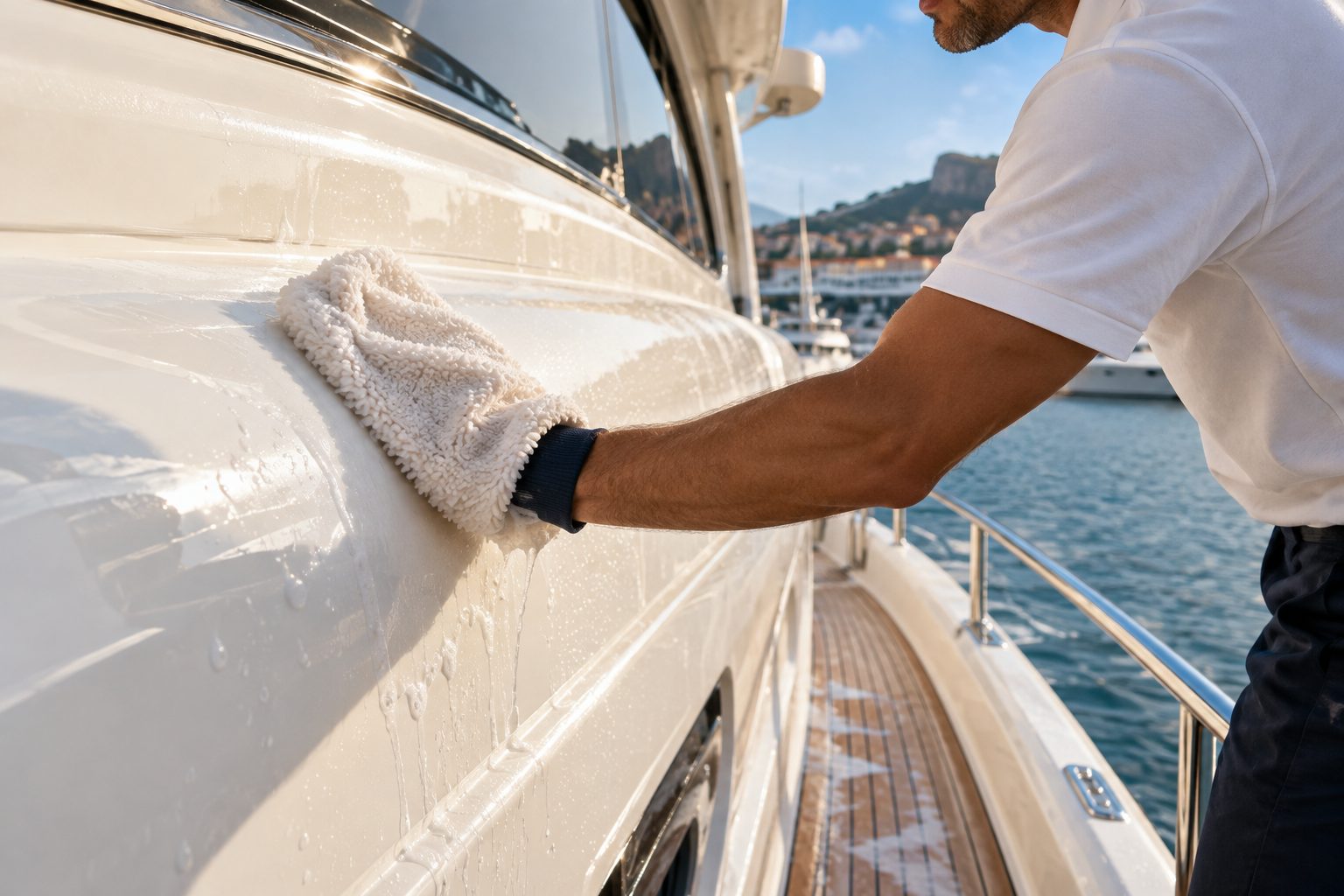
The basic rules are simple, and most of the damage owners and crews do to coated surfaces comes from ignoring them. Wash in shade or when the surface is cool, since hot surfaces dry soap and water into spots. Rinse first with fresh water to remove salt and loose grit before touching the surface with anything. Use a quality boat soap with a neutral pH, diluted as directed. Apply it with a clean, soft wash mitt or a soft brush made for marine finishes, working from top to bottom in manageable sections.
Use plenty of soap and light pressure. A coated surface is hard but not scratch-proof, and grit dragged across it leaves swirls. Rinse the mitt often, and use separate mitts for the upper surfaces and the lower hull, where dirt is heavier. Rinse thoroughly with fresh water, and then dry by hand with soft towels or a gentle blower, since air-dried water leaves mineral spots even on a coated surface.
Harsh brushes, rough sponges, dirty towels and automatic scrubbing pads should stay away. The page on yacht wash and dry service explains the order and equipment of a proper wash in more detail, and those principles apply to coated and uncoated surfaces alike, with extra attention on the coated ones.
- Rinse with fresh water to remove salt and grit
- Wash top to bottom with neutral boat soap and a clean soft mitt
- Rinse mitts and change them between upper and lower areas
- Rinse thoroughly with fresh water
- Dry by hand or with a gentle blower before water spots form
- Inspect for contamination, marks and signs of wear
Chemical choices that protect or harm a coating
A coating resists many chemicals but not all, and the wrong product can degrade it quickly. Strong acidic cleaners, such as those used on rust or hull stains, can etch or strip some coatings. Strong alkaline cleaners and degreasers can dull them. Solvents, abrasive polishes and heavy compounds can wear through the layer. Some wax products leave residue that masks the coating's properties and traps dirt.
A neutral-pH boat soap suits routine washing. Maintenance sprays and sealants made to work with ceramic coatings are available, and some makers sell their own matching products. Following the coating maker's care guidance is wise, since each system has its own recommendations about products and intervals. When a stronger cleaner is needed, for rust, fuel or heavy waterline stains, it should be tested on a small area and used briefly, and the area rinsed thoroughly and rechecked.
Detailers sometimes face a choice between removing a stain and sparing the coating. Often the stain can be lifted by a gentler method used patiently. Where it cannot, the owner should be told honestly that removing it may thin the coating in that spot, and be given the choice. The guide on why household cleaners damage boats explains why a bottle from under the kitchen sink can do harm to marine finishes, coated or not.
Water spots, mineral deposits and drying
Water spots are the most common complaint on coated boats. The coating's slick surface causes water to bead, and those beads dry in place if left, leaving minerals behind. In South Florida, where water is often hard and sprinklers and docks add more minerals, spots can form quickly in the sun. Fresh spots wipe away with a damp cloth. Older spots bond to the surface and can etch it if neglected.
Prevention comes first. Dry the boat after washing, avoid washing in direct sun, and keep the boat away from sprinklers where possible. Deionized or filtered water for the final rinse reduces mineral spotting, though it is not always practical dockside. If spots do appear, a mild acidic spot remover made for coated surfaces, used briefly and rinsed away, can dissolve them. Strong acids used carelessly can harm the coating, so the product and the contact time matter.
If spots have etched into the coating or the gelcoat, cleaning alone will not remove them. Polishing may be needed, and polishing a coated surface can remove some of the coating. At that point the owner and detailer should talk about whether to polish and recoat the affected area, since the choice affects cost and the look of the finish.
Bird droppings, tree sap, sunscreen and other contamination
Coated surfaces resist some contamination, but not all. Bird droppings are acidic and can etch even a coated surface if left in hot sun. Tree sap and pollen can bond to the surface. Sunscreen and oils leave films on horizontal areas. Fuel and exhaust soot settle near transoms and engines. Rubber and paint transfer from fenders and docks can leave marks along the hull.
The most useful habit is quick removal. Bird droppings should be softened with water and wiped away gently, not scraped. Sap and sticky residue can be softened with a coating-safe cleaner and removed with a soft cloth. Fender marks often respond to a gentle cleaner on a microfiber cloth, with repeated light passes. Where marks resist, the answer is to stop and ask, not to scrub harder.
The page on bird droppings on boats explains how they damage finishes and how to remove them, and the principles apply to coated surfaces with the added need to protect the coating.
Maintenance products, toppers and boosters
Some coating systems offer a maintenance topper or booster, a spray or liquid applied after washing to refresh the water-shedding and gloss. These can extend the visible life of a coating by adding a thin sacrificial layer on top of it. They are not a substitute for the coating, and they are not always needed. Used correctly, they help. Used carelessly, they build up residue or interfere with the coating's properties.
The right choice depends on the coating, the use of the boat and the owner's expectations. A boat that sits in the sun and is washed weekly may benefit from a topper every few months. A boat that is used lightly, stored under cover and washed carefully may need one only occasionally. Where the maker recommends a specific product, that is the safe starting point.
Waxes and sealants not made for use over coatings can mask the coating or cause streaking. If an owner wants a different look or feel, the detailer can explain the trade-offs. The guide to wax, sealant and ceramic compared describes how these products differ, which helps in choosing what goes on a coated hull.
Inspection: how to tell if a coating is wearing
A coating does not fail all at once. It wears gradually, and the signs are visible if you know what to look for. Water stops beading and starts to sheet or cling in patches. The surface feels less slick under a gloved hand. Dirt clings more and takes more effort to remove. Gloss looks flatter in sun, and fine scratches appear more readily. Areas of heavier wear, such as horizontal surfaces, bow areas, rub rails and places where lines or fenders touch, show the signs first.
A detailer can check these signs during a maintenance visit, with a water test on a clean panel and by observing how the surface responds to washing. If wear is patchy, spot repair may be possible. If wear is general, the owner can decide between a maintenance topper, a refresh with polishing and recoating, or letting the coating run its course.
It is important to be honest about the limits here. The detailer cannot promise a specific lifespan for a coating, since conditions vary widely, and no one can predict exactly how long a coating will last on a boat that lives in sun, salt and heat. What can be said is that a coating that is washed carefully, protected from harsh chemicals and inspected regularly lasts longer than one that is not.
What a maintenance visit looks like
A typical coated-vessel maintenance visit is shorter than a full detail and more focused. The crew arrives, inspects the vessel and notes the condition of the coating, the amount of contamination and any damage. A fresh water rinse removes salt, followed by a gentle wash with neutral soap and clean mitts. Contamination such as water spots, bird marks or fender residue is treated with coating-safe methods. The surface is rinsed and hand dried.
Where appropriate, a maintenance topper is applied. Glass, stainless and other surfaces are cleaned. The crew checks for early wear, notes problems and reports. The visit is not the time for heavy correction, which is a different service, though a visit can reveal where correction is needed, such as the areas covered in compounding and polishing.
Visits are most effective when they are regular. A coated boat washed gently every couple of weeks with the right method needs less intervention than one that is washed rarely and cleaned aggressively. The recurring maintenance plans page explains how visit patterns are set to match use and storage.
Mistakes that shorten a coating's life
Several mistakes recur. Washing in direct sun, so soap and water dry on the surface. Using one dirty mitt for the whole boat. Using household cleaners or dish soap, which may strip protective layers. Using a pressure washer too close, forcing water under edges. Leaving bird droppings and sap for days. Waxing over a coating with a product that masks it. Using abrasive pads on stains. Ignoring the maker's guidance on products and intervals.
Another is expecting too much. A coating is a protective layer, not armor. It will not prevent scratches from dock rash or keep a hull clean after months of neglect. Expecting it to do so leads to frustration, and sometimes to blaming the product or the installer when the cause is care.
If you have a coated vessel and want to maintain it properly, or you want to know whether your coating is still doing its job, call. Tell us the coating system if you know it, when it was applied, how the boat is stored and used, and what you have noticed. Quotes are given by phone, and a more complicated job may need an on-site visit first, with a service call charge explained before dispatch.
Questions people ask
Does a ceramic coated boat still need regular washing?
Yes. A coating makes washing easier but does not remove the need for it. Salt, bird droppings, sunscreen and hard water spots still settle on the surface and can dull or etch it if left. Regular gentle washing keeps the coating working and keeps the finish looking right.
What soap should I use on a coated hull?
A neutral-pH boat soap, diluted as directed and applied with a clean, soft mitt, suits routine washing. Avoid household detergents, strong degreasers and acidic cleaners unless the coating maker approves them. Check the maker's care guidance, since each coating system has its own recommendations.
Can I wax over a ceramic coating?
Usually it is not needed and can mask the coating or cause streaking. Some makers sell compatible toppers or sealants made to work with their coating. If you want extra gloss or a different feel, ask the detailer or the coating maker which products are suitable.
How do I know when my coating is wearing out?
Look for water that no longer beads, a surface that feels less slick, dirt that clings more and gloss that looks flatter in sun. Wear shows first on horizontal surfaces and high-contact areas. A detailer can check this with a water test on a clean panel and advise on options.
Will you promise how long my coating will last?
No. Lifespan depends on sun exposure, storage, washing methods, products used and the quality of the original application. A coating that is washed gently, protected from harsh chemicals and inspected regularly lasts longer than one that is not, but no honest detailer can give a fixed number.
How are quotes handled for coating maintenance?
Quotes are given only by phone. A routine maintenance visit can often be discussed from a description of the vessel and coating. A boat with unknown history or visible wear may need an on-site look first. There is a service call charge, and it is explained on the phone before anyone is dispatched.
Describe the situation by phone and we will tell you what the job involves. Quotes are given by phone. Jobs that cannot be quoted without seeing them need a technician on site, and the service call charge is explained on the phone before anyone is dispatched.
(954) 719-3572Related pages
Setting up a maintenance routine that fits the boat
A coated hull does not run on autopilot, and the most useful thing an owner can do is set a routine that suits how the boat is actually used. A weekend cruiser that goes in and out of the water might need a different rhythm from a vessel that sits in a slip for weeks. The detailer starts by asking how often the boat is used, where it is kept, and how it is washed now. From those answers a simple plan emerges, with a list of what to do after each outing, what to do monthly and what is best left to a professional visit.
The routine usually includes a fresh water rinse after use, a gentle wash with a pH neutral soap, and a careful dry that avoids leaving mineral spots. It also includes habits that sound minor but matter, such as keeping abrasive pads off the hull and not letting the wash water dry on the surface in the sun. Washing mitts and towels are kept clean and are replaced when they become gritty. Owners often find that a consistent small effort keeps the surface slick and easy to clean, which is exactly what they hoped the coating would provide.
Written notes help the routine stick. The detailer can summarize the plan in plain language, listing the products to use and the ones to avoid, so that crew changes do not interrupt the pattern. If the owner prefers to leave everything to the detailer, the visits can be scheduled on a rhythm that matches the boat's use. In either case, the scope and any quote are explained before work begins, and the plan can be adjusted when the boat's schedule changes or the surface shows different needs.
Reading the surface after a few months of use
After a coating has been in service for a season, the surface tells a story if you know how to read it. Water behavior is a good clue, since water that sheets off or forms tight beads suggests the surface is still doing its job, while water that clings in wide patches suggests a film or contamination is sitting on top. Technicians check the finish by washing a small area and watching how it behaves, and then compare areas that get more sun or more contact with those that stay in shade. Differences between them show where wear is likely to start.
Contamination is often mistaken for failure. A coating that looks dull may only be covered in a thin film of traffic grime, mineral residue or an old topper product. A careful decontamination wash, with products matched to the coating, can bring the surface back without any abrasive work. The technician avoids harsh methods unless they are needed, because every aggressive step carries some risk of wearing the very layer the owner is trying to preserve. When abrasive correction is truly needed, the reasons are explained first.
Sometimes the honest conclusion is that a section of the finish has worn and will need attention. The technician describes what was found, where it is, and what options exist, from a maintenance product to a more thorough correction. No performance promises are made about how long any product will last, since conditions vary widely from one slip and one season to the next. The scope and any quote are explained before work begins, and the owner decides what makes sense for the boat. Questions are welcome at every stage of the conversation.