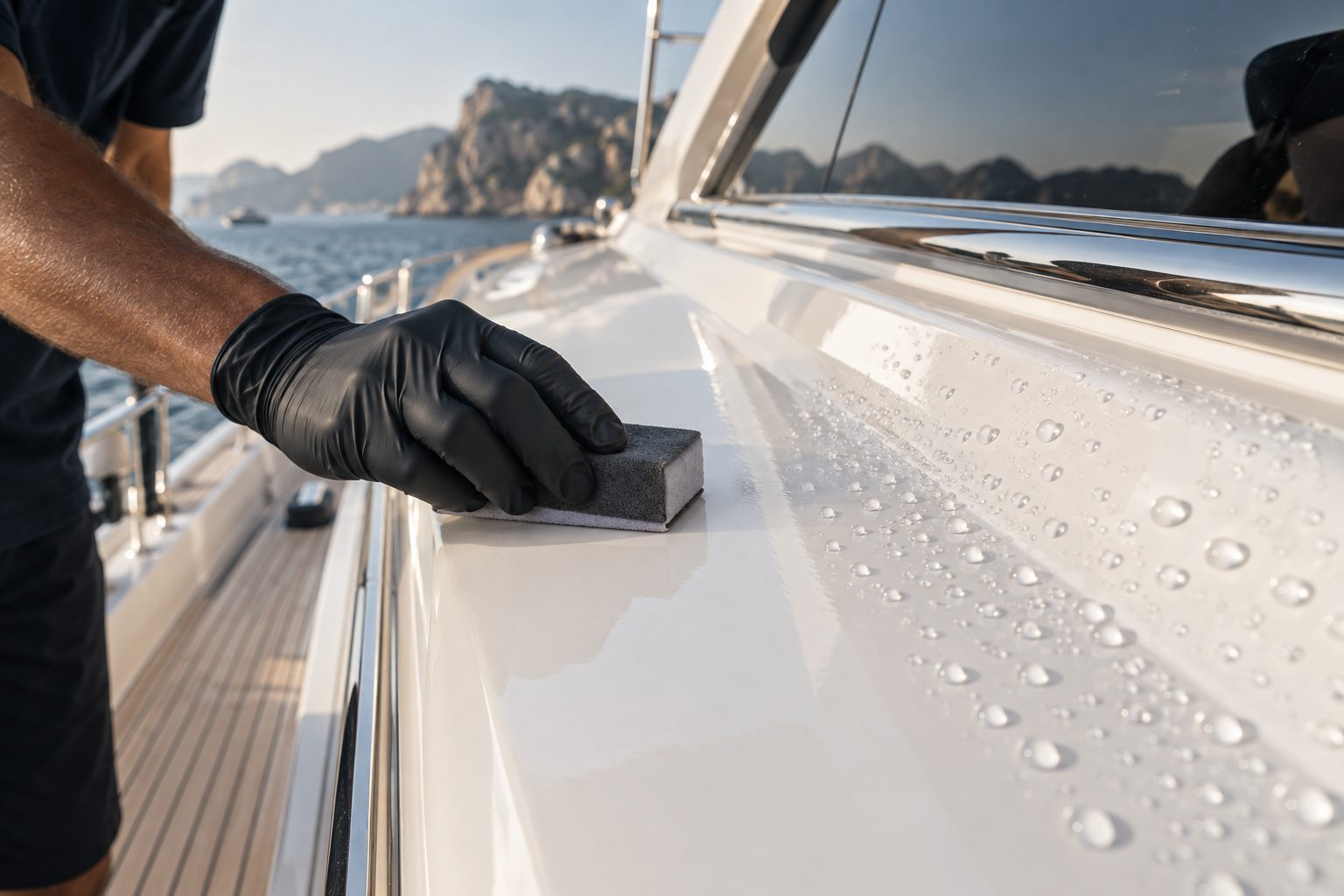
Why boats are not houses
Household cleaners are designed for household materials: ceramic tile, porcelain, glass, laminate, stainless steel sinks and painted walls. They are tested against kitchen grease, soap scum and everyday dirt. A boat is made from different materials that live in a much harsher environment, and the cleaning needs reflect that.
Marine surfaces face constant ultraviolet light, salt, humidity, heat and flexing. Gelcoat is a thin resin layer protected by wax or sealant. Teak is an oily hardwood that wears away if scrubbed. Clear vinyl is a soft plastic that scratches and clouds. Canvas has a water-repellent finish. Stainless steel relies on a thin oxide layer that salt attacks. Aluminum and chrome have their own sensitivities. Every one of these can be damaged by a product that is perfectly safe in a kitchen.
There is also the matter of what you cannot see. A cleaner may look as if it works, because it removes visible dirt, while it quietly removes wax, dries out seals, weakens stitching or dulls a finish. The damage shows up later as faster fading, more staining, cloudy windows or fabric that rips. Because it is slow, it is easy to blame something else.
Marine products are formulated with these surfaces in mind. They tend to be gentler, to rinse cleanly and to work in the presence of salt and hard water. They are not magic, but they are designed for the job. Our guide on yacht detailing products explained describes the main categories, and the sections below cover the household products most often misused.
Bleach: strong, fast and hard on a boat
Chlorine bleach is a common choice for mildew and black stains, because it visibly whitens things. On a boat it causes a long list of problems. It attacks stitching and fabric, especially canvas, sail covers and upholstery, and it weakens thread so that seams fail. It can discolor and bleach colored fabrics and vinyl, and it dries out vinyl and rubber, leaving it brittle.
On metal, bleach is corrosive. Chlorine and chloride ions attack stainless steel, causing pitting and rust staining, and they affect aluminum and chrome. A bleach spill on a rail or fitting can leave permanent marks. Bleach runoff can also damage the gelcoat around it, and it can discolor teak and carry onto surfaces you did not intend to clean.
Bleach also does not solve the root of mildew problems. It may kill surface growth and lighten stains, but it does not address the moisture and the food source that mildew needs, and growth returns. In porous materials, bleach can leave the roots behind while damaging the fabric.
Safety is a factor too. Mixing bleach with ammonia or acids produces toxic gases, and boat interiors are enclosed spaces with limited ventilation. A bleach cleaning session in a cabin can be hazardous. Never mix products, always ventilate, and wear gloves and eye protection.
For mildew on canvas and interior surfaces, marine mildew treatments and the right technique do a better and safer job. Our page on mildew treatment explains how a professional approaches it.
Ammonia and window cleaners
Ammonia is the active ingredient in many glass cleaners. It cuts grease and dries without streaks on household windows, and that is why it is popular. On a boat it is a problem for clear vinyl and plastic windows, where it can cause clouding, crazing and hardening. Over time, ammonia-based cleaners shorten the life of isinglass and similar materials.
Tinted glass and window films are also at risk. Many tints and coatings are damaged by ammonia, which can cause bubbling, peeling or discoloration. If your boat has tinted windows, check the manufacturer's guidance before using any cleaner.
Ammonia is also hard on some metals and rubber. It can attack brass and copper alloys, and it can degrade seals and gaskets. Around electronics and displays, it can damage anti-glare coatings and plastics.
Beyond the material issues, there is the safety matter described above: never mix ammonia with bleach. The result is chloramine gas, which is dangerous to breathe.
For windows and glass, use a marine glass cleaner or a gentle solution recommended for the material, a soft microfiber cloth and fresh water. Rinse salt off first so that crystals do not scratch the surface. For vinyl, use a product made for clear vinyl and avoid paper towels, which scratch. Our guide on protecting canvas and enclosures has more detail, and the cloudy isinglass page explains what happens when plastics are mistreated.
Dish soap and laundry detergent
Dish soap seems harmless. It is mild on hands, it foams well and it is inexpensive and everywhere. That is precisely why it is the most common household product used on boats. Dish soap is designed to cut grease, and it does the same to wax and sealant. A wash with dish soap can strip protection from gelcoat and paint, leaving the surface exposed.
Dish soaps also vary. Some contain salts, dyes, fragrances, moisturizers or additives that leave residue. They can foam excessively, which makes rinsing harder, and they may leave a film that attracts dirt. On teak, dish soap can dry the wood and lighten it unevenly. On canvas, it can strip the water repellent finish.
Laundry detergent has stronger surfactants and sometimes bleach or brighteners. It is too aggressive for most boat surfaces, and it can leave residue in fabrics that is hard to rinse. Laundry products on cushions and covers often cause stiffness and fading.
A marine boat wash is formulated to clean without stripping protection, to rinse cleanly in hard water, and to be gentler on the range of materials on board. Follow the dilution on the label, because more soap does not mean more clean. Our guide on how to wash your own boat covers the routine.
If you have been using dish soap on a protected hull, it is not a disaster. You may find that water no longer beads, which is a sign that protection has worn. A technician can reapply wax or sealant as part of a visit.
Scouring powders, abrasive pads and magic erasers
Abrasive cleaners are tempting on stubborn marks. Scouring powders, green kitchen pads, steel wool and melamine sponges all work by scratching away the dirt, and they scratch the surface with it. On gelcoat, they leave a dull, hazy patch. On clear plastic, they leave scratches that are impossible to remove without replacement. On painted surfaces, they can cut through the finish.
On non-skid, abrasives can wear the texture. On teak, steel wool leaves fibers that rust and cause black stains in the wood. On stainless steel, abrasive pads can leave scratches that trap salt and encourage rust, and pads that have been used on steel can transfer iron particles, which then rust on the surface.
Melamine sponges, sold as magic erasers, are mild abrasives. They can remove marks from smooth surfaces, but they also dull glossy finishes. Used on gelcoat or paint, they leave a visible matte patch. Because the damage is subtle at first, owners often keep going and make it worse.
If a mark does not come off with soap and a soft cloth, stop. The right response is a specific product and technique chosen for the stain, not more abrasion. A professional can test a small area and decide whether chemistry or polishing is appropriate. Our guide on gelcoat compounding explained shows how controlled abrasion is done properly.
Vinegar, acids and degreasers
Vinegar is popular as a natural cleaner and is often suggested for water spots and mineral deposits. A mild vinegar solution can help on some hard surfaces, but on a boat it needs caution. Acids attack certain materials: they can etch gelcoat if left on too long, damage some metals, harm sealants and rubber, and discolor teak.
Stronger acid products, such as toilet bowl cleaners, rust removers and descalers, are even more risky. They can burn through finishes, pit metal and damage gaskets and hoses. Some release harmful fumes. If a product is meant to dissolve rust or limescale in a toilet, it can do real damage to a boat's surfaces.
Degreasers and multipurpose sprays are another trap. Strong alkaline degreasers cut grease and also strip wax, dry out vinyl and rubber, dull some finishes and lighten teak. Citrus-based cleaners that smell pleasant can still contain solvents that damage plastics and sealants.
Rust stains, tea staining and water spots do have chemical solutions. They are targeted products, used with correct dwell time and rinsing, and tested on a small area. A professional matches chemistry to the stain, and rinses and neutralizes thoroughly. For rust and metal problems, see the rust stain removal page.
If you want to try something at home, test it first on a hidden spot, use the mildest option that works, and rinse thoroughly. If the result is not what you expected, stop there.
Interior cleaners, air fresheners and carpet products
Cabin interiors get the same well-meant mistakes. Household carpet cleaners can leave residue and soak foam and subfloor with more water than a boat can easily dry. Residual moisture in a closed boat feeds mildew and odor, and the problem comes back worse. A technician uses extraction methods that control moisture and remove it rather than leaving it behind.
Fabric and upholstery cleaners can bleach, stain or stiffen marine fabrics. Leather and vinyl need products made for them. Wood interiors may have varnish or oil finishes that household polishes damage or cloud.
Air fresheners and fogging products mask odors rather than solving them. A musty smell usually has a source, such as damp carpet, a leaking hatch, a wet locker, a bilge, or a refrigerator that was left closed. Covering it with fragrance delays the repair. Our pages on odor removal and musty smell below deck explain how to find and address sources.
Disinfecting sprays and wipes are fine for surfaces in the galley and head when used according to the label and the material, but avoid mixing, and ventilate. Heads and holding systems have their own rules about what chemicals they tolerate, since some products damage seals and hoses or disrupt treatment systems. Check the manufacturer's guidance.
Interior work benefits from a plan: dry, clean, address moisture, then protect. If the problem keeps returning, it is usually a moisture issue rather than a cleaning issue.
Why 'natural' and 'gentle' labels do not settle the question
Labels such as natural, plant-based, non-toxic and eco-friendly are marketing terms rather than safety assurances for a particular surface. A product can be gentle on skin and still be wrong for gelcoat, vinyl or stainless steel. A citrus solvent is natural and can still soften sealant. A vinegar solution is natural and can still etch. Whether a product is safe for a boat depends on its chemistry and on the material it touches, not on the word on the front of the bottle.
The reverse is also true. A product made for boats is not automatically safe for every surface on the boat. Marine teak cleaners can be harsh on gelcoat if they run down the side. Metal polishes can stain porous materials. Always read the label for the list of surfaces it is meant for, and keep it off anything else.
When you are uncertain, the safest approach is the mildest one: fresh water, a soft cloth, a little marine soap. If that does not work, the stain or problem probably needs a targeted method, and that is a good moment to ask a professional rather than to escalate through the cleaning aisle.
What to use instead: a short practical list
You do not need a cabinet full of products. A few well-chosen items cover most needs. A marine boat wash soap for regular washing. A soft wash mitt, soft brush and microfiber towels. A marine glass and vinyl cleaner for windows and enclosures. A product made for canvas for covers and biminis. A stainless and metal polish for brightwork. A cleaner made for non-skid. Marine-safe teak cleaner used by hand, with the grain, if you must, or leave teak to a professional.
For stains that resist the basics, rely on targeted products and professional advice. Mildew, rust, waterline marks, black streaks, yellowing and oxidation each have a matching method. Describe the problem and the surface to a technician and let them choose.
Read labels. Products intended for boats usually say so, and they list the materials they are safe on. If a label does not mention your surface, treat that as a warning. Check dilution rates, dwell times and rinse instructions. Test any new product on a small hidden area before using it more widely.
Store products safely and separately, away from heat, in the containers they came in, and out of reach of children and pets. Dispose of leftover chemicals properly, and avoid washing them into the water. Our guide on environmentally responsible yacht cleaning discusses runoff and rules in general terms.
If you have already used them, and when to call
Most owners have used a household product on a boat at some point. The first step is not to panic. Stop using the product, rinse the area thoroughly with fresh water, and look at the surface in good light.
Check for signs of damage: loss of gloss or water beading on gelcoat, clouding or scratches on vinyl and windows, bleached or stiffened fabric, rust spots or pitting on metal, lightened or dry teak, and sticky or tacky residues. Some of these can be corrected, and some cannot, but identifying them early helps.
Photograph what you see and note what product was used, how strong and for how long. This information helps a professional decide what to do. Please do not try to fix chemical damage with another chemical. Stacking products makes the situation harder to read and sometimes worse.
When you are ready, call and describe the surface, the product and the result. Quotes are given only by phone, and more complicated jobs need an on-site visit, with a service call charge explained before dispatch. A technician can tell you whether the surface needs protection renewed, correction by polishing, or a repair, and how to avoid the same issue next time.
Questions people ask
Is dish soap safe for washing a boat?
It is not the best choice. Dish soap cuts grease and strips wax and sealant, which leaves gelcoat and paint unprotected, and some formulas leave residue or dry out teak and canvas. A marine boat wash cleans effectively, rinses well and is gentler on the finish.
Can I use bleach on mildew?
It is better to avoid it. Bleach weakens stitching, bleaches fabric, dries vinyl, corrodes metal and discolors teak, and it does not address the moisture that feeds mildew. Mixing it with other products also creates dangerous fumes. Use a marine mildew treatment or call a professional.
Why can't I use glass cleaner on clear vinyl?
Ammonia and other solvents in household glass cleaners can cloud, harden and craze clear vinyl, shortening its life. Paper towels also scratch it. Rinse salt off first, then use a product made for clear vinyl with a soft microfiber cloth.
Are magic erasers okay on gelcoat?
Not usually. Melamine sponges are mild abrasives that dull glossy finishes, leaving a matte patch that is hard to reverse. If a mark will not come off with soap and a soft cloth, stop and ask a professional which method suits that stain and surface.
What should I do if I used the wrong cleaner?
Stop using it, rinse the area thoroughly with fresh water and look at the surface in good light. Take photos and note the product used. Avoid stacking other chemicals on top. Call and describe what happened so a technician can advise on correction or protection.
Is vinegar a safe natural cleaner for boats?
In mild form it can help with some spots, but it is an acid and can etch gelcoat, harm sealants and rubber, and affect some metals and teak. If you try it, test a hidden area first and rinse thoroughly. For stubborn stains, a targeted marine product is a safer choice.
Describe the situation by phone and we will tell you what the job involves. Quotes are given by phone. Jobs that cannot be quoted without seeing them need a technician on site, and the service call charge is explained on the phone before anyone is dispatched.
(954) 719-3572