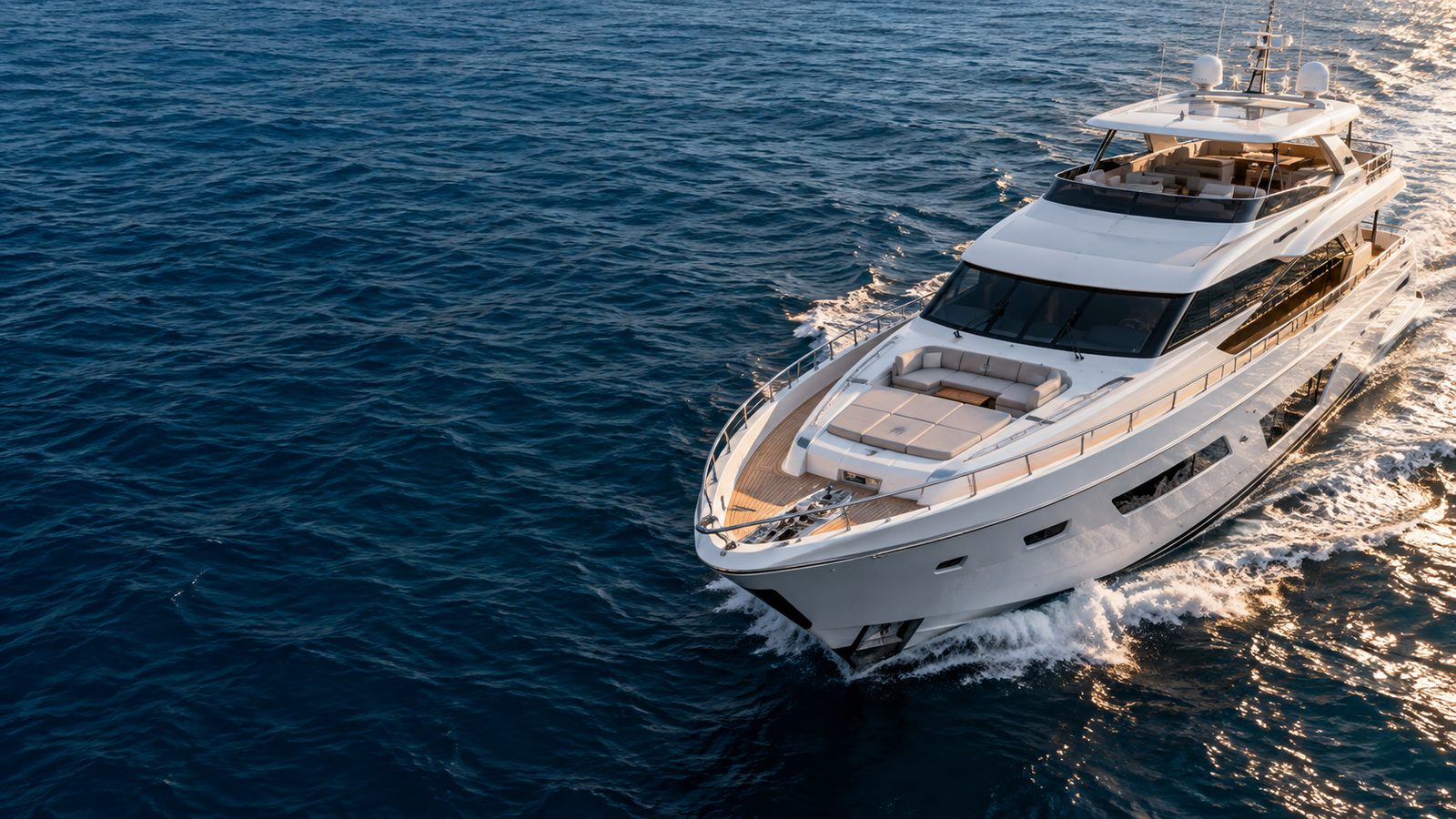
What a painted hull is actually made of
Painted topsides on a yacht are a layered system, not a single coat of color. Underneath is the fairing and primer that make the hull smooth. On top of that sits a color coat, which carries the pigment, and over it a clear or high gloss finish layer. Many two part polyurethane systems, including the well known names in yacht paint, are built this way, and the surface you see and touch is the outermost layer.
That outermost layer is what takes the abuse. Sun, salt, rain, humidity, wash brushes, fender rub and polish all act on it. When it wears, the paint underneath still looks fine up close but the hull loses its mirror depth. The color can look flat, the reflections become soft and wavy, and the surface may feel slightly rough or chalky under the hand.
Painted hulls differ from gelcoat in an important way. Gelcoat is a thick resin layer that can lose a little material in each polish and still have plenty left. A painted topside has a far thinner protective layer, and once it is gone, there is no more clear to polish. That single fact drives most of the advice on this page.
Why painted topsides go dull
Ultraviolet light is the main driver. Over years of South Florida sun, UV breaks down the surface of the clear layer, leaving it microscopically rough. Rough surfaces scatter light instead of reflecting it, which is why the hull looks dull even though the paint color has not changed. Dark colors such as black, navy and deep blue show this fastest because every flaw shows against the dark background.
Contamination adds to it. Salt spray dries on the surface and leaves a film. Exhaust soot, airborne fallout from industrial and boating areas, and the iron particles that settle from the air bond onto the finish. Without regular washing and protection, these build up into a haze that no ordinary rinse removes.
Washing and polishing habits can wear the finish faster than the weather does. Abrasive towels, gritty sponges, strong detergents and repeated aggressive compounding strip away the clear layer a little at a time. Pressure washers held too close can lift edges and damage thin spots. See our guide on avoiding pressure washer damage for the safe distances and angles.
Heat and humidity matter as well. Boats kept in the water in warm, humid conditions grow a thin film of biological growth on the surface, which holds moisture against the paint and speeds up dulling. Sunscreen, chemical cleaners and dock cleaners can leave stains that cloud the surface if they are not rinsed promptly.
Dull, chalky or faded: reading the signs
Not all dullness is the same, and the type tells us what we are dealing with. A hull that looks dull but feels smooth, and shines up quickly with a test polish, has surface contamination or light oxidation. That is a good outcome, and a careful polish can usually bring it back.
A chalky hull leaves a colored residue on a damp white cloth when you rub it. That residue is the paint itself breaking down. Chalking means the clear layer is gone or nearly gone in that area and the color coat is now being worn away. Polishing a chalky surface removes more of the very layer you are trying to preserve, so we go gently and set expectations carefully.
A hull that has faded unevenly, with one side or a high sun exposed area lighter than the rest, tells us where the UV load has been heaviest. The tops of rail caps, flybridge sides and the sunny side of a hull in a slip often show this first.
Hairline cracking, crazing, peeling edges or bubbles are a different category. Those point to a paint system that has failed in adhesion or flexibility, and no polish will fix them. If you see them, be prepared for a conversation about repainting or localized repair rather than detailing.
Safe polishing limits on painted surfaces
The golden rule for painted hulls is to use the finest abrasive that will do the job, and to stop as soon as the surface looks right. Heavy compounding on thin clear is how a repairable hull turns into a repaint candidate. A fine finishing polish with a soft pad, worked at a gentle speed, often restores a surprising amount of depth because it removes only the roughest top layer.
Before any machine work, a careful detailer will wash and decontaminate the surface. Clay or a similar decontamination step lifts bonded particles that would otherwise be dragged across the paint by a pad. Many hulls that look oxidized are cleaner than they seem once this step is done.
We then try a small test area. A patch a foot or two square, polished with the gentlest combination, shows how the paint responds and how much clear is likely to be left. If the paint tolerates it, we continue. If the pad turns the color of the hull, the paint is chalking, and it is a signal to stop and talk, not to push harder.
Edges, raised lines, corners and anywhere the paint looks thin are protected or avoided. Heat is managed carefully, because paint softens and can burnish or cloud under a spinning pad. We would rather leave a touch of dullness than burn through the topcoat.
How we decide between polishing and repainting
Polishing is the right call when the color is even, the surface is smooth, there is no chalk on a damp cloth, and a test spot clearly improves. In that case a full polish and a protective layer can add real life to the hull for a reasonable time, and it keeps the existing paint in service.
Repainting becomes the honest recommendation when the paint is chalking heavily, when the clear is worn through in patches, when there are cracks, peeling or blistering, or when previous polishing has used up what was left. A repaint is a major job done in a boatyard under controlled conditions, not something done at the slip, and it should be planned with a paint shop. We can help you judge whether you are at that point and what to ask a paint shop.
There are in between paths. A hull may have good paint on most areas and thin paint on a few, such as the rail edges or the sun facing flybridge. We can polish the sound areas gently and flag the weak spots so they are watched, protected or addressed in a later repaint. Sometimes a detailer is best used to extend the life of a paint job for a season or two while an owner plans the repaint around a haul out and a schedule that suits the boat.
Our painted topside care service is built around this approach: protect what is there, and tell you plainly when it is time to repaint.
What does not work on a dull painted hull
Some popular fixes do more harm than good. Heavy rubbing compound intended for gelcoat, used with a wool pad, can cut through a painted topside quickly. Household abrasive cleaners and magic erasers leave scuffing that is hard to polish out. Cleaners with strong solvents can soften paint or leave a streaked film.
Wax that is applied over a dull surface only hides the problem for a short time. It can make the hull look wet for a few weeks, but it does not remove the roughness that is causing the dull look, and the underlying issue returns. Waxes with cutting agents behave like a mild compound and should be used with the same care.
Car paint products are another trap. Automotive polishes and coatings are formulated for a different paint and a different environment. They are not tested for long exposure to salt water, constant UV and the movement of a boat hull. Marine specific products and methods give better and longer lasting results.
Finally, a quick coat of clear from a spray can is a mistake we see now and then. It rarely bonds well to a weathered surface, never matches the original finish, and usually has to be sanded off again before any proper work can be done.
Protecting a painted hull after polishing
A polished painted hull is fresh and exposed. Without protection it will begin to dull again, and it will do so faster if it sits in direct sun at a slip. The protective layer is what slows that down and makes washing gentler.
Options include a quality marine wax, a synthetic polymer sealant, or a ceramic coating suited to painted finishes. Each has strengths. Wax is easy to apply and refresh, and a sealant lasts longer. A ceramic coating forms a harder surface and can resist contamination better, but it demands a properly prepared surface and a careful application. Our comparison of wax, sealant and ceramic goes through the trade offs, and our ceramic coating service page explains how that product is applied to a boat.
Whichever layer is chosen, the surface needs to be compatible with it. Some paint manufacturers have guidance on products for their finishes, and we follow that where it exists. If your hull has a particular paint brand and you know the name, tell us when you call.
Routine care matters as much as the protective layer. A fresh water rinse after use, a soft mitt wash with a gentle boat soap, and prompt cleanup of stains and sunscreen prevent most of the wear that dulls paint.
Color specific concerns
White and light hulls hide imperfections better, but they show yellowing and stains. Their paint tends to chalk quietly, and the evidence is the residue on a cloth rather than a visible color change. Regular washing and protection keeps those hulls in good shape for a long time.
Dark hulls, from black to navy to deep green, are the most demanding. Every swirl, wash mark and dust trace shows. Heat builds up on the surface in the sun, which speeds paint aging and makes polishing more delicate. Washing in shade, using a very clean mitt, and drying carefully matter far more with a dark hull.
Metallic and pearl colors have flakes in the color layer, and polishing them too hard can reveal or disturb the flake pattern. They also make a mismatch in a spot repair easy to spot. A conservative approach pays off with these finishes.
Two tone hulls and boot stripes introduce edges and tapes that need protection during polishing. Boot stripes in particular sit at the waterline and take daily contact with fenders and wakes, so they are often the first area where the finish wears through.
What we need from you when you call
The more we know about the paint, the better the advice. Tell us the paint brand if you know it, the age of the paint job, the hull color, and whether it has been polished or coated before. Tell us if there is chalking, peeling, cracking or touch up paint. Photos in daylight, one wide and one close, help us understand how the finish looks.
We will ask where the boat is kept, whether it sits in a covered slip or full sun, and how often it is washed. That tells us a lot about the type of wear.
Pricing is by phone only, and a paint finish with unknown condition calls for an on-site look before we commit to a plan. There is a service call charge, which we explain on the phone before anyone is sent. During the visit we do a test area, check the paint response, and then explain what we can and cannot improve.
If the answer is that your hull needs a repaint, we will say so, and we can help you think through timing, what to ask a paint shop, and how to keep the existing finish presentable until the work is done.
Examples from the dock
A white hull on a sportfish looks flat and slightly gray on the sun side. A damp white cloth picks up no color. A test polish brings back clear reflections in a few passes. The plan is a gentle polish of the whole hull and a sealant, with the owner reminded to keep up with washing.
A dark blue motor yacht has a hull that looks hazy and washed out. The cloth shows a trace of blue chalk. We try a small test with a very fine polish, find the clear is thin, and recommend a light touch now and a repaint conversation at the next haul out.
A hull with a spot of crazing near the bow and bubbling at a rail edge is beyond polishing. The detailer's role is to clean it, protect what is sound, and recommend a paint shop assess the failing areas.
Each of these starts the same way: a phone call, a description, and an honest assessment of the finish before any work begins. If you are unsure which of these describes your boat, call and talk it through with us.
Questions people ask
Can a dull painted hull always be restored by polishing?
No. If the dullness comes from surface contamination or light wear in the clear layer, a gentle polish can restore depth. If the paint is chalking, worn through, cracked or peeling, polishing cannot rebuild what is gone and may do harm. A test spot tells us which situation you have before any large area is touched.
How do I check whether my paint is chalking?
Dampen a clean white cloth and rub a small area of the hull with light pressure. If the cloth picks up color matching the hull, the paint surface is breaking down. A cloth that stays clean suggests the finish is intact and the dullness is from dirt or light oxidation. Tell us what you find when you call.
Is it safe to use compound made for fiberglass on painted topsides?
Usually not. Gelcoat compounds are made to cut a thick resin layer, and painted topsides have a much thinner protective clear. A heavy compound on a wool pad can cut through quickly and leave a repaint as the only repair. Painted surfaces need the finest abrasive that works, tested on a small area first.
Will a ceramic coating make a dull painted hull shine again?
A coating alone does not remove dullness. It adds a harder protective surface over whatever is beneath it, so the paint must first be cleaned and polished to the best condition it can reach. Coating a rough or chalky finish locks in the problem. Surface preparation is the step that decides the result.
When is repainting the better choice than more polishing?
When the paint chalks heavily, the clear is worn through in patches, there is cracking, bubbling or peeling, or earlier polishing has left very little material. In those cases further polishing wastes effort and thins the finish. A repaint is done by a boatyard paint shop, and we can help you judge when you have reached that point.
Can you tell me if I need a repaint without seeing the boat?
We can give a good first opinion from your description and daylight photos, but the real answer comes from an on-site test. Quotes are given by phone, and complicated jobs need a visit first. There is a service call charge, explained on the phone before dispatch. Call us with the paint brand, age and the signs you have noticed.
Describe the situation by phone and we will tell you what the job involves. Quotes are given by phone. Jobs that cannot be quoted without seeing them need a technician on site, and the service call charge is explained on the phone before anyone is dispatched.
(954) 719-3572