Why a pressure washer looks like the right tool
Pressure washers are everywhere. They clean driveways, fences, cars and decks quickly, and the result is immediate and satisfying. A boat covered in salt, algae and grime seems like an obvious candidate. Pointing a jet at a dirty hull and watching the grime disappear is tempting, and many marinas have owners who use them regularly.
The problem is that boats are not driveways. A boat is a precise assembly of different materials, each with its own tolerance for force. Gelcoat, paint, teak, canvas, clear vinyl, sealants, rubber, bearings, electrical connections and fabrics all behave differently under a jet of water. Surfaces that handle pressure well, such as concrete, are rare on a boat. Most surfaces are softer than they look, and most joints depend on seals that were never designed to resist a concentrated jet.
There is also an invisible side to pressure. Water that is forced into a seam or fitting does not always come back out. It moves along gaps, into cores and behind trim, where it stays damp. Damage from trapped water shows up weeks or months later as stains, odors, mildew, corrosion or soft spots, long after the pressure washer is forgotten.
None of this means that every use is a disaster. Professionals sometimes use controlled pressure on specific surfaces, with the right nozzle, distance and experience. The point of this guide is that owners should not use a household pressure washer on a boat as a general cleaning tool, and should understand what is at stake before they do. Our guide on how to wash your own boat describes the gentler approach.
Teak: the most common victim
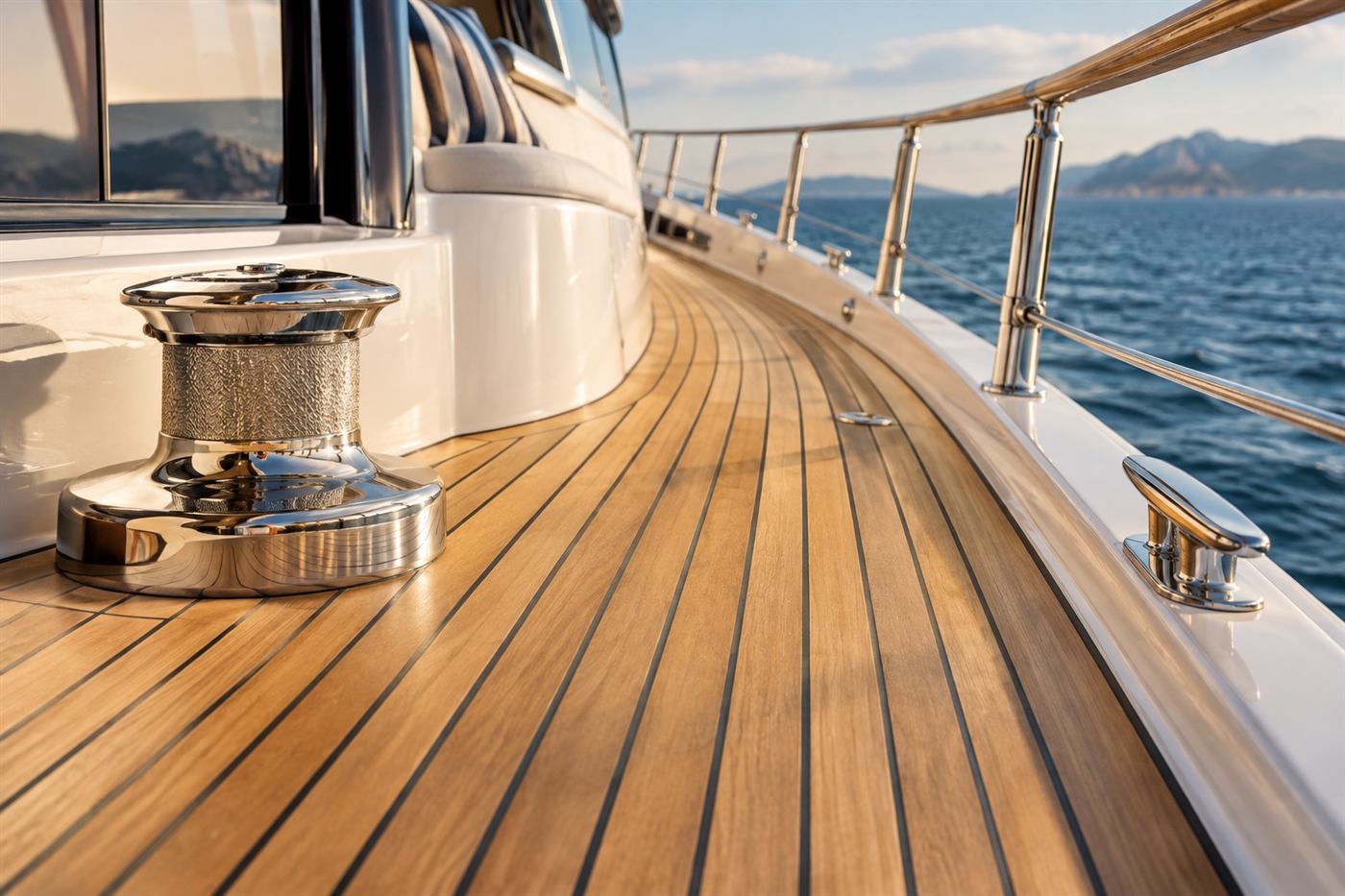
Teak is the surface most often damaged by pressure washing. As described in our guide on protecting teak between details, teak has soft and hard growth bands. A pressure jet strips the soft bands quickly and leaves the hard ones raised, creating a ridged surface that looks clean at first and then holds dirt and moisture.
Each time teak is blasted, a layer of wood is lost. Teak decking is often fairly thin, depending on how the deck was built, and it cannot be replaced casually. A deck that has been pressure washed repeatedly can end up thin, with fasteners and plugs standing proud. In severe cases the planks need replacing.
The caulk between planks is also vulnerable. Pressure can tear or lift the sealant, which opens paths for water to reach the deck core. A seam that was sound before can fail after a single session, and water below a teak deck can lead to rot in the core and damage to the structure.
Gray, weathered teak tempts owners most, because it looks dirty and a jet makes it look bright immediately. The cleaner appearance is mostly the result of removing wood. A gentler cleaning and brightening process, done by hand along the grain, removes discoloration without removing the wood. Our page on gray weathered teak explains the options.
Seams, sealants and bedded fittings
A boat is held watertight by sealants and gaskets: around windows and ports, under deck hardware, along rub rails, at hull and deck joints, around hatches, and in the seams of a teak deck. These materials are designed to resist water that falls, splashes and runs over them. They are not designed to resist a narrow, high-force jet.
A pressure jet can lift the edge of a sealant bead, push water behind it, and cause the sealant to fail early. It can force water around window seals and into the interior, where it leaves stains on headliners and cushions. It can drive water into hatch gaskets, deck fittings and stanchion bases, leaking into the core or lockers below.
The damage is often not obvious at the time. The deck looks clean. The window looks clean. A week later there is a stain on the ceiling, or a musty smell, or a patch of lifting sealant. Owners rarely connect the two events. If you find a new leak after a wash with pressure, that is likely the cause. Our page on leaking hatch stains explains how water paths work below deck.
Resealing is repair work and belongs to a marine repair professional. It involves removing old sealant, cleaning the joint, and applying the right product for the material. This is time-consuming and not part of a detail. Avoiding the damage in the first place is much simpler.
Canvas, clear vinyl and fabric
Canvas and clear vinyl are among the most vulnerable parts of a boat. Biminis, covers, enclosures, sail covers, cushions and upholstery are made from fabrics and plastics that are stitched, bonded and coated. A pressure jet attacks all of those features.
On fabric, pressure can break stitching, fray edges and strip the water-repellent finish. Once the finish is gone, the fabric absorbs water and becomes heavier and more prone to mildew. Seams can open and zippers can be damaged. Torn stitching is expensive and awkward to repair.
On clear vinyl, a jet can cause scratches, haze and cracks. Vinyl is already sensitive to sun and cleaning products, and pressure adds mechanical stress. Windows that have been blasted can cloud quickly. Our guide on protecting canvas and enclosures lists safe alternatives.
On upholstery and cushions, pressure drives dirt and water into foam and fabric. Foam holds moisture for a long time, which leads to mildew and odor. Vinyl seams can open, letting water in.
For all of these materials, the right approach is gentle: soft brushes, mild soap, plenty of fresh water at normal hose pressure, and thorough drying. If the fabric is stained, a professional can recommend the right treatment.
Seals, bearings and moving parts
Hidden inside many parts of a boat and its equipment are seals and bearings that keep grease in and water out. A pressure jet aimed at them can defeat that protection. Water forced past a seal washes out grease and gets into the bearing, where it causes rust and wear.
This applies to outboard lower units, steering components, trailer wheel bearings, winches, windlass bases, thrusters, trim tabs, pumps, and the seals around shafts and rudders. Trailer bearings are a classic case. A hot bearing hit with cold water can draw water past the seal as it cools, which shortens bearing life.
Electrical and electronic equipment is at risk too. Pressure can force water into connectors, switch panels, lights, speakers and navigation gear. Moisture in electrical connections causes corrosion, intermittent faults and in some cases hazards. If equipment has been soaked, have it checked by a qualified marine electrician before relying on it.
Engines and engine rooms are not places for pressure either. Air intakes, alternators, sensors, wiring harnesses and gaskets can all be harmed. Follow the manufacturer's instructions for cleaning engines and for flushing cooling systems. Our guide on how to rinse a boat after saltwater use notes that flushing follows the manual.
If a part has moving components and seals, treat it gently. A hose with a soft nozzle and a damp cloth do the job without the risk.
Gelcoat, paint and non-skid
Gelcoat and paint are tougher than canvas, but they are not invulnerable. A tight jet at close range can mar a soft or aged surface, especially around chips, cracks and thin spots. Where gelcoat has worn thin, pressure can expose the layer beneath or lift small areas.
Painted surfaces are more delicate. Two-part paints on hulls and topsides can be damaged by pressure around edges, decals, lettering and areas where the paint is already compromised. A jet that lifts a corner of a decal or a chip in the paint will keep working at it and make the damage larger.
Wax and sealant are also stripped by pressure and by the harsh detergents that often go with it. A boat washed with a pressure washer and a strong degreaser may be very clean but have no protection left. The next round of sun and salt then hits unprotected surface. Our guide on wax, sealant and ceramic compared describes what protection does.
Non-skid deserves a mention. Owners often use pressure to blast dirt out of the texture. Moderate use may seem fine, but repeated pressure wears down the pattern, reducing grip. A worn non-skid deck is a safety issue, and it is hard to restore.
Water pressure can also lift or crack aging gelcoat, and it can strip fresh coatings and films before they have fully cured. If you have had any recent work done on the boat, wait and ask before using any pressure at all.
Why damage often shows up later
One reason pressure washing keeps happening is that the harm is delayed. A boat pressure washed on Saturday looks wonderful on Saturday. The owner is pleased, the neighbors admire it, and nothing seems wrong. The consequences appear gradually, which makes it hard to connect cause and effect.
Teak that was blasted looks bright for a few weeks and then darkens faster than before, because the roughened surface holds dirt and moisture. Sealant that was lifted slowly lets in water, and the first sign may be a soft spot or a stain months later. A bearing that took on water develops noise or heat over the next several trips. Canvas with weakened stitching fails in the first stiff breeze. Gelcoat that was marred shows swirls or dullness only when the sun hits it at the right angle.
Humid South Florida conditions speed this up. Water trapped in a seam or behind a panel does not dry quickly in a warm, damp climate, and it supports mildew and corrosion. Salt carried in with the water adds to the problem, since it keeps the moisture active.
This delay is also why people believe the damage came from something else. A leak is blamed on old sealant, a noisy bearing on age, a worn deck on weather. Sometimes those explanations are correct. But when the timing follows a pressure wash, it is worth considering the connection, and telling the technician what was done so that they look in the right places.
If you are unsure, being open with your detailer or mechanic helps. They are not there to judge. They want to find the real cause, and knowing the history shortens the search.
Your own safety
Pressure washers are not harmless to people. A jet at close range can cut skin and cause injection injuries, and kickback from the wand can cause falls on wet, sloping decks. On a boat, where surfaces are slippery and footing is uncertain, the risks are higher.
Electrical hazards matter as well. Pressure washers run on mains power or gasoline engines, and they are used with water on or near a boat that has shore power connections. Keep cords and connections dry, use proper ground fault protection, and never run a pressure washer where its power cord could end up in water. Gasoline engines produce carbon monoxide, which is dangerous in enclosed spaces, including cabins and boat sheds.
Keep the jet away from people, pets and neighboring boats. Spray carries, and so does runoff. Be aware of marina rules, which often restrict pressure washing at the dock for reasons of environment and neighbors. Our guide on dockside detailing and marina rules explains what marinas usually ask.
If you decide that a particular job needs pressure, such as cleaning a trailer frame or a dock, use the correct nozzle, keep a distance, and keep it far from windows, seals, fittings and electronics. And consider asking a professional first.
What to use instead
Gentle methods clean effectively when they are used regularly. A hose with a soft spray nozzle provides enough flow to rinse. A soft wash mitt or brush and a marine boat soap loosen dirt and algae. Microfiber towels dry the surface without scratching it. These tools take a little longer than a jet, but they do not remove wood, strip protection or push water where it should not go.
For stubborn stains, the answer is the right chemistry, not more force. Oxidation, rust, tea staining, mildew, waterline marks and algae each respond to different products and techniques. A technician matches the method to the problem, often using a mild cleaner, dwell time and gentle agitation. Our exterior wash-down page describes the usual approach.
For teak, use a soft brush with the grain and, if needed, a professional cleaning and brightening process. For canvas and vinyl, use mild soap and a soft brush, and rinse well. For non-skid, use a stiff but safe brush and an appropriate cleaner, then rinse. For metal, use polish and cloths. None of these requires pressure.
Regular care reduces the need for anything aggressive. A boat that is rinsed after use and washed regularly rarely needs heavy intervention. That is the real alternative to a pressure washer: consistency.
If it has already happened, and when to call
If you have used a pressure washer on your boat and are worried, take a calm look. Check teak for a ridged texture, caulk seams for lifted or torn sealant, canvas for loose stitching, and windows for new leaks or haze. Look inside for water stains, damp carpet or odors. Check bearings and equipment for odd noises or behavior in the following days.
Do not try to fix things with household products or more force. Document what you see with photos, and call a professional. Some damage can be improved with gentle care. Some needs repair by a marine tradesperson, such as resealing, replacing a section of teak or repairing canvas.
If you are planning to use pressure for a specific reason, ask first. Describe the surface, the equipment and the purpose, and a technician can tell you whether it is safe or whether a different method is better.
Quotes are given only by phone, and more complicated jobs need an on-site visit, with a service call charge explained before dispatch. When you are ready, call and tell us what you have and what you are worried about.
Questions people ask
Is any pressure washer use safe on a boat?
Professionals sometimes use controlled pressure on specific, robust surfaces with the right nozzle and distance. For owners, it is safest to avoid household pressure washers on boats. A hose with a soft spray nozzle and gentle tools clean effectively without risking teak, seals, canvas, bearings or finishes.
Why does pressure damage teak so easily?
Teak has soft and hard growth bands, and a jet strips the soft bands faster, leaving a ridged surface that traps dirt and moisture. Each blast also removes wood that cannot be replaced, and pressure can damage the caulk lines between the planks.
Can a pressure washer cause leaks?
Yes. Water forced against seals, window gaskets, hatch seals and fitting bases can get past them, and lifted sealant can open paths for water. The leak may not show until later as a stain, odor or damp area, so a new leak after a pressure wash is a likely connection.
What about using a low pressure setting?
A lower setting reduces risk but does not remove it, especially at close range or with a narrow nozzle. Teak, canvas, seals and electrical equipment are still vulnerable. A garden hose with a soft nozzle gives enough flow for rinsing without the concentrated force.
How do I clean heavy algae or stains without pressure?
Use the right marine product, give it time to work, and agitate gently with a soft brush. Stains usually respond to chemistry and patience, not force. If a stain does not come off, call and describe it, because a technician can recommend the right method for the surface.
I already pressure washed my boat. What should I check?
Look at teak texture and seams, canvas stitching, clear vinyl, window and hatch seals, and the interior for stains or damp spots. Watch equipment for unusual behavior. Take photos and call, and a professional can help work out what needs attention and what can be improved.
Describe the situation by phone and we will tell you what the job involves. Quotes are given by phone. Jobs that cannot be quoted without seeing them need a technician on site, and the service call charge is explained on the phone before anyone is dispatched.
(954) 719-3572