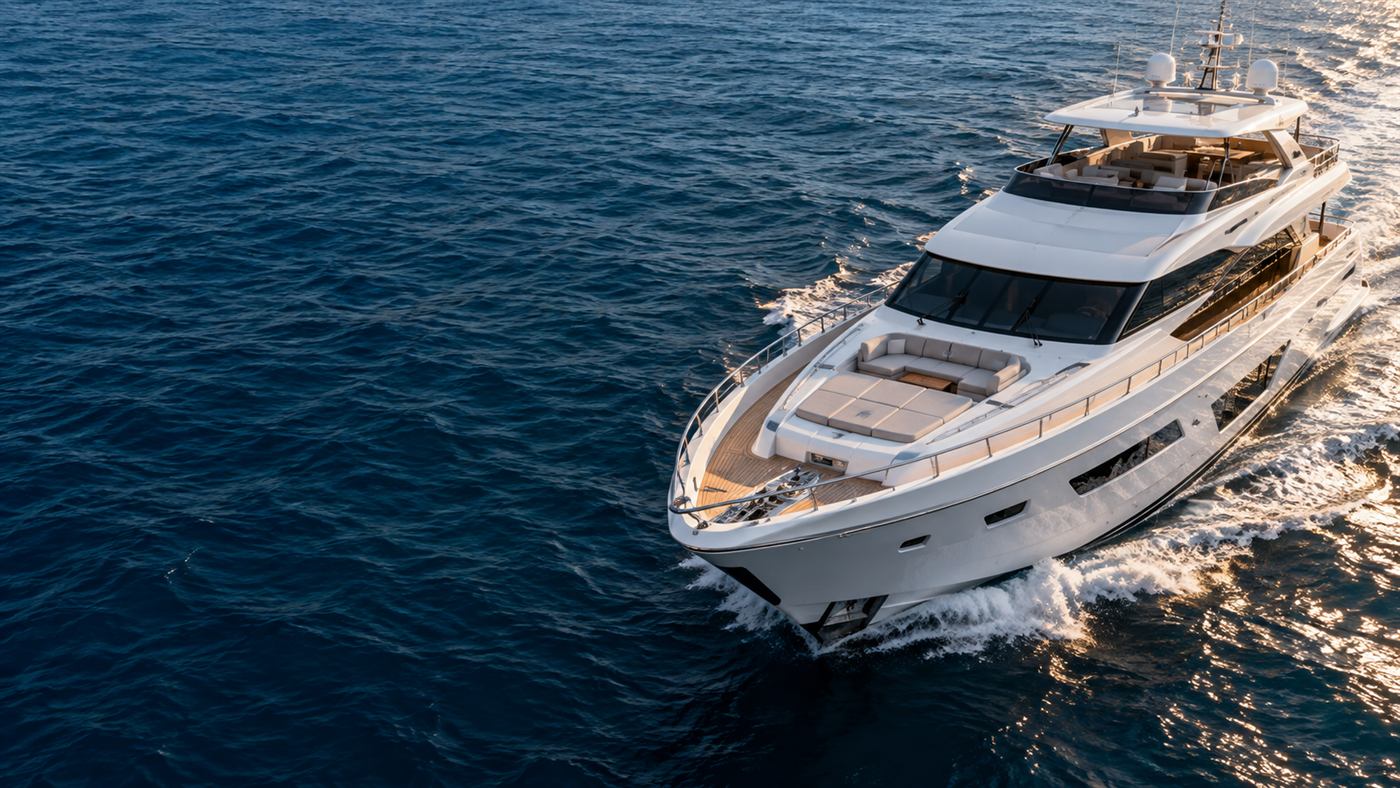
Searching for yacht detailing near me at Hillsboro Inlet? Best Yacht sends a real detailer dockside with before-and-after photos on every job. See our yacht detailing near me page for full marina coverage.
The Hillsboro Inlet corridor sees heavy salt exposure from open-ocean access, vessels here often need more frequent bright work than boats further up the Intracoastal.
Exterior wash-down, compound and polish, ceramic coating, bright work, interior detail, and teak and deck care, scheduled dockside. Call (954) 719-3572.
How a dockside job runs
Assess the vessel
Size, gelcoat condition and scope confirmed before a price is quoted.
Flat price agreed
Quoted before we schedule, not adjusted dockside.
Work the vessel dockside
At Hillsboro, coordinated around your schedule.
Walk-through and sign-off
Reviewed with you before we consider the job done.
Servicing Hillsboro, part of Lighthouse Point / Pompano Beach
We work directly with boat owners and captains docked at Hillsboro, most jobs done dockside without the vessel leaving its berth. For marina rules, gate access or dockage, check with Lighthouse Point's marina office directly; we handle the detailing.
One of the narrower working cuts on this coast.
Hillsboro Inlet sits between Pompano Beach and Lighthouse Point, a narrower, more technical inlet than Port Everglades further south, well known among local boaters for current that runs hard on an outgoing tide and chop that can build quickly when wind opposes that current. Vessels based near this inlet, whether tied up just inside it on the Intracoastal or at docks a short distance up either adjacent canal system, deal with genuinely more dynamic water conditions day to day than boats sitting in a fully sheltered basin further from any inlet.
The inlet's proximity to open Atlantic water means salt aerosol and direct spray reach docks near it more forcefully and more often than at almost any other address in this coverage area outside of Bahia Mar itself. Boats making regular runs offshore through Hillsboro pick up a heavier, more concentrated salt load on each return trip than a boat that stays purely in the Intracoastal, since running directly into or alongside inlet chop throws spray across the whole vessel in a way calm inland water simply doesn't.
The historic Hillsboro Lighthouse, still an active aid to navigation marking this inlet, is a familiar landmark to anyone who boats this stretch of coast regularly, and its presence is a reminder that this has always been a working, technically demanding piece of water, not simply a scenic backdrop.
A heavily used route to the Gulf Stream.
Hillsboro Inlet is one of the more heavily used offshore access points on this stretch of coast, particularly for sportfishing boats and center consoles chasing the Gulf Stream's proximity to shore in this part of Broward County. Vessels running this inlet regularly develop the same kind of heavy-use wear pattern described for Dania Beach's charter fleet, tackle and gear handling wear on cockpit surfaces, near-constant salt spray on towers and outriggers, and a general pace of use that outstrips a purely leisure boat's exposure by a wide margin.
We approach bright work on Hillsboro-based sportfishing vessels with the same understanding brought to any working boat, functional wear on rod holders, ladder rails and tower legs gets assessed honestly alongside cosmetic oxidation, and a maintenance interval here typically needs to run tighter than almost anywhere else in this coverage area given how directly exposed to inlet spray and open water these vessels are on a routine basis.
Correction and coating for the toughest conditions we service.
Gelcoat on a vessel based near Hillsboro Inlet that's gone any real stretch without attention tends to show the most pronounced oxidation we see across this entire coverage area, a direct consequence of the combination of open-water salt exposure and the heavier-than-average offshore use typical of boats based here. Staged compounding on these hulls often needs a more aggressive initial cut than a comparable boat further inland, simply because the oxidation has usually had more concentrated conditions to work with by the time a full correction gets scheduled.
A properly applied ceramic coating is worth serious consideration for any vessel that calls this inlet home long-term, given how much harder the environment works against an unprotected finish here compared with almost anywhere else we service. We talk through the coating decision honestly with Hillsboro-based owners, being clear that even a good coating needs a disciplined wash schedule behind it in an environment this demanding, it's not a substitute for regular maintenance, just a stronger foundation for that maintenance to build on.
Is Hillsboro really more demanding than other marinas you cover?
Among the addresses we service, yes, the combination of inlet exposure and heavy offshore traffic here puts it at the top end of the exposure range on this coast.
Do sportfishing boats here need a different maintenance interval than leisure boats?
Generally yes, a boat running the inlet regularly for offshore trips needs a tighter wash and bright work schedule than one that stays mostly at the dock.
Is ceramic coating worth it for a boat based this close to the inlet?
Given the exposure here, a properly applied coating over corrected gelcoat is genuinely one of the more worthwhile investments we discuss with owners at this specific address.
Where corrosion moves fastest on this coast.
Stainless towers, outriggers and rod holders on Hillsboro-based sportfishing boats take the most direct, concentrated salt spray of any vessels we regularly service, and the crevice corrosion risk around fasteners, welds and fitting bases here develops on a noticeably faster timeline than at a sheltered inland dock. A bright work pass on these vessels needs particular attention to the fitting bases and weld seams where corrosion typically starts first, and the interval between passes generally needs to run shorter here than almost anywhere else in this coverage area to keep genuinely ahead of it.
Teak on flybridge and cockpit surfaces facing directly into inlet spray sees a heavier, more constant salt film too, and benefits from the tightest cleaning cadence we recommend anywhere on this coast, simply because the environment here works against wood and finish alike more aggressively than a sheltered canal or even a moderately exposed marina further from the inlet itself.
What a standing program looks like at this inlet.
For owners keeping a vessel near Hillsboro Inlet long-term, a recurring maintenance program built around this specific environment's demands is less a luxury and more a practical necessity, tighter wash intervals than almost anywhere else we cover, closer attention to bright work and rigging corrosion, and a coating plan revisited more frequently than we'd recommend for a sheltered canal boat given how hard this environment works against an unprotected finish.
Whatever brings a vessel to this stretch of water, a hard-running sportfishing operation working the Gulf Stream regularly, or a leisure boat simply docked nearby, the same underlying approach applies, an honest assessment of what this genuinely demanding environment has actually done to the boat, and a scope of work built to match it rather than a generic package borrowed from a calmer address elsewhere on this coast. Call (954) 719-3572 to talk through your specific vessel near Hillsboro Inlet.
Working around genuinely technical water conditions.
A crew servicing a vessel near Hillsboro Inlet needs to plan around tidal current in a way that's simply unnecessary at a sheltered inland dock. An outgoing tide against an onshore wind can turn choppy fast near the inlet mouth, and any part of a detailing visit that requires a small boat or paddleboard to reach a vessel's outboard side, common on a rafted or face-dock berth, needs realistic timing around slack water or at least manageable conditions rather than fighting genuinely rough water for the sake of convenience. We plan visits near this inlet with that reality built in from the start, rather than assuming standard scheduling applies the same way it would further inland.
Freeboard changes between high and low tide are also more pronounced near an active inlet than in a calm canal, which affects how a crew accesses certain hull sections from a fixed dock versus needing to adjust technique as the water level shifts through a visit. Local knowledge of this specific inlet's tidal behavior, not just general boating knowledge, genuinely matters here in a way it simply doesn't at most of the calmer addresses on this coast.
What constant offshore use means for the cabin.
A sportfishing boat that runs the inlet regularly tracks a genuinely different level of salt-laden humidity and general grime into its cabin and below-deck spaces than a boat that stays mostly at the dock. Boarding and disembarking after an offshore trip, often in wet gear, hauling coolers and gear through companionways, means interior surfaces near entry points take real wear that a purely cosmetic detailing checklist misses. We address these specific wear points directly during interior visits on Hillsboro-based working boats, recognizing that a boat this hard-used needs interior attention on a genuinely different cadence than a boat that mostly just sits at the dock looking good.
Salt-laden air infiltrating the cabin during trips through the inlet also settles into electronics compartments, wiring runs and any exposed metal fittings below deck faster than it would on a boat with less direct open-water exposure, and periodic attention to these less visible areas during a scheduled interior visit catches early corrosion signs before they become a genuinely expensive repair rather than a simple cleaning task.
Do you account for tide and current when scheduling a visit here?
Yes, particularly for any work requiring water-side access to a vessel, we plan around this inlet's specific tidal behavior rather than a generic schedule.
Does a hard-running sportfish boat need different interior care than a leisure boat?
Yes, entry points and below-deck spaces see genuinely heavier wear and salt infiltration on a boat running the inlet regularly, and we address those specific areas directly.
Being honest about where attention pays off fastest here.
Given how demanding this specific stretch of water is, we're direct with owners about where a maintenance budget does the most good. For a boat running Hillsboro regularly, keeping bright work and rigging fittings ahead of corrosion tends to protect both appearance and genuine mechanical integrity more than an equivalent amount spent on purely cosmetic gelcoat polishing that a fresh coat of salt will dull again within days regardless. This doesn't mean gelcoat correction doesn't matter, it clearly does, but understanding which maintenance priorities actually protect long-term vessel value in this specific environment is part of the honest conversation we have with every owner here before recommending a scope.
This same honesty extends to telling an owner when a boat's condition reflects genuine, honorable working wear rather than neglect, a scuffed cockpit sole and salt-dulled hardware on a boat that fishes hard several days a week tells a very different story than the same wear on a boat that simply sat unmaintained, and we're careful not to conflate the two when assessing what a specific vessel actually needs.
Hillsboro Inlet represents the toughest environment we regularly service on this whole stretch of coast, and vessels based here deserve a detailer who understands that reality rather than applying a generic template meant for a calmer marina further inland. That's the standard we bring to every boat we touch at this address.
A shared address between two quieter neighbors.
Hillsboro Inlet sits directly between Lighthouse Point and Pompano Beach, and boats based near the inlet often have practical ties to both cities, docked on a canal in Lighthouse Point but running the inlet daily, or fueling and provisioning out of a Pompano Beach marina before heading out through the cut. This geographic overlap means we regularly coordinate visits that account for a vessel's relationship to both neighboring cities, not just the inlet itself, since a boat's specific dock location just inland of the inlet can sit technically within either city's limits depending on which side of the water it's on.
For owners unsure which city technically governs their specific dock, that distinction usually matters less for detailing purposes than the boat's actual exposure to the inlet itself. A vessel on a quiet Lighthouse Point canal a mile from the cut experiences meaningfully calmer conditions than one docked at a marina directly at the inlet's mouth, and we scope every visit based on the boat's real exposure rather than assuming a uniform standard for the whole inlet corridor.
Timing a visit around when the boat is actually home.
Owners and captains running Hillsboro regularly for offshore fishing often plan trips around weather windows, calm seas, favorable current, good bite reports, and that same weather-driven unpredictability affects when a boat is reliably at the dock and available for a detailing visit. We stay flexible with scheduling for these vessels, understanding that a planned Tuesday appointment might need to shift if an unexpectedly good weather window opens up and the boat heads out instead. Building this flexibility into how we work with Hillsboro-based sportfishing owners tends to produce a better long-term relationship than rigidly holding to a fixed schedule that fights against how the boat actually gets used.
This flexibility runs both ways, a bad weather stretch that keeps the boat at the dock for several consecutive days is often exactly the right window for a fuller correction or coating job that would otherwise be hard to schedule around a busy offshore calendar. Owners who let us know about an unplanned stretch of downtime sometimes get more accomplished during that window than a rigid recurring schedule would have covered on its own.
Can scheduling flex around weather-dependent offshore trips?
Yes, we understand that a good weather window takes priority, and we're happy to reschedule around a trip that comes up unexpectedly.
Does it matter whether my dock is technically in Lighthouse Point or Pompano Beach?
Less than the boat's actual exposure to the inlet itself, which is what really drives the maintenance recommendation regardless of which city's address applies.
Whatever the specific dock, whatever the fishing calendar looks like this season, the underlying commitment stays the same for every vessel based near this inlet, honest assessment of a genuinely demanding environment, and work scoped to match it rather than a generic package that undersells what this stretch of water actually does to a boat. Describe your dock, your typical running schedule through the cut, and roughly how the boat's condition compares to when it was last serviced, and we'll build an accurate plan from there, one that respects both the water you're actually in and the pace at which you actually use it. Owners new to this inlet, whether newly arrived or new to boating altogether, are welcome to ask what a realistic first year of maintenance looks like given how much harder this specific stretch of coast works against a finish compared with a quieter marina elsewhere, and we'll walk through that honestly before any commitment is made, including what a realistic wash interval, bright work cadence and eventual coating timeline should look like for a vessel kept this close to open water, so there are no surprises about pace or cost once the relationship actually begins, and every visit after the first one simply builds on a plan both sides already understand clearly, refined as the boat's real condition and real schedule become familiar to us over time, which is exactly how a working relationship at a demanding address like this one is supposed to develop, one honest visit at a time, at the pace this stretch of water genuinely demands rather than the pace a calmer marina elsewhere would be happy to get away with, because a boat kept at this inlet deserves care that matches the conditions it actually faces every day.
Need detailing at Hillsboro?
Describe the situation by phone and we will tell you what the job involves. Quotes are given by phone. Jobs that cannot be quoted without seeing them need a technician on site, and the service call charge is explained on the phone before anyone is dispatched.
(954) 719-3572