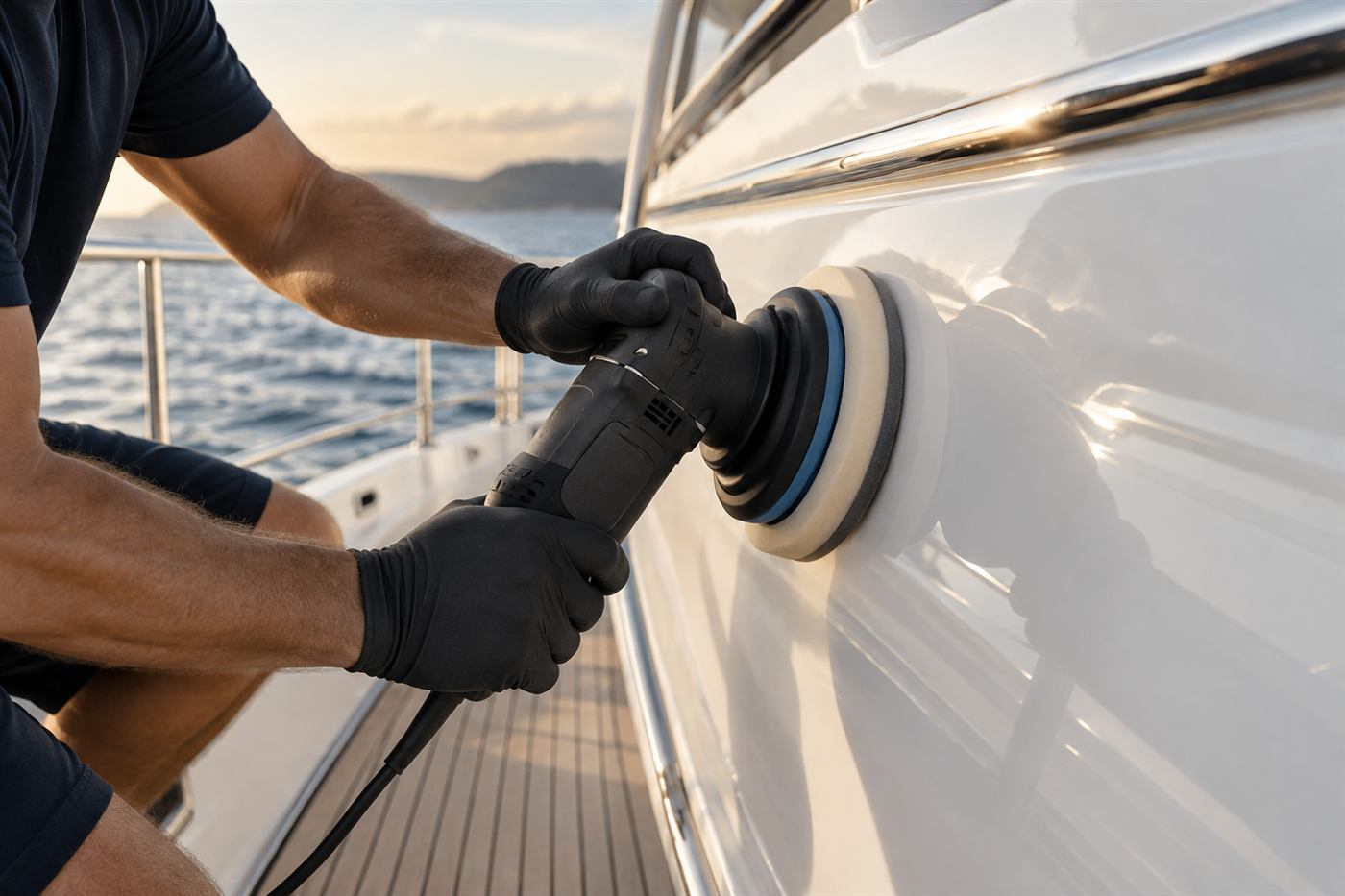
What a between-visit wash is meant to do
A professional detail corrects and protects. A wash in between simply keeps the boat clean so the protection has time to do its job. Salt dries into crystals that scratch and hold moisture. Dust and pollen bond to damp surfaces. Algae and mildew start as a thin film that is easy to remove early and hard to remove later. Regular washing stops these from building up.
Think of the wash as maintenance rather than restoration. It will not remove deep oxidation, rust stains, black teak spots or scratches. If you scrub harder to try to remove them, you usually damage the surface instead. A gentle wash that is done often is far better for the finish than a hard scrub done rarely.
How often depends on how the boat is used and where it sits. A boat that goes out in salt water regularly needs a fresh water rinse after every trip, and a proper wash every week or two. A boat that sits in a slip collects dust, pollen, bird droppings and film, and benefits from a wash on a similar rhythm. Our guide on how often to wash a yacht goes into the factors.
Before you start, check your marina rules. Many marinas restrict washing at the dock, limit the products allowed, or prohibit certain activities such as scrubbing the hull above the water with harsh detergents. Our guide on dockside detailing and marina rules explains what to look for. When in doubt, ask the dockmaster.
Safety first: what to keep off your to-do list
Boat washing looks harmless, but boats have slippery surfaces, uneven decks, moving water and high places. Set a firm rule: stay on surfaces that you can reach safely with both feet planted and one hand on a rail. Wet gelcoat and fiberglass are slick, and soap makes them slicker. Wear non-marking shoes with good grip.
Do not climb on a tower, a hardtop, an arch, a radar mast or the roof of a flybridge to wash it. Do not stand on a ladder at a dock to reach a high point. Do not lean over the side from a finger pier at an awkward angle. Falls from boats cause serious injuries, and a clean surface is never worth one. If an area needs a ladder, a harness, or a lift, leave it to a professional.
Be careful with electricity. Do not spray water into electrical panels, shore power inlets, outlets, or equipment. Do not use electric tools on wet surfaces or while standing in water. Unplug and keep cords out of puddles. If you are unsure about a connection, leave it alone and ask a qualified marine electrician.
Also keep chemicals separate. Never mix cleaning products, especially anything containing bleach or ammonia, because the combination can release toxic fumes. Work in ventilated spaces, wear gloves and eye protection when handling cleaners, and keep products out of reach of children and pets. Read the label and follow the instructions.
Finally, watch the weather. Do not wash during lightning, high wind that drives spray onto neighbors, or intense midday sun that dries soap onto the surface.
Tools and products to gather
A short list of tools covers most of the work. You need a hose with a soft spray nozzle, a bucket or two, a soft wash mitt or boat brush with soft bristles, a long-handled soft brush for reaching the deck, a separate stiffer brush for non-skid, several clean microfiber towels, a chamois or drying blade for glass and smooth surfaces, and a sponge or soft cloth for hardware.
For soap, choose a marine boat wash made for fiberglass, and follow the dilution on the label. Marine soaps are formulated to clean without stripping wax and sealants. Our guide on yacht detailing products explained describes the categories. Avoid heavy degreasers on a general wash, because they can remove protection.
Keep tools clean and separate. A mitt that has touched a dirty bilge or a greasy cleat should not then go on your hull. A mitt dropped on the dock picks up grit that scratches gelcoat, so put it aside and use a clean one. Rinse brushes and towels after use, and dry them before storage so they do not sour.
A few optional items are useful. A soft detail brush helps around hardware and seams. A small spray bottle of fresh water helps rinse tight spots. A foam pad on a pole speeds up work on the sides of the hull. None of these are required, and none replace the basics.
- Hose with a soft spray nozzle (not a pressure washer)
- Marine boat wash soap, diluted as the label directs
- Soft wash mitt and soft-bristle brush
- Stiffer deck brush kept only for non-skid
- Clean microfiber towels and a drying blade or chamois
The order of work
Work from the top down and the inside out, and finish the dirtiest areas last so you do not spread grime. A common sequence is: pre-rinse, deck and cockpit, upper areas, hull sides, glass and hardware, then final rinse and dry.
Start by rinsing the whole boat with fresh water to loosen salt and loose dirt. This step is important because it keeps grit from being dragged across the surface when you start washing. Take your time and rinse every surface you plan to touch.
Wash the upper areas first within reach: the roof of the cabin if it can be safely reached from the deck, the windshield frames, the rails and the cockpit. Dirty water runs down, so washing from the top prevents re-washing the lower surfaces. Then wash the deck, using a soft brush for smooth areas and the stiffer brush for non-skid.
Wash the hull sides in sections, working in the shade if possible, and rinsing each section before soap dries. Use straight overlapping strokes instead of circles, which show up as swirls. Reach only as far as you can safely do so from the deck or a stable position at the dock. Leave the high topsides to a professional if reaching them requires leaning out or standing on anything unstable.
Wash glass and hardware last, using clean towels. Then do a complete final rinse and dry, as described below.
Soft-wash technique on gelcoat and decks
The aim is to let the soap and the soft tool do the work. Wet the surface, apply soap, let it sit briefly according to the label, and agitate lightly. Gentle pressure and clean tools protect the surface and any wax or sealant on it.
Rinse the mitt often in a bucket of clean water, or use two buckets, one with soap and one for rinsing. This removes grit and keeps it from going back onto the hull. If the mitt looks dirty, rinse it again.
Treat non-skid differently. It traps dirt in its texture, so it needs a stiffer brush, but the brush should still be soft enough not to wear the surface. Use light pressure in multiple directions and rinse well. If stains remain, leave them for a professional, because heavier chemistry or hard scrubbing on non-skid can discolor or wear it. Our page on non-skid deck cleaning describes the professional approach.
Take care with teak. Wash with the grain using a soft brush and mild soap, and avoid scrubbing across it, which wears the soft growth bands. Never use a pressure washer on teak. Our guide on protecting teak between details has more.
Do not use abrasive pads, kitchen scrubbers or stiff brushes on gelcoat. They leave scratches that dull the surface. If something does not come off with soap and soft tools, stop and call, rather than escalating.
Rinsing, drying and avoiding water spots
Rinsing is not a quick finish. Soap residue left on the surface attracts dirt and can streak. Rinse thoroughly, from the top down, and check seams, around hardware and in corners where soap collects.
Drying matters in Florida because mineral-rich water leaves spots as it evaporates in the sun. Dry glass and smooth surfaces with a clean microfiber towel or drying blade, working before the water dries on its own. If you wash in sections, dry each section before moving on, and do not let a hose of tap water sit and dry on the surface.
Wash in the shade or in the early morning or evening when possible. A hot surface dries soap and water quickly, causing spots and streaks that are harder to remove than the original dirt. If the surface is hot to the touch, wait or work in smaller sections.
Pay attention to places where water lingers. Drain holes, scuppers, hatch seals and hardware bases can hold water and salt. Clear any debris and make sure water can flow out. Keep an eye on seals and seams during the wash, since a small leak or crack is easier to catch when everything is wet and clean. Report any concerns to a repair professional, and do not try to fix structural issues yourself.
Products and habits to avoid
Household cleaners are a common mistake. Dish soap, bleach, ammonia, glass cleaner, degreasers and abrasive powders can strip wax, cloud plastic, damage stainless and discolor gelcoat. Our guide on why household cleaners damage boat surfaces explains each one.
Avoid pressure washers for general washing. High pressure can force water into seams and bearings, lift sealant, damage canvas and wear wood. Our guide on pressure washer damage on boats describes the risks.
Avoid dry wiping. Wiping a dusty or salty surface with a dry cloth drags grit across it and causes fine scratches. Always wet the surface first.
Avoid washing in direct sun with strong soap that dries on contact. Avoid using the same tools on the deck and the hull without cleaning them. Avoid letting hoses and cords stretch across the walkway. Avoid dumping runoff where marina rules forbid it, and follow local guidance on cleaning products. Our guide on environmentally responsible yacht cleaning describes general principles.
Dealing with fresh stains and bird droppings quickly
Some contamination is better handled right away than at the next scheduled wash. Bird droppings are acidic and can etch gelcoat, canvas and paint if left in the sun. Rinse them early with plenty of fresh water, soften them with a wet cloth rather than scraping, and then wash the area with marine soap. Scraping a dried dropping with a fingernail or a tool drags grit across the surface and leaves scratches.
Suntan lotion, food, drinks and fuel spills should be wiped and rinsed promptly. Sunscreen in particular soaks into vinyl and cushions, where it leaves stains that are hard to reverse. Blot spills instead of rubbing them in, rinse with fresh water, and then wash with a mild marine cleaner suited to the material.
Dock lines and fenders leave dirt marks on the hull. Wash them early with soap and a soft mitt. If marks remain after a gentle wash, they have probably bonded to the surface and need professional treatment. Our page on dock line and fender marks explains how those are removed.
Fuel and oil need caution. Small amounts on a deck can be absorbed with an appropriate pad and cleaned with a marine product, but if there is a leak or a sheen on the water, stop, contain what you can, and follow marina and local rules for reporting. Do not wash fuel or oil into the water. This is a safety and environmental matter, not just a cleaning one.
A short habit helps: when you board, glance at the deck for fresh spots, and clean them immediately. Small problems handled the same day rarely become large ones.
A sample routine you can adapt
Every boat differs, but a basic routine works for many owners of mid-size boats. After each saltwater trip, rinse the whole boat, with extra attention to hardware, windows and the swim platform. Once a week or every other week, do a full wash: rinse, soap, soft mitt, rinse, dry. Once a month, check the condition of sealant on the hull sides and the state of canvas and seals, and note anything that needs attention.
Keep a simple log with dates and observations. When you call a professional, the log tells the technician what has been done and when. It also helps you notice trends, such as stains that return in the same place or areas that dull faster than others.
Use the same sequence each time so that nothing is missed. Many owners keep a small kit aboard with a mitt, a brush, towels and a bottle of marine soap, so the wash is easy to start. The easier it is, the more likely it is to happen.
If you share the boat with family or crew, write down the rules: no household cleaners, no pressure washers, no climbing on high structures, and no scrubbing at stains without asking. Clear rules protect the boat when you are not there.
When to stop and call a professional
A good wash reveals problems. Once the surface is clean, you can see oxidation, stains, rust, algae, scratches and worn areas that were hidden by dirt. That is useful information, not a reason to scrub harder.
Call a professional for chalky or faded gelcoat, yellowing, black streaks that return after washing, rust stains, teak that has gone gray or black, pitted or hazed metal, cloudy isinglass, strong odors, and anything that requires climbing or other gear. These problems have causes and fixes that go beyond soap and water, and rushing them can make them worse.
Also call if you find damage while washing: a crack, a soft spot, a loose fitting, a leaking seal, or a wet deck. A detailer can point out where a repair is needed, but cleaning will not fix it.
When you call, describe what you found and where. Quotes are given only by phone, and more complicated jobs need an on-site visit, with a service call charge explained before dispatch. A clean boat makes the assessment easier, so your wash is also good preparation for the professional visit. When you are ready, call and tell us what you saw.
Questions people ask
How often should I wash my boat myself?
A fresh water rinse after every saltwater outing is the baseline. A proper wash every week or two suits most boats, with the interval shortened in heavy pollen, bird activity or frequent use. Between professional details, regular gentle washing keeps protection working and keeps problems small.
Can I use dish soap to wash my boat?
It is better to use a marine boat wash. Dish soap is designed to cut grease and can strip wax and sealant, leaving the surface unprotected. It can also leave residue. Use a product made for fiberglass boats and follow the dilution instructions on the label.
Is it safe to wash the tower or flybridge roof myself?
Only if you can reach it safely from a stable position. Do not climb on towers, arches, hardtops or flybridge roofs, and do not use a ladder on a dock to reach high points. Falls cause serious injuries. Leave high or hard-to-reach areas to a professional with the right equipment.
Should I use a pressure washer?
Not for general washing. Pressure can force water into seams, damage sealant, strip wood, harm canvas and stress seals. A hose with a soft spray nozzle is enough for rinsing. If you think a surface needs pressure, ask a professional first.
Why do I get water spots after washing?
Water that dries on the surface leaves minerals behind, and sun and heat make it worse. Wash in shade or at cooler times, work in sections, rinse thoroughly and dry glass and smooth surfaces with clean microfiber or a drying blade before the water evaporates.
What stains should I leave for a professional?
Rust, tea staining on metal, black teak spots, waterline stains, deep yellowing, oxidation and mildew in fabrics or carpet usually need specific chemistry and technique. Scrubbing harder at home can damage the surface. Call, describe what you see, and the technician can tell you the right approach.
Describe the situation by phone and we will tell you what the job involves. Quotes are given by phone. Jobs that cannot be quoted without seeing them need a technician on site, and the service call charge is explained on the phone before anyone is dispatched.
(954) 719-3572