How to use this checklist
This checklist is designed to be used, not just read. Walk the boat with it in hand, tick off what you do, and write notes beside items that need attention. Over a few seasons the notes become a record of your own boat's habits, showing where salt collects, where mildew appears first and which surfaces age fastest.
It is organized by area rather than by frequency, because most owners think in terms of places: the hull, the deck, the cockpit, the cabin. Each section lists the tasks that matter most and the problems worth watching for. A short rhythm guide at the end suggests how often each group of tasks is worth revisiting.
The checklist covers owner-level tasks, meaning things most boat owners can do safely with ordinary tools and marine products. It does not include structural, electrical, plumbing or engine work. Where a task calls for a professional, the checklist says so.
Read product labels before using any cleaner, test in a hidden spot first, and never mix chemicals. Where something is unfamiliar, ask a detailer before trying it. A short phone call can prevent a mistake that costs far more effort to fix.
Hull and topsides
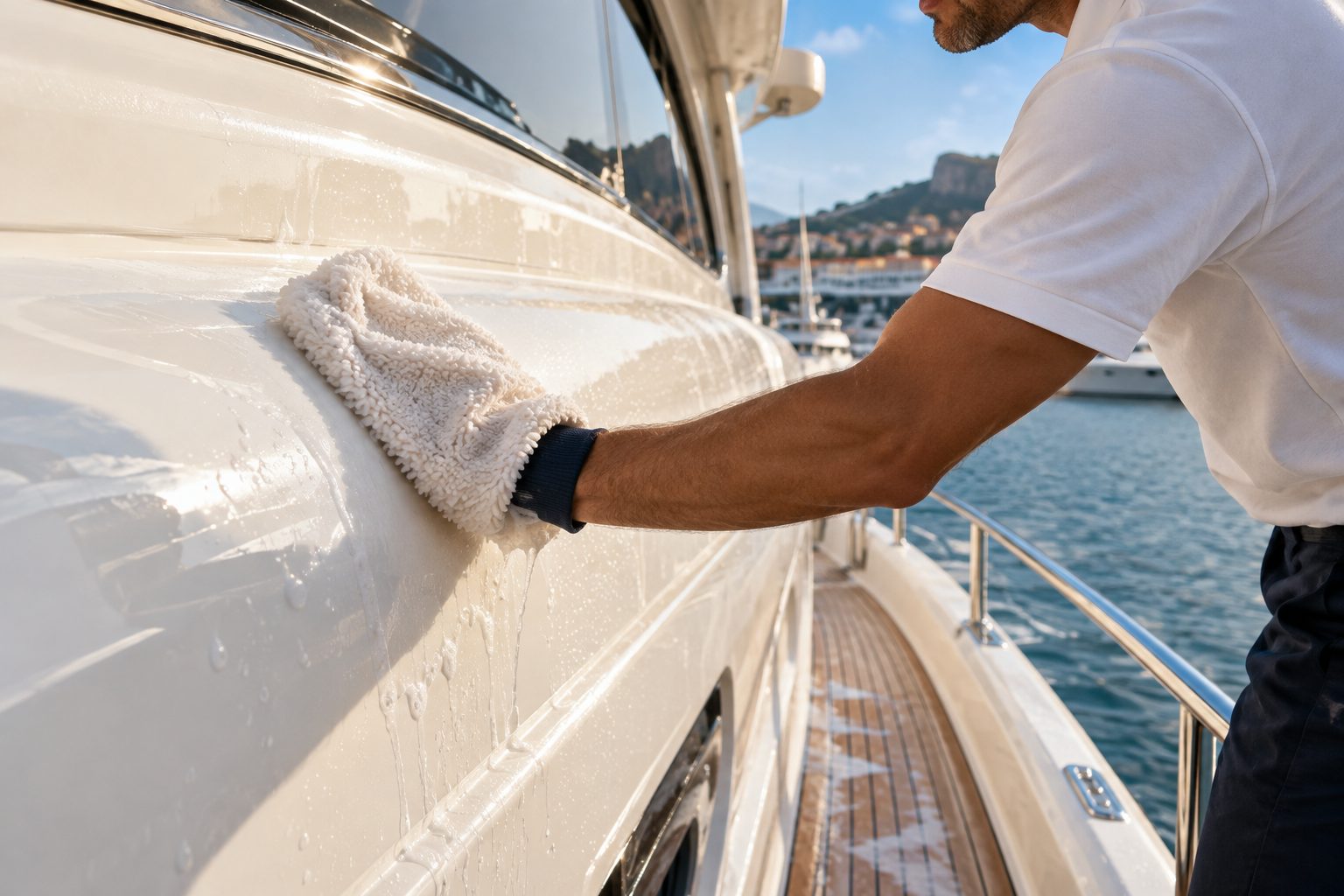
Start at the top of the hull and work down. Rinse with fresh water to remove salt and grit, then wash with a mild boat soap and a soft mitt, using a gentle motion and rinsing the mitt often. Rinse thoroughly and dry with clean towels or a squeegee to avoid water spots.
As you wash, look at the surface. Note any chalky areas, yellowing, stains at the waterline, black streaks from the rails or vents, rust specks, scuffs from fenders and dock lines, and areas where the shine has dulled. Check that water beads on the surface. If it does not, the protection is wearing thin.
Check the rub rail, the transom, the bow and any edges, since these are the thinnest and most exposed areas. Look at decals and numbers, and at seals along the rail. Look at the waterline for growth or staining that has crept above it.
Leave heavy correction, such as machine compounding and polishing, to a professional unless you are experienced. Our guides on gelcoat compounding explained and how gelcoat ages explain why.
- Rinse with fresh water, top to bottom
- Wash with mild boat soap and a soft mitt, rinse often
- Dry to prevent water spots
- Check beading, chalking, staining, scuffs and thin edges
- Note any area for polishing or protection
Decks, non-skid and the cockpit
Decks take the most traffic and the most sun. Rinse first to remove loose grit, then scrub non-skid gently with a soft brush and a suitable cleaner, working in sections and rinsing as you go. Non-skid texture traps dirt, so a bristle brush is better than a flat mitt. Avoid pressure washers aimed at the surface, which can damage the texture and force water into seams.
Look for green or black algae in shaded corners, sunscreen and food stains in the cockpit, and slick spots that suggest a film is building up. Check the drains and scuppers, and clear any debris so water leaves the deck.
In the cockpit, wipe seating, tables and lockers. Pay attention to the corners and seams where crumbs and moisture collect. Clean the fishing or cooking areas, if any, and wipe down the swim platform and ladder. Fish residue and oil on a platform can stain, so clean them promptly. See our page on non-skid deck cleaning for more on this surface.
Check the bedding around deck fittings and the condition of any hatch seals. Stains below a hatch or a fitting inside the cabin often mean water has found a way in.
Stainless, chrome and bright metal
Rinse metal with fresh water after every salt exposure, and wipe it dry with a clean microfiber towel. Every few weeks, wash with mild soap, rinse and dry. This does more to keep metal bright than any polish.
Look for tea staining, rust specks, pitting and white powder on aluminum. If you see light staining, use a cleaner made for marine stainless or the relevant metal, following the label, with the grain and a soft cloth. If you see pitting or movement in a rail or stanchion, have it checked by a professional, because it may be structural.
Check the bases of stanchions and cleats, hinge pins and the underside of fittings, where water and salt collect. Check fasteners for corrosion and looseness. A fitting that weeps rust is trying to tell you something.
Apply a protective product made for marine metal as needed. Avoid chlorine bleach, steel wool and abrasive powders. Our guide on caring for stainless hardware goes into detail on cadence and products.
Teak, wood trim and swim platforms
Teak is a living material in the sense that it responds to sun, water and cleaners. Rinse it with fresh water regularly, and clean with a mild teak cleaner when it turns gray or dirty, scrubbing across the grain with a soft brush, not along it, and rinsing thoroughly. Avoid harsh acids and stiff wire brushes, which wear down the soft grain and leave a ridged surface.
Check for black spots, which may indicate mold or water trapped under a sealer, and sticky or tacky patches, which may indicate failed sealer or leftover product. Check caulk lines between planks for gaps or lifting. If caulk is failing, water can get under the teak, and a repair is better than cleaning over it.
Decide whether you prefer a natural gray patina or a golden color. Golden teak needs more regular cleaning, brightening and sealing. Gray teak needs gentler, less frequent care. Either way, keep it clean and avoid products that leave residue.
Our guides on protecting teak between details and the page on teak deck care explain the options. Heavy restoration and sealing are best left to someone experienced.
Glass, canvas, vinyl and clear panels
For glass, rinse first, then clean with a marine glass cleaner and a clean microfiber towel. Wipe in one direction and finish with a dry towel. Hard water spots from sprinklers or dock rinses can etch glass if left to bake, so remove them early with a suitable product.
For canvas and enclosures, rinse and clean with a mild soap and soft brush, following the fabric maker's instructions. Avoid harsh cleaners, which can strip water resistance. Check for mildew spots, loose stitching and chafe points. Let fabric dry fully before folding or stowing.
For clear vinyl panels, use a cleaner made for them, a soft cloth and plenty of water. Never wipe dry or with paper towels, which scratch. Cloudy, yellowed or crazed panels need professional assessment or replacement. Our page on cloudy isinglass explains the causes.
For vinyl upholstery, wipe with mild soap and water, rinse and dry. Remove sunscreen and body oils promptly, since they stain and dry out vinyl. Use a protectant made for marine vinyl as directed. Our guide on caring for boat upholstery covers fabrics and vinyl together.
Interior: cabin, galley and head
Start by airing the cabin. Open hatches and ports or run fans, and check for any smell on entry. A musty smell usually points to moisture and mildew. Look at cushions, headliners, carpet, lockers and corners for spots, damp or discoloration.
Vacuum floors and carpet, wipe hard surfaces and clean windows from the inside. Lift cushions and check beneath them. Wash or air soft goods as needed. In the galley, clean the stove, counters, sink and refrigerator, and remove perishable food from a boat that will sit unused. In the head, clean the toilet, sink, shower and floor, and check hoses and seals for leaks or odors.
If you find mildew, clean light cases with a suitable marine cleaner according to its label, ventilate well and fix the moisture source. If it is widespread or keeps returning, seek professional help. Our page on interior mildew treatment describes what that involves.
Persistent odors that cleaning does not fix may come from the bilge, holding tank, refrigeration or hidden moisture. Do not mask them with air fresheners, since that delays finding the cause.
- Air the cabin and note any smell on entry
- Check cushions, headliners, carpet and lockers for damp or spotting
- Vacuum, wipe surfaces and clean windows
- Clean the galley, including the refrigerator
- Clean the head, and check seals and hoses
- Treat light mildew per the label and fix the moisture source
- Call a professional for widespread or recurring mildew or odors
Bilge, engine space and the hidden areas
Look in the bilge for water, oil sheen, debris and odor. Small amounts of water may be normal on some boats, but any change in level, an oily film or a fuel smell should be taken seriously. Have a marine mechanic investigate anything that looks wrong.
Owners can wipe up light spills and clear loose debris in accessible areas, using absorbent pads for oil and products intended for bilge cleaning, disposed of properly according to local rules. Heavy bilge and engine room cleaning is a job for a professional who knows what to avoid around machinery, wiring and fuel lines. See our page on bilge cleaning for the scope of that work.
Check lockers and hidden spaces for signs of pests, moisture and corrosion. Look at the area behind and under the galley and head for leaks. Check around hatches and windows for stains.
Do not use cleaners or tools around batteries, fuel and electrical systems unless you know what you are doing. When in doubt, call a qualified marine technician.
Tools and supplies worth keeping aboard
A short, well-chosen kit makes the checklist easy to follow. Keep it in one locker so you can reach it in a minute. The aim is not a large inventory but a handful of reliable items that cover the tasks above without tempting you to improvise with household products that can harm a boat.
For washing, you need a soft mitt or brush, a separate softer brush for non-skid, a bucket, a mild boat soap and a supply of clean microfiber towels. Keep towels for different jobs separate: one set for paint and gelcoat, one for glass, one for metal and one for dirty work such as the bilge or the head. Washing them between uses and avoiding fabric softener keeps them absorbent and non-scratching.
For metal and protection, keep a marine stainless cleaner, a metal polish made for marine use and a wax or sealant you have chosen with care. For the interior, a mild all-purpose marine cleaner, a mildew cleaner made for boats and a vinyl cleaner and protectant suit most owners. For glass, a marine glass cleaner and a squeegee are enough.
Add gloves, eye protection, a small soft brush for tight corners, a flashlight and a notebook. Store chemicals securely with lids tight, away from heat and out of reach of children and pets. Read the labels, and if a product's instructions do not suit your surface, leave it on the shelf.
Replace worn tools. A mitt that has dropped on a gritty dock needs a thorough rinse or retirement, since the grit it picked up will scratch the finish. A towel that is stiff with old product does a poor job. Fresh, clean tools are a quiet part of getting good results.
Mistakes worth avoiding while you work
Some errors come up again and again. Washing in direct hot sun lets soap and water dry on the surface and leave spots, so work in shade or in the cooler part of the day. Using one dirty towel for everything spreads grit. Scrubbing a dry, salty surface scratches it. Using too much product and leaving it to dry makes it harder to remove.
Pressure washers are another common problem. A strong jet can damage non-skid, push water behind seals, strip sealant and lift decals. A gentle hose and a soft brush are safer for routine work.
Mixing products is a risk, as is using a product on a surface it was not designed for. A rust remover meant for steel can stain teak or etch gelcoat. A cleaner meant for glass can cloud clear vinyl. Always check the label and test a small hidden area.
Finally, do not ignore small problems because they look cosmetic. A weeping stain, a soft patch, a new crack or a persistent smell is information. Cleaning over it hides the clue. Note it, photograph it and have it looked at if it persists.
A rhythm for the whole list
Different parts of the checklist need different timing. The table below suggests a rhythm, which you should adjust for how you use and store the boat. Boats in open slips, near fuel docks or lived aboard may need more frequent attention. Boats on lifts under cover may need less.
Treat the intervals as starting points. The notes you keep will tell you where your boat differs.
| Area | Light touch | Fuller attention |
|---|---|---|
| Hull and topsides | Rinse after use, wash every few weeks | Polish and protect when beading fades or haze appears |
| Decks and cockpit | Rinse after use, scrub non-skid as needed | Deep clean and check drains each season |
| Stainless and metal | Rinse and dry after salt exposure | Clean, polish and protect when dulling or spotting appears |
| Teak | Rinse regularly, wipe spills | Clean, brighten and seal when it grays or stains |
| Glass, canvas, vinyl | Wipe and rinse regularly | Deep clean and protect each season |
| Interior | Air and wipe often | Full clean, soft goods and mildew check each season |
| Bilge and hidden areas | Look each visit | Professional cleaning when needed |
What to hand to a professional
Owners can do a lot themselves, but several jobs reward professional skill. Machine compounding and polishing of gelcoat and paint, ceramic coatings and paint protection film, teak restoration and sealing, heavy rust and stain removal, deep cleaning of carpet, headliners and upholstery, mildew and odor treatment, and engine room cleaning are typical examples.
Access is another reason. Reaching the upper hull sides, flybridge, outriggers and the waterline from the dock is awkward and time-consuming, and a detailer has the equipment and method for it. Time is a reason too: a thorough detail can take a team a good part of a day or more, which many owners prefer to hand off.
A good arrangement is a professional restoration to set a baseline, followed by owner upkeep with this checklist and periodic professional visits to refresh protection. Our page on recurring maintenance plans describes how that can be arranged.
A professional should also tell you when something is outside their scope, such as a structural problem, a leak or an electrical fault, and point you to the right tradesperson.
Getting help, and how the call goes
If you want help with any part of the checklist, call and describe the boat. Say what type and length it is, where it is kept, what you have found on your walk-through and what you want done. Your notes from the checklist are a good starting point.
Quotes are given by phone. The scope depends on the boat's size, condition and the services you want. Larger or more complicated jobs may call for an on-site visit first, and there is a service call charge, explained on the phone before dispatch.
Have ready the boat type and length, the marina or slip, your list of concerns and any deadline. Daylight photos of problem areas help.
When you are ready, call the number on this page. A short conversation is the easiest way to turn your checklist into a plan.
Questions people ask
How often should I go through a cleaning checklist?
Use the light-touch items regularly, such as rinsing after use and washing every few weeks, and walk the full list at each season change. Boats in open slips, lived aboard or heavily used may need more frequent attention. Notes from each pass help you tune the rhythm for your boat.
Can I do all of this myself?
Most routine tasks, like rinsing, washing, wiping metal and glass and airing the cabin, are suited to owners. Machine polishing, coatings, teak restoration, heavy stain and mildew treatment and engine room cleaning are better left to professionals. Structural, electrical and plumbing issues need qualified tradespeople.
What should I do if I find something unusual during the walk-through?
Take photos and notes, and avoid aggressive treatment until you know what it is. Rust bleed, pitting, soft spots, new cracks, water stains inside the cabin, and bilge changes should be assessed. A detailer can tell you what is cosmetic, and a repair shop, rigger or mechanic can handle the rest.
Is it safe to use strong cleaners aboard?
Use caution. Strong cleaners can damage gelcoat, teak, canvas and metal, and can give off fumes in a closed cabin. Choose products made for marine use, read the label, test in a hidden spot, ventilate, and never mix chemicals. If you are unsure, ask a detailer before you start.
Does the checklist change for a boat that is rarely used?
Yes. A boat that sits needs regular washing to remove dust, rain spots and bird droppings, and attention to interior moisture, which causes mildew in closed cabins. Use the checklist at each visit, air the boat, and consider a check service if visits are infrequent.
How do I get a quote for help with parts of the checklist?
Quotes are given by phone after a short conversation about your boat and what you want done. Larger or more complicated jobs may need an on-site visit first, and any service call charge is explained on the phone before a technician is dispatched. Call the number on this page with your notes and photos ready.
Describe the situation by phone and we will tell you what the job involves. Quotes are given by phone. Jobs that cannot be quoted without seeing them need a technician on site, and the service call charge is explained on the phone before anyone is dispatched.
(954) 719-3572