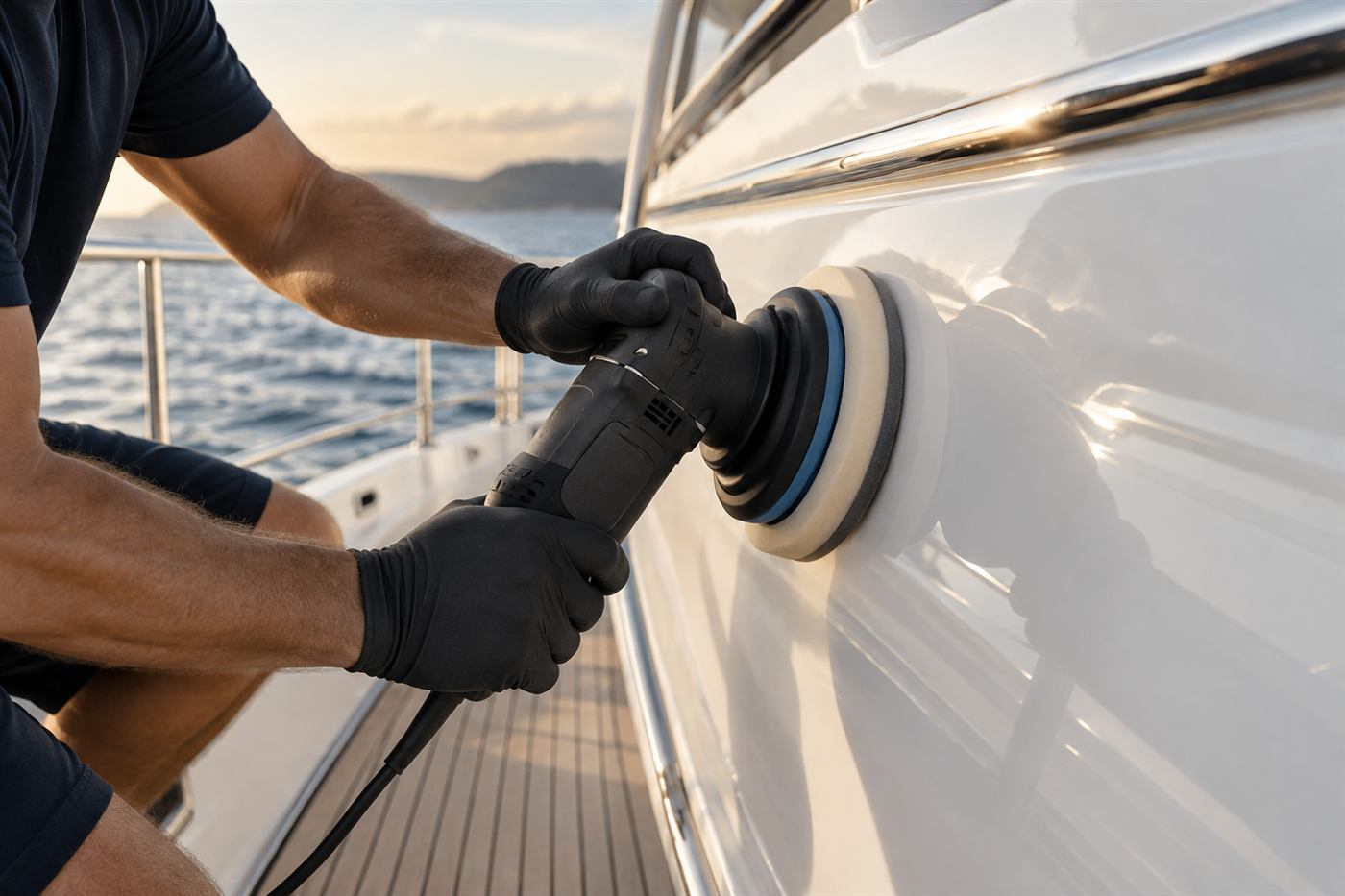
Presentation is part of the listing
Buyers form an opinion of a yacht in the first moments, and much of that opinion is based on presentation. A vessel with a clean hull, bright decks, clear glass, fresh-smelling interior and tidy lockers feels cared for, and that feeling carries into the way buyers think about the mechanical side as well. A boat that looks tired, even if the machinery is sound, invites questions and negotiation pressure that a cleaner presentation might avoid.
That is not a promise about sales results, which depend on the market, the boat, the asking terms and a dozen other things. It is simply a recognition that presentation is within the control of the broker and owner, and that detailing is one of the most direct ways to improve it. Good photographs, good showings and a smooth survey all begin with a clean boat.
This guide is written for brokers and listing agents, though owners, captains and yacht managers will find it useful. It covers when to detail, what to prioritize, how to coordinate access and how to avoid common timing mistakes. Our page on pre-sale detailing describes the service in general terms.
What to detail first: the listing walk-through
Before any work is scheduled, walk the boat as a buyer would. Start from the dock and look at the hull and the overall impression. Step aboard and look at the cockpit, the flybridge, the foredeck and the swim platform. Then go inside: the salon, galley, cabins, heads and engine room. Take notes and photographs of anything that looks tired, stained, damaged or off, including smell.
Sort what you find into groups. Cosmetic items a detailer can address include dull gelcoat, waterline stains, black streaks, gray teak, spotted stainless, cloudy glass, stained upholstery, carpet marks and odors. Items that need another trade include leaking hatches, failed sealant, damaged canvas, mechanical faults and worn hardware. And owner decisions include whether to restore tired teak, recoat the hull or replace a worn item. Telling the owner clearly which group each item belongs to avoids confusion about who is responsible for what.
Be honest about what detailing cannot do. It cleans and restores surfaces, and it can make a worn boat look much better. It cannot hide structural issues, and it should not be used to conceal defects from a buyer or a surveyor. A good detailer will tell you when a problem is beyond cosmetic cleaning, and a good broker will make sure those items are disclosed as the law and professional standards require.
- Walk the boat as a buyer would, outside first and then inside.
- Note cosmetic items, repair items and owner decisions separately.
- Photograph problem areas for the owner and for your own records.
- Never use detailing to conceal defects from a buyer or surveyor.
Timing detailing around photographs
Listing photographs are often the first look a buyer gets, and they are hard to redo. The detail should finish before the photographer arrives, with the boat staged and the weather considered. A clean boat photographed on a gray, rainy day still looks like a clean boat, but one with water spots, dust and streaks does not photograph well in any light.
Plan the sequence. Exterior restoration first, such as compounding and polishing, then protection, then a final wash close to the photo date to remove dust and spotting. Interior cleaning comes before staging, with fresh linens, tidy surfaces and clear counters. Remove personal items and clutter, and decide what belongs in the photographs and what does not. The owner, captain or manager may have to approve what is removed.
Leave a buffer. If a shoot is booked for a certain day and rain or a delay interferes with the detail, you want room to move the shoot rather than photograph a half-finished boat. If a dock is crowded or a berth is awkward, tell the detailer and the photographer in advance so that each can plan their equipment and time. Good communication here saves expensive rescheduling.
Showings: keeping the boat ready day after day
A listing is not shown once. It may be shown many times, to different buyers, over weeks or months. A single detail at the start of the listing is not enough, because a boat sitting at a dock gets dusty, spotted and visited by birds, and an interior left closed up in the humidity can lose its freshness. A plan for upkeep keeps it in showing condition.
Options range from a periodic wash and touch-up to a recurring schedule that includes the exterior rinse, interior wipe-down, glass cleaning and a check of odor. The right level depends on how often the boat is shown and how quickly it deteriorates in its berth. Our page on recurring maintenance plans explains how such arrangements work. For listings with frequent showings, a short refresh before each important appointment is often worth arranging.
Coordinate access with care. Showings are usually arranged on short notice, and the detailer needs access to the boat without disturbing the schedule. Agree in advance who holds the keys, who authorizes entry and how the marina handles contractor access. If the boat is under the care of a captain or a management company, work through them. Never give a contractor access to a client's vessel without the owner's authorization.
Survey day and sea trial: access and timing
Once a buyer is under contract, the survey and sea trial follow, and cleaning and surveys interact. A surveyor needs to see the boat as it is. A fresh detail is welcome, but heavy work that masks defects, such as painting over a repair or coating a stained area to hide it, can raise concerns and cause delays. The honest approach is to clean thoroughly and to leave surfaces accessible for inspection.
Our guide on timing detailing around a survey explains the details, including what surveyors need to see, how to handle a haul-out day and why it often makes sense to do the main detail before the survey and a short touch-up afterward. The key point for brokers is to coordinate dates early so that detailers, surveyors, yard staff and the captain are not competing for the boat.
Be mindful of access to engine rooms, bilges, lockers and any areas the surveyor will open. A clean, accessible engine room makes the survey go more smoothly and shows the boat has been cared for. The page on engine room cleaning describes what is involved. Do not instruct a detailer to clean up evidence of a leak or a spill that the surveyor ought to see. Surfaces should be clean, not misleading.
Working with owners, captains and managers
Brokers rarely do the cleaning themselves, and often the owner is not on site. The captain, a yacht manager or a crew member holds the keys and knows the boat. Detailing goes much better when the broker establishes who has authority to approve the work and the cost, who provides access and who signs off.
Clear communication prevents the usual problems. Tell the owner what you recommend and why, in terms of the buyer's likely view, and let them decide. Tell the captain or manager what is planned and when so that the schedule does not clash with their work. Tell the detailer what is expected and what is out of scope. And keep everyone informed of changes, since weather and showings often shift the plan.
Remember that quotes for detailing come from the detailer, by phone in our case, and the owner or an authorized agent approves them. A broker who recommends a detail and then arranges it on the owner's behalf should be clear about who is paying and who has agreed. For more complicated jobs, an on-site visit may be needed first, with a service call charge that is explained on the phone before dispatch.
What shows up on camera
Photographs are unforgiving in ways that a walk-through is not. Bright light and wide lenses exaggerate water spots on glass, streaks on the hull, swirl marks in dark gelcoat, rust runs below fittings and dust on dark upholstery. A boat that looks fine in person can look tired in a photograph, which is why detailing for photographs needs a closer eye than detailing for a casual visit.
Look especially at reflections. Glossy hull sides reflect the dock, the sky and neighboring boats, and any unevenness in the finish shows in the reflection. Glass should be dry and clear. Stainless should be bright without fingerprints. Decks should be clean and their texture visible. Inside, light surfaces and mirrors show every mark, so the interior wipe-down should be the last thing done before the photographer arrives.
Talk to the photographer about the plan. They may want certain areas staged, particular times of day for natural light, and certain angles that need the dock clear. Coordinating the detailer, the captain and the photographer on the same morning is difficult, so most brokers schedule the detail the day before and a quick final wipe on the morning of the shoot. If the weather turns, a rinse and dry before the shoot is often enough to recover the look.
Common mistakes in listing preparation
The most common mistake is leaving detailing until the last moment. A listing that goes live before the boat is ready tends to be photographed in poor condition, and those images stay in circulation. Next is detailing without a plan for upkeep, so that a boat that looked excellent on photo day looks dusty and spotted by the third showing.
Another mistake is ignoring the smell. Owners get used to the odor of their own boat, and brokers sometimes hesitate to raise it. Buyers do not hesitate, and a musty cabin can end a showing quickly. Raise it kindly and early, and look for the cause. A third mistake is cosmetic work that hides rather than fixes, such as a heavy fragrance over mildew or a quick coat over a stain, which tends to come back and makes buyers suspicious.
A fourth is not telling the detailer about restrictions. Marina rules on outside contractors, product use and working hours differ, and a crew that arrives unprepared may be turned away. Share the requirements in advance. And finally, assuming that detailing replaces repairs. A clean boat with a leaking hatch is still a boat with a leaking hatch, and the surveyor will find it. Detail what can be detailed, and let the right trades fix what needs fixing.
- Leaving detailing to the final days before photographs.
- No plan for upkeep between photographs and showings.
- Ignoring odor because the owner no longer notices it.
- Masking problems with fragrance or quick coatings.
- Not sharing marina contractor rules with the detailer.
Turnaround planning between listing stages
A listing moves through stages: preparation, photographs, marketing, showings, offers, survey, closing and delivery. Each stage has its own cleaning needs, and planning them together saves time and avoids duplicate work. A pre-listing detail brings the boat to a high standard. A maintenance wash keeps it there through showings. A pre-survey touch-up and a pre-delivery clean finish the process.
At delivery, the new owner or their captain will often expect a boat that is clean and ready to use. A final detail after closing, or just before, is a good-will step that leaves a positive impression and is often arranged by the broker. Check the purchase agreement about what is expected, and coordinate with the seller and buyer's representatives about access.
If a sale falls through, or a boat is relisted, a reset detail returns the vessel to showing condition. The sooner it is done after the interruption, the less it has to recover. A boat that sat through a long wait may need a deeper clean than a boat that was maintained along the way, and a conversation with the detailer will clarify what is needed.
What to have ready when you call
A good call starts with a clear description. Give the vessel type, size and condition. Say where it is berthed and what the access is like. Explain the listing timeline, including the photographs, showings and any survey date. List the cosmetic issues you have seen, and say whether the owner has approved the work. Mention who holds the keys and who coordinates access. And if there is a marina requirement for outside contractors, tell us.
With that, we can explain what the job involves, what can be done in the time you have and what should be left to other trades. We give quotes by phone only, and for larger or more complicated jobs we may suggest an on-site visit first. There is a service call charge, explained on the phone before anyone is dispatched. We do not make promises about arrival windows or results we cannot see.
Call when you are ready to plan the listing preparation and we will talk through the sequence, the timing and what makes sense for the boat. If the schedule is tight, tell us at the start and we will be straightforward about what is realistic. Brokers who give us clear information get clear answers, and that is the quickest route to a boat that is ready when the buyer walks aboard.
Questions people ask
Does detailing help a yacht sell?
Presentation matters to buyers, and a clean, bright, fresh-smelling boat photographs and shows better. We do not promise sales results, which depend on the market, the boat and the terms. Detailing is simply one of the more direct ways an owner and broker can improve how a listing looks and feels.
When should the detail be done relative to photographs?
Before the photographer arrives, with a final wash close to the shoot date to remove dust and spots. Restoration work such as polishing and teak care should come earlier. Leave a buffer so that weather or delays can be absorbed by moving the shoot rather than photographing a half-finished boat.
Can detailing hide problems from a surveyor?
It should not, and we would not agree to try. Detailing cleans and restores surfaces. It is not meant to conceal defects, leaks or damage, and covering a problem can cause delays and raise concerns. Clean thoroughly and keep areas accessible for inspection, and make sure known issues are disclosed as required.
How do I keep a listing boat ready for showings?
Plan upkeep, not just a single detail. A periodic wash, interior wipe-down and glass cleaning, or a recurring schedule, keeps dust, spots and odor from building up. For important appointments, a short refresh beforehand is often worth arranging. Agree in advance who authorizes access and who holds the keys.
Who approves the work if the owner is not on site?
The owner or an agent they have authorized, such as a captain or yacht manager. Brokers should confirm who has authority for the work and its cost before anything is booked. We do not give a detailer access to a client's vessel without the owner or their representative authorizing it.
How do I get a quote for a listing detail?
Call us. Quotes are given by phone once we know the vessel type, size, condition, berth and listing timeline. Larger or more complicated jobs may need an on-site visit, and there is a service call charge, explained on the phone before anyone is dispatched. We will tell you plainly what is realistic in the time you have.
Describe the situation by phone and we will tell you what the job involves. Quotes are given by phone. Jobs that cannot be quoted without seeing them need a technician on site, and the service call charge is explained on the phone before anyone is dispatched.
(954) 719-3572