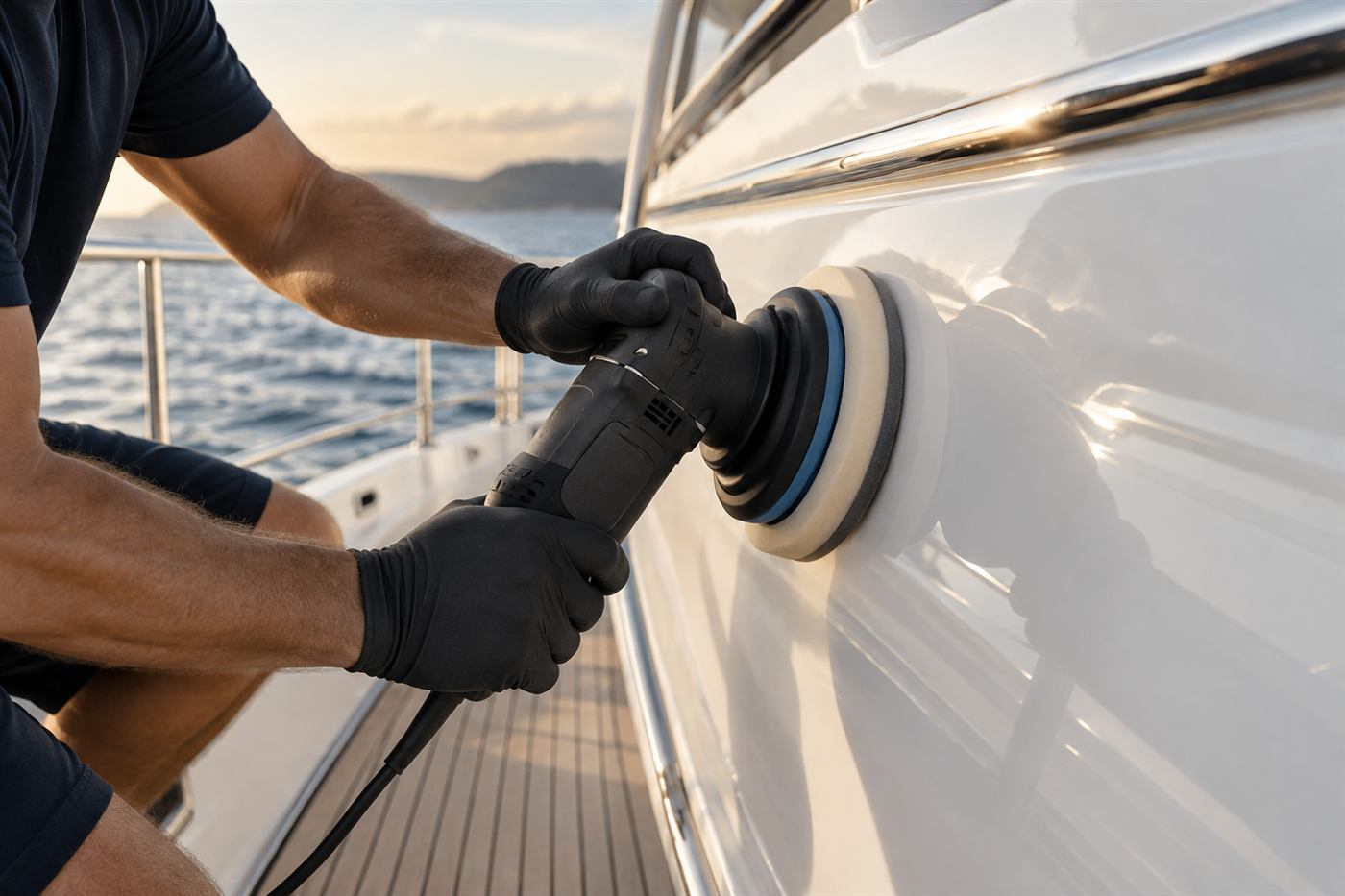
What buyers actually notice first
A buyer walking down a dock sees a boat in layers. The first layer is distance: does the hull look bright, are the lines clean, is the canvas intact, does anything hang loose. The second layer is close inspection: gelcoat texture, stainless, teak, glass, upholstery, the smell when the cabin door opens. The third layer is hidden: engine room, bilge, wiring, hull condition. A surveyor will cover that third layer in detail. The first two layers are what a detailer influences.
People tend to treat surface condition as a clue about everything else. A boat with dull, stained gelcoat, rust streaks and a musty cabin raises a question in the buyer's mind about what else has been neglected. A boat that is clean, protected and fresh-smelling suggests an owner who paid attention. That is a feeling, not a fact, and a good buyer will still check the details. But feelings influence how closely buyers look and how they approach a conversation.
None of this means detailing can hide real problems. Experienced buyers and surveyors are good at spotting cosmetic cover-ups. Polish applied over an unaddressed blister, or fresh dressing on a cracked cushion, tends to backfire when it is found. The honest approach is to present the boat as it is, in its best true condition, and let repairs be repairs. That is also the approach this page recommends.
Appearance versus value: keeping claims honest
It is tempting to say that a detail adds a certain amount to a boat's sale price. We do not make that claim and you should be wary of anyone who does. A boat's value depends on make, model, age, engine hours, equipment, maintenance records, survey results, the market and the buyer. Appearance is one input among many, and its effect cannot be reduced to a number that applies to every boat.
What can be said is narrower and more useful. Condition and presentation influence how quickly a buyer decides to engage, how long they stay aboard, how much they trust the owner's records, and how negotiation tends to go. A boat that shows well often makes an easier first impression, and a poor first impression can cost a listing attention. Those are effects on process, not promises about price.
Brokers see this regularly, and our guide on yacht detailing for brokers describes how professionals use detailing around listings and showings. Owners selling privately face the same dynamics without a broker's help, so preparing the boat carefully matters even more.
The slow damage that detailing prevents
Most appearance loss on a yacht is caused by sun, salt, humidity and neglect, and most of it is gradual. Gelcoat oxidizes and chalks. Stainless tea-stains and pits. Teak grays and wears. Vinyl chalks, cracks and stains. Canvas mildews. Window seals and sealant lines discolor. Each of these is easier and gentler to correct early than late.
Consider gelcoat. Every polish removes a thin layer of material, and gelcoat is not infinitely thick. A boat that has been regularly washed and protected may never need aggressive compounding. A boat left unprotected for long stretches may need heavy correction, and each correction uses up some of the layer. Our guide to how gelcoat ages explains why steady, light care preserves more of the surface than occasional rescue work.
Metal and teak follow the same pattern. Routine rinsing, cleaning and protection of stainless prevents deep pitting. Regular care of teak avoids the rough, thin planking that comes from repeated hard scrubbing. See caring for stainless hardware and protecting teak between details. In each case the principle is the same: small, regular, gentle steps protect the surface, and that is what keeps a boat looking cared for.
Exterior areas that carry the most weight
Some parts of the boat attract more attention than others. The hull sides and transom are seen from the dock, so gelcoat condition and waterline cleanliness matter. The swim platform and cockpit are where people step aboard, so non-skid, teak and upholstery matter there. The flybridge or helm area is where a buyer imagines running the boat, so glass, electronics surfaces and seating get a close look.
Typical items a presentation-focused detail pays attention to include the waterline band, the stainless and brightwork, the canvas and clear enclosures, the cockpit and deck surfaces, the glass, and the boarding area. Each has its own method. See waterline stain removal, bright work and metals and marine window glass cleaning for how those are handled.
It also helps to remember what is not visible from the dock. Rust streaks that run from a fitting, dark stains at hawse pipes and anchor lockers, and black rub marks along the rail are small things that a buyer notices quickly. Fixing a few of those can change the impression of the whole side of the boat.
- Hull sides and transom: gloss, stains, scratches, rub rail.
- Waterline: tannin or algae bands and residue.
- Metal: rails, cleats, ladders, hinges and hatches.
- Cockpit: non-skid, teak, upholstery and swim platform.
- Glass and enclosures: clarity, spots, scratches and seals.
The interior and the smell test
Many sales are made or lost in the cabin. Buyers open the door and register the air before they see anything. A musty or sour smell raises the suspicion of moisture, leaks or neglected systems. A clean, neutral smell suggests the opposite. That makes interior care one of the most useful preparations for showing a boat.
The key point is that real freshness comes from removing the cause, not masking it. Sources include damp carpet, mildew in lockers and on the headliner, a dirty ice box or refrigerator, bilge residue, an unclean head, and old cushions. A detailer cleans accessible surfaces, treats mildew where it can be reached, and reports sources that need a mechanic or carpenter. See odor removal and interior mildew treatment.
Ventilation and humidity control afterward matter just as much. A boat that is cleaned and then closed up in a warm marina for weeks can smell musty again. Our guide on interior humidity control covers habits that keep a cabin fresh between showings, such as air circulation, moisture absorbers and regular visits.
Timing a detail around a listing or showing
Timing is a practical question. Detailing too early lets the boat get dirty again before it is shown. Detailing too late leaves no time to fix surprises. A sensible approach is to plan the main detail before photographs are taken for the listing, and then to schedule a lighter wash and wipe-down before key showings.
Photographs matter because most buyers see the boat online first. Good light, a clean hull, clear windows and tidy cockpit space make the images more honest and more useful. Photographing a boat that has been freshly cleaned does not misrepresent it, as long as nothing is hidden.
A survey is another timing point. A buyer's surveyor will inspect the boat, and cosmetic work done just before a survey should not obscure any conditions the surveyor needs to see. Our guide to survey and detail timing covers how the two fit together. For sellers, the service page on pre-sale detailing describes what such a visit typically includes.
Where detailing stops and repair begins
Honest preparation separates cleaning from repair. A detailer can remove oxidation, stains, mildew and grime and can restore gloss to sound surfaces. A detailer cannot fix a leaking hatch, a soft deck, deep gouges, gelcoat blisters or corroded fittings. These need a repair trade, and attempting to cover them with polish or dressing is poor practice.
If a boat has known repair items, the sensible course is to fix them or to disclose them honestly. Buyers and their surveyors will find most defects, and a seller who discloses problems and shows a clean boat is in a stronger position than one who is caught hiding them. Our guide to gelcoat repair versus detailing explains how to tell which problems fall on which side of the line.
A good detailer will tell you plainly when something is beyond a cosmetic fix. That candor is part of the value. It lets you decide whether to repair first, to adjust your expectations, or to present the boat as is with the condition described clearly.
Habits that protect appearance while you own the boat
The best preparation for a sale begins long before a listing. Rinse the boat with fresh water after use, especially after salt spray. Wash on a regular rhythm suited to the boat's use. Keep a protective layer on gelcoat and metals. Dry or ventilate the interior. Clean up spills, sunscreen, fish residue and fuel promptly. Use gentle products made for boats.
Schedule professional work at sensible intervals. Some boats benefit from recurring visits, while others need seasonal attention. The guide on choosing between weekly and monthly service helps with that decision. A boat that has had steady, gentle care often needs a lighter job at sale time.
Keep records. Notes about what was done and when, along with photos before and after major work, help show that the boat has been looked after. Maintenance history is part of what a buyer weighs, and organized records are easier to trust than a vague memory.
A showing-day checklist for sellers
Showing day is when everything you have done is tested at once. A short routine before each visit keeps the boat consistent, whether it is a broker with a client or a private buyer who walks down the dock unannounced. The aim is not to stage the boat as something it is not. The aim is to let the true condition be seen without avoidable distractions.
Start outside. Rinse any fresh salt or dust, wipe water spots from glass, and check that fenders, lines and shore power cords are neat. Look at the swim platform and cockpit sole, which are the first places a visitor steps. Then go inside. Open the boat early enough to let it air, run the air conditioning, and look in the head, galley and ice box for anything that has changed since the last visit.
Check the small things that buyers handle: hatches, latches, cabinet doors, lockers and drawers should open easily and look clean. A sticky latch or a spotted mirror reads as neglect even when the boat is sound. Remove personal clutter, because buyers need to picture their own use of the space, and clear surfaces make a cabin feel larger.
Finally, leave the paperwork where it can be found. Maintenance records, equipment manuals and receipts for major work are part of the presentation. A boat that is clean and documented tells a consistent story.
- Rinse salt and dust and wipe glass before each showing.
- Air out the cabin and check the head, galley and ice box.
- Make sure hatches, latches and lockers work smoothly.
- Remove personal clutter from visible surfaces.
- Keep records and manuals together and easy to find.
Questions sellers ask about preparation
Owners often ask whether to fix cosmetic flaws before selling or leave them and let the buyer decide. The answer depends on the flaw. Light oxidation, stains, mildew and dull metal are inexpensive in effort to correct and affect first impressions strongly, so they are usually worth addressing. Larger cosmetic repairs, such as repainting a hull or replacing upholstery, are decisions to talk through with a broker, because they depend on the boat's age and market.
Another common question is whether to apply a long-lasting coating before a sale. A coating protects the surface, but a buyer is acquiring the boat, not the coating, and the new owner may prefer their own approach. A good wax or sealant that leaves the hull glossy and the surface clean is often enough for presentation. If you plan to keep the boat for a while, our guide on whether ceramic coating is worth it helps weigh the choice.
Owners also ask about doing the work themselves. Many tasks, such as rinsing and wiping, are reasonable to do yourself. Machine polishing, teak brightening and stain removal can cause damage if done wrongly, and the cost of correcting a mistake can exceed the cost of hiring someone. If in doubt, our guide on how to wash your own boat shows where a careful owner can safely help.
Getting started
If you are thinking of selling in the near future, a short conversation early is useful. Tell us about the boat, the marina, the planned listing date and what you have noticed. Together you can sort out what is cosmetic, what is repair, and what order makes sense. Quotes are given by phone only. If the boat needs a closer look, an on-site visit comes first, and a service call charge applies, which is explained on the phone before anyone is dispatched.
Whether you plan to sell next month or simply want to keep the boat in good shape, the approach is the same: honest condition, gentle methods, regular care. When you are ready, call the number on this page and describe the boat.
Questions people ask
Will detailing increase my boat's sale price?
We do not make that claim, and no one can for every boat. Value depends on the boat's make, age, equipment, records, survey and the market. What detailing does is improve presentation, which affects how buyers react at first sight and how confident they feel. It supports a sale but it does not set a number.
Should I detail before listing or before showings?
Both can make sense. A full detail before photographs gives the listing honest, attractive images. A lighter wash and wipe-down before key showings keeps the boat looking fresh after it has collected dust. The timing depends on how long the boat sits between visits and how active the marina is.
Can polish hide problems from a surveyor?
It should not be used to. Surveyors are trained to find defects, and cosmetic cover-ups often draw more suspicion. Detailing should present the boat honestly in its best true condition. Known problems such as blisters, leaks or soft areas are better repaired or disclosed, because buyers tend to trust sellers who are open.
What if the interior smells musty?
The cause needs to be found and cleaned, not masked. Common sources include damp carpet, mildew on headliners and in lockers, a dirty ice box and bilge residue. A detailer can clean reachable areas and tell you when a mechanic or carpenter is needed. Afterward, air circulation and humidity control keep the smell from returning.
How do I get a quote for a pre-sale detail?
Quotes are given by phone only. Call, describe the boat, the marina and the planned listing date, and say what you have noticed. If the boat needs a closer look first, an on-site visit is arranged, and a service call charge applies. That charge is explained on the phone before anyone is dispatched.
Describe the situation by phone and we will tell you what the job involves. Quotes are given by phone. Jobs that cannot be quoted without seeing them need a technician on site, and the service call charge is explained on the phone before anyone is dispatched.
(954) 719-3572