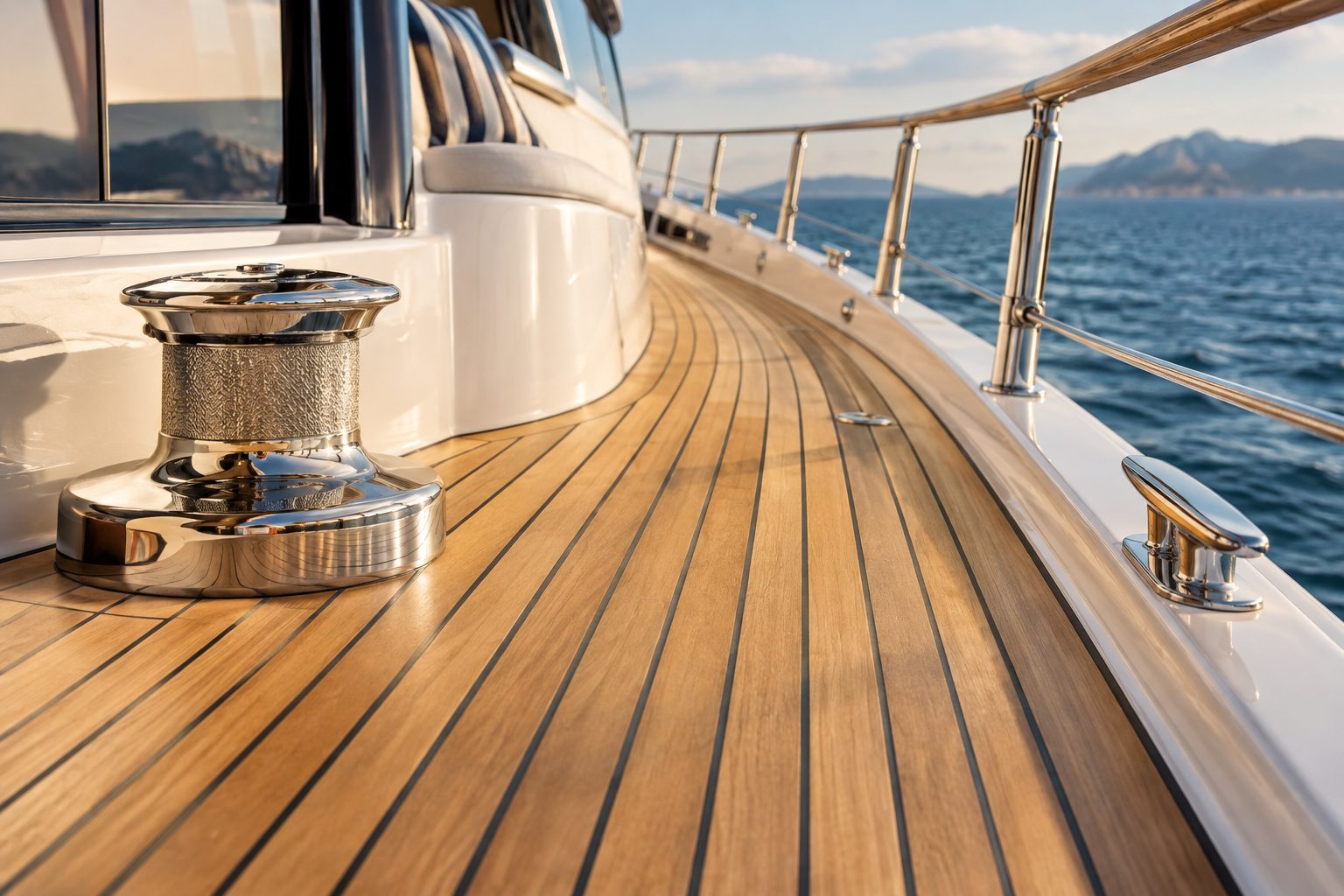
A yacht beside a working port
Port Everglades sits along the coast of Broward County, where the cities of Fort Lauderdale, Hollywood and Dania Beach meet. It is one of the busiest cruise and cargo ports in Florida, and the inlet that serves it is deep enough for very large ships. Cruise vessels come and go on a regular rhythm, cargo ships and tankers use the terminals, and the channel around them stays busy with tugs, pilot boats and service vessels. Yachts that are kept in marinas and shipyards nearby are part of that traffic, sharing the water with vessels many times their size.
For a yacht owner, the setting has real advantages: deep water, access to the open Atlantic, and a concentration of marine services, from fuel docks to repair yards. It also has a cost, because a working port puts a lot more into the air and water than a quiet residential canal does. The deposits we see on boats here differ from those in a purely residential neighborhood, and cleaning them needs patience and the right products.
A good detail near the port starts with understanding what is on the surface before touching it. A gritty black film needs a different approach than a brown waterline stain, and a polished stainless rail covered in fine orange dust needs a different approach than one with tea staining. We take time to identify the material first.
Ship traffic soot and what it leaves behind
Large vessels burn fuel at the dock and underway, and the exhaust includes fine particles that drift downwind and settle on whatever is nearby. On boats in the vicinity, this appears as a gray or black film, often a bit oily, that dulls white gelcoat, coats glass and gathers on canvas. It is more noticeable on windward-facing surfaces and on upper decks, and it tends to streak when rain falls on it, leaving gray tracks down the topsides.
The film is not just dirt. It contains oily material that clings and traps other particles, so a quick rinse spreads it rather than removing it. A proper wash uses a marine soap with enough cleaning power to lift the oily layer without stripping the protection underneath. We pre-rinse thoroughly, wash from the top down with a clean mitt, and change water and mitts as they load with grime so the film is not dragged across the next panel.
On finishes with wax or sealant, repeated soot exposure shortens the life of the protection, because the oily deposits break it down. That is one reason boats near a port often benefit from a more durable coating, and from washing more often than boats in cleaner surroundings. Read about exhaust soot stains and exterior wash-down for more detail.
Cargo and industrial dust, rust specks and orange stains
Ports handle bulk cargo and equipment, and shipyards and repair facilities grind, weld and paint. Fine metal particles can travel on the wind and settle on nearby boats. When those particles land on a wet surface, they rust, leaving tiny orange or brown specks on white gelcoat, on glass and on polished metal. Owners sometimes mistake them for stains from their own boat, but they are often foreign iron particles from outside.
Iron specks are removed with products designed to dissolve embedded iron without scrubbing, usually a gel or spray that changes color as it reacts, followed by a thorough rinse. We test on a small area first and take care around metal fittings, seals and any coating. Fine particles that are left too long can bond with a surface and leave a pattern of stains that is hard to clear without polishing.
Overspray from nearby yard work is another occasional problem. Paint dust on a hull feels like fine sandpaper when you run a hand over it. A clay bar or a dedicated product removes it safely, but only when used correctly, which is why we handle it ourselves rather than recommend aggressive scrubbing. Our page on overspray and paint dust describes how the problem arises.
Deep-water inlet exposure and salt
The inlet at Port Everglades opens straight to the Atlantic. Wave energy and wind funnel into the channel, and the spray and salt aerosol that comes with them travel across the port area. Boats here get a heavy dose of salt compared with those sheltered inside a canal system. Dried salt on glass, rails and gelcoat is common, and metal corrosion progresses faster.
The usual rules apply with more urgency: rinse with fresh water after use, wash regularly with the right soap, dry glass and metal by hand and keep a protective layer on the finish. Where a larger yacht has a lot of polished surface area, those tasks take time, and many owners hand them to their crew or to a detailing service.
Wake is another consideration. Large ships and fast pilot boats push surge through the channel, and boats at nearby docks rock and chafe against fenders and lines. Fender marks and scuff lines on the hull are common here, and they respond to proper cleaning and, in stubborn cases, light polishing. See dock line and fender marks and salt crust on deck.
Working on large yachts
Many boats near the port are large: motor yachts with multiple decks, sportfish vessels with towers, and vessels that are on the larger end of what we handle. Size changes the work. A bigger boat means more surface to wash and polish, taller topsides that require staging or lifts, and more complicated areas such as flybridges, side decks and bow rails. It also means more people involved: captains, crew, yacht managers and sometimes the shipyard.
We approach larger vessels by planning. We start with a walk-through with the captain or manager, agree on scope and sequence, and decide how many people the job needs. We think about access, the order in which areas are done so that clean surfaces are not dirtied by later work, and how to protect adjacent finishes. For a very large vessel or a complex job, a visit to see the boat precedes any quote.
We also communicate in the language of a crew. Captains want to know what products are going on the boat, what areas need to stay clear, how long surfaces must cure and what the weather window looks like. Our pages on captain and crew support, superyacht detailing support and motor yacht detailing describe how we work with professionals.
Yards, haul-outs and post-work cleaning
The area around the port contains shipyards and service facilities, so many boats here are hauled out for bottom work, paint, repairs and refits. When a boat comes out of the water, it is pressure washed, sanded, painted or repaired, and it returns to the dock dusty, scuffed and speckled with overspray and compound residue. The yard's job is the repair, not the finish, so a detail after haul-out is common.
Post-yard cleaning has its own sequence. We remove sanding dust and overspray, clean away barnacle residue and bottom paint dust from the waterline area, wash the topsides, inspect the finish for damage from yard work, and then polish and protect as needed. Interior spaces often need attention too, because dust works its way inside during a refit and settles on every surface.
If you are planning a haul-out, tell us the dates so we can schedule the cleanup for when the boat is back at the dock and the yard has finished with it. See post haul-out detailing and barnacle residue after haul-out.
Glass, stainless and canvas under industrial air
Window glass and clear panels collect the soot and dust film quickly, and the combination of oily film and salt makes them hard to see through. Cleaning them correctly matters, because dragging grit across a pane scratches it, and clear vinyl scratches more easily than glass. We rinse first, wash with a soft mitt and plenty of water, and dry with clean microfiber, working from top to bottom.
Stainless steel and chrome face the combined attack of salt, dust and moisture. Orange specks from iron dust may sit on polished surfaces beside brown tea stains caused by salt, and each needs the correct treatment. We clean carefully, then polish and protect so the next layer of dust is easier to remove. See metal polishing for stainless and rust around stanchions.
Canvas, awnings and cushions gather the same soot, and because fabric is porous, the grime sinks in. We clean fabrics with marine-safe products and soft brushes, rinse thoroughly and let them dry in open air. If the soot has been there for a long time, results will vary, and we will say frankly how much can be improved.
Protecting the finish in a high-grime environment
In a place with heavy particulates and salt, protection pays off. A bare gelcoat surface absorbs grime, stains and holds oxidized material. A protected one sheds more of it. We discuss three tiers of protection plainly. Wax is the simplest and needs frequent renewal. A synthetic sealant lasts longer and handles salt better. A ceramic coating bonds to the surface, makes it smoother and easier to wash, and tends to hold up against chemical stains, though it is not an armor and still needs regular washing.
The right choice depends on how the boat is used, how often it is washed and who does the washing. A yacht with a full-time crew that washes it often can get good results from a sealant. A vessel that sits for weeks between visits may benefit more from a coating. Painted hulls follow different rules and should not receive compounds meant for gelcoat. Read wax, sealant and ceramic compared and ceramic coating before you decide.
Whatever you choose, preparation is where the quality comes from. A coating applied over a dirty or oxidized surface locks in the problem. We clean, decontaminate and correct first, and only then protect.
Interiors and air quality near a busy port
Exterior grime is the visible part of living near a port, but the same fine particles and humidity also find their way inside. Air conditioning systems draw in outside air, and dust settles on carpet, upholstery, headliners and window tracks. A yacht that is closed up for long periods in warm weather tends to hold a stale smell, and soot film appears on interior glass and sills near vents and doors.
We clean interiors thoroughly and in sequence: dust from high surfaces first, then glass, cabinetry and upholstery, then floors and carpet last. We treat mildew where we find it and pay close attention to the head, galley and any lockers where moisture collects. We do not make claims about air quality or health, and we do not service air conditioning equipment, though we will note if vents or filters look clogged so you can have a qualified technician check them.
A boat that is cleaned inside as well as outside feels better to use and holds its value better. See interior detail and interior humidity control.
Planning, access and how to start
Facilities near the port can be strict about security, vendor access and hot work. Some marinas and yards require that outside vendors register in advance, provide proof of insurance and keep to specific work areas. Tell us where the boat is kept and we will ask what the facility requires. If your boat is managed by a yacht management company, we can coordinate with them directly.
When you call, have the boat's length, type and finish, its location and a short description of what you see on it: soot film, rust specks, waterline marks, dull paint, a musty interior. If the boat has just come out of a yard, mention what work was done. Larger or complex jobs need an on-site visit before a quote.
Quotes are given only by phone and we do not publish prices. If a service call charge applies, we explain it before dispatching anyone. Whenever you are ready, call and we will talk through the vessel and the schedule together.
Questions people ask
What is the gray film on my boat near the port?
Usually a mix of exhaust particles, oily residue and dust that drifts downwind from ship and shore activity. It clings, so a quick rinse smears it. A proper marine wash lifts it, and a sealant or coating makes the next removal easier. Frequent washing matters more here than in a cleaner setting.
Why do I see tiny orange specks on white gelcoat?
They are often iron particles from nearby industrial or yard work that landed on a wet surface and rusted. They can be removed with an iron-dissolving product designed for the purpose, followed by a thorough rinse. We test first and take care around metal fittings, seals and any coating on the boat.
Do you work on very large yachts?
We handle larger vessels with planning. A walk-through with the captain or manager sets the scope, staging and sequence, and a very large or complex job needs an on-site visit before any quote. We coordinate with crews and yacht management companies and follow facility access rules.
Can you clean up after a shipyard haul-out?
Yes. After yard work we remove sanding dust, overspray, bottom paint dust and barnacle residue near the waterline, wash the topsides, check the finish for damage and then polish and protect where needed. Tell us when the boat will be back at the dock so we can plan the visit.
Is a ceramic coating a good idea here?
It can help in a high-grime setting because it makes washing easier and resists some chemical staining. It does not stop scratches and still needs regular washing. A sealant may suit a boat with a crew that washes often. We explain the differences on the phone and recommend what fits how the boat is used.
How do I get a quote for my yacht?
Call us. Quotes are given only by phone after we hear about the boat and the work. Larger or more complex jobs need an on-site visit first. If a service call charge applies, we explain it before dispatching anyone. We do not list prices on the website.
Describe the situation by phone and we will tell you what the job involves. Quotes are given by phone. Jobs that cannot be quoted without seeing them need a technician on site, and the service call charge is explained on the phone before anyone is dispatched.
(954) 719-3572Related pages
Why timing and sequence matter more on a grimy waterfront
In an environment with soot and fine particles in the air, the order of cleaning can make or break the result. Dry wiping a dusty surface drags particles across the finish, which is a common cause of fine scratches. The crew starts instead with a long, gentle rinse to float off loose material, followed by a wash with plenty of lubrication. Only then is any close work attempted. Moving too quickly to a scrubbing step saves a few minutes and costs the finish dearly. Patience at the beginning is the cheapest protection a surface can get.
Staining from industrial fallout, such as small orange or brown specks, needs a measured approach. Some marks lift with a mild cleaner, while others bond to the surface and need a specific product that is safe on the finish. We test in a small spot first and work up carefully. Pushing too hard can dull gelcoat or strip protective layers. If a stain will not respond to safe methods, we tell the owner so rather than risk damage, and describe what other professionals might do. Taking the time to do it in the right sequence also tends to reduce the total effort across the season.
Planning the visit around the weather also helps. Wind can carry fresh fallout onto a surface that has just been cleaned, and strong sun dries soap before it can be rinsed. The crew watches conditions and adjusts the order of tasks, saving final glass work and wipe-downs for a calm moment. Owners can help by scheduling visits when the boat is not in the middle of other contractor work. Regular, shorter visits usually serve a boat in this setting better than occasional large ones. Conditions on the day can shift the plan slightly, and the crew explains any change before acting on it.