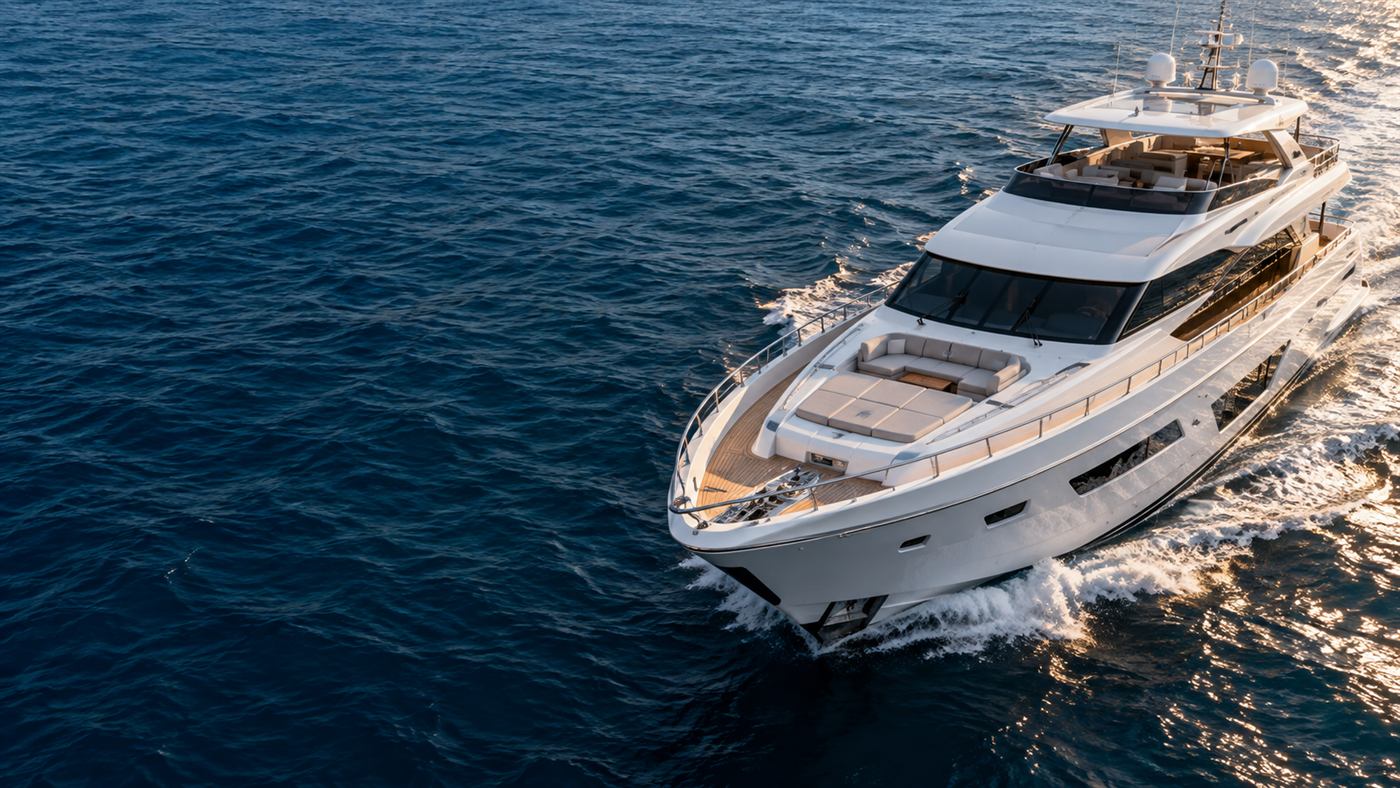
A busy bayside neighborhood built around the water
Sunset Harbour is a bayside neighborhood on Miami Beach, with docks that sit close to residential buildings, restaurants and shops. Boats of many sizes are kept here, from day boats and center consoles to motor yachts that dominate their berths. The area is lively, and the water is part of the neighborhood's identity.
The setting is different from an open-ocean marina. The water is bay water, usually calmer and more protected, though wakes from passing boats and the movement of nearby vessels can make docks surge. The Collins Canal and the waterways nearby channel boat traffic, and the area is busy during weekends and holidays.
For detailing, the key points are density and visibility. Boats are close together, and activity at neighboring slips is constant. People walk the docks, take photos and watch the work. That shapes the way a detailer works: carefully, neatly and with attention to neighbors.
This page covers how the bay setting affects boats, how dense dock activity changes the work, how city events and seasons shift scheduling, and what to have ready when you call. For other Miami Beach areas, see Miami Beach and Miami Beach Marina.
Bay water, humidity and what lands on the boat
Boats at Sunset Harbour sit in warm bay water that supports growth. The waterline picks up a film, and in summer algae can colonize fenders, lines and the lower hull. Brown or green bands form at the water's edge. Growth below the surface is a job for a diver or a haul-out service.
The air carries salt, but less spray than on the ocean side. Humidity is high most of the year, and the combination of warmth and moisture is hard on interiors, canvas and any enclosed space. Mildew follows quickly in closed cabins.
City air adds dust, pollen and traffic soot. Boats near streets and buildings pick up fine particles that settle on hulls, glass and canvas. Rain brings streaks as it dries. Lights and trees near the docks attract birds, and droppings are a daily issue. Droppings are acidic and can etch finishes, so quick removal matters.
Our pages on bird droppings on boats and water spots on windows describe how those are treated, and rain streaks on boat sides covers streaking on hulls.
The best defense is regular rinsing, washing on a rhythm and protection on the finish. A boat that is kept clean takes less effort to restore.
Working in dense dock activity
Docks at Sunset Harbour are busy. Boats come and go, people board and disembark, deliveries arrive, restaurant guests look at the yachts, and neighbors watch what is happening on the next slip. A detailer working here has to be tidy, quiet and considerate.
Space is tight. Boats may be a few feet from each other, and a spray or splash can easily reach a neighbor. A careful detailer controls hoses and sprayers, keeps products from drifting and covers or protects nearby surfaces if needed. Machine polishing sprays compound that can land on a neighbor's hull, so many marinas restrict it or require specific methods.
Walkways need to stay clear. Hoses, cords and buckets across a dock are a trip hazard, and dockmasters care about that. A detailer sets up neatly, secures cords and puts supplies where they do not block movement.
Noise and hours matter in a neighborhood with residents nearby. Early starts and late finishes may be restricted. Ask the dockmaster or the facility office about the hours and rules for contractors.
Our guide to dockside detailing and marina rules describes the usual points. If you keep your boat at a private dock in the neighborhood instead, see private dock detailing.
Wakes, surge and fender marks
Boats at busy bayside docks move. Passing vessels and wakes make boats surge against their lines and fenders, and over a season the result is chafe, marks and wear.
Fenders leave dark smudges on hulls, particularly on white gelcoat. Lines abrade the finish where they cross the rub rail or hull. Dock bumpers and pilings leave streaks. Light marks usually polish out. Deep chafe through the gelcoat is a repair issue. See dock line and fender marks and rub rail damage and discoloration.
Fenders themselves collect slime, dirt and sticky residue. Dirty fenders transfer to the hull. A clean fender is a good habit. See sticky dock residue on fenders.
Chafe gear on lines and properly sized fenders help prevent wear. A rigger or the captain can advise on dock lines. A detailer cleans the damage and tells you what is cosmetic and what needs repair.
Motor yachts, cruisers and day boats
The boats at Sunset Harbour range from compact day boats to large motor yachts. Many are used actively, especially in the busy season, for cruising, dining and gatherings. Others are kept as part of a lifestyle on the water.
Motor yachts have large expanses of gelcoat or paint, extensive glass, teak or synthetic decks, stainless hardware and detailed interiors. They need systematic cleaning, often over several visits. See motor yacht detailing for how large vessels are handled.
Smaller cruisers and day boats need regular rinsing, vinyl care and gelcoat protection. See express cruiser detailing.
Charter boats operate in the area as well, and turnover cleaning between guests is a particular kind of work. See yacht charter turnover cleaning.
Many yachts have a captain or crew who handle daily care. A detailer works with them, not around them. See captain and crew support for how that works.
Stainless, glass and visible detail work
In a neighborhood where boats are on display, the details count. Stainless rails, cleats, ladders and hardware show tea staining and pitting quickly. Glass shows water spots and film. Teak shows graying. Canvas shows mildew spots.
Stainless gets a wash, a treatment for staining and protection. Light staining lifts easily. Pitting cannot be polished away. See stainless hardware cleaning and pitted chrome and stainless.
Glass is cleaned with products that do not leave film or streak, and water spots are treated before they etch. See marine window glass cleaning.
Teak needs gentle care. See teak deck care. Canvas needs the right cleaners and dry storage.
A visible detail is not just about looks. Clean, protected surfaces are easier to maintain, and early problems are easier to see. A boat that is cared for regularly ages more slowly.
Decks, non-skid and the cockpit that gets used
Boats in a lively neighborhood are used socially. Guests step aboard in all kinds of footwear, drinks get spilled, food is served on deck and music plays late. The cockpit and deck areas take the brunt of it, and the results show up as scuffs, stains and a gray film in the non-skid.
Non-skid surfaces trap dirt in their texture, and the usual wipe-down cannot reach it. A stiff brush and a cleaner matched to the surface lift the residue so the texture grips again, which matters for safety as much as appearance. Heel marks and scuffs on smooth gelcoat polish out when they are on the surface. Sunscreen and wine can stain vinyl and synthetic teak if they sit, so quick wiping helps. See non-skid deck cleaning and stained boat cushions.
Cockpit tables, bars and outdoor seating deserve attention too. Gaps and seams collect food, grit and spilled liquids, and the stickiness attracts insects and grows mildew. A detailer cleans these with brushes and rinses thoroughly, then protects the surface. If you host often, a short weekly routine of rinsing and wiping the cockpit keeps most of this from building up.
A final point for boats that host guests: cleaning products on decks should rinse off completely. Anything left behind can be slick underfoot or can transfer to clothing. We choose products with that in mind and rinse more than most owners expect.
Planning the visit: what happens on the day
A detail at a busy bayside dock follows a sequence that keeps the work tidy. The detailer checks in with the dockmaster if required, confirms where to park and unload, and walks the boat with the owner or captain to agree on what is included and what is off limits.
Washing comes first, from the top down, so dirt and soap run off without being dragged across clean surfaces. Glass and metal follow, then the hull and deck work. Polishing and protection come after the surfaces are clean and dry. Interior work can run alongside when there is more than one person, which keeps hours at the dock down.
Throughout, the detailer watches the neighbors. Wind carries spray farther than expected, and a gust can turn a controlled rinse into a mist over the next boat. Work pauses when conditions change.
At the end, the detailer walks the boat again, shows what was done, notes anything that needs a repair professional and cleans up the dock area. Larger vessels may take several days, and the plan is set out on the phone before work begins.
City events, season and scheduling
Miami Beach hosts events throughout the year, and the busiest ones bring crowds, road closures and heavy traffic to the area. Boat shows, art fairs, holiday weekends and festivals can make getting to and from a dock harder and fill marinas with visitors.
That affects scheduling. A job that is simple on a quiet Tuesday can be complicated on a busy event weekend. We do not promise arrival windows, since traffic, weather and dock schedules can all shift timing. Scheduling is confirmed on the phone, and we will tell you plainly what we can fit.
Owners often want boats at their best before an event or a big weekend. Plan early, because many owners have the same idea. See boat show prep detailing and winter high season yacht prep.
Summer brings heat, humidity, storms and hurricane season. Before a storm, owners secure or move boats, and cleaning is not the priority. After a storm, prompt cleaning prevents set-in stains. See after a storm yacht cleaning.
Interiors and the humidity problem
Interiors at bayside docks face high humidity. Closed cabins build up moisture, and without ventilation or air conditioning, mildew follows. Cushions, carpets, headliners and lockers all suffer.
A thorough interior detail includes vacuuming, cushion cleaning, mildew treatment, sanitizing of the galley and heads, and attention to hidden spaces. Where odors persist, we look for the source rather than masking it. See interior detail and odor removal.
Air conditioning and dehumidifier systems belong to marine technicians. If a system is not working properly, interior moisture will return no matter how often the cabin is cleaned.
Owner habits help: ventilate when you can, use moisture absorbers, keep cushions dry and avoid storing damp items. See yacht interior humidity control.
What to have ready and how the call goes
When you call about a boat at Sunset Harbour, tell us the type and length, where it is docked and what the marina requires. Tell us about access, parking and whether water and power are available at the slip.
Describe what you see: bird droppings, waterline bands, fender marks, chalky gelcoat, spotted glass, stained stainless, mildew or odors. Tell us about any event or trip that sets your timeline.
Quotes are given by phone only. Straightforward jobs can often be quoted on the call. Larger or more complicated jobs may need an on-site visit, and there is a service call charge, which we explain before anyone is dispatched. Our website does not post prices.
If your boat sits in the middle of the action at Sunset Harbour and needs to look the part, call and tell us about it. We will talk through the right approach with you.
Questions people ask
Does the marina allow detailing at the slip?
Many marinas allow it with conditions, such as check-in, proof of insurance, permitted hours and limits on machine polishing or runoff. Rules differ by facility, so ask the dockmaster or office, and tell us what you learn. Our guide on dockside detailing and marina rules covers the usual points.
How do you avoid splashing neighboring boats?
By controlling hoses and sprayers, using gentle products, protecting nearby surfaces when needed and avoiding methods that throw compound or spray, such as machine polishing where it is restricted. In tight docks, neatness and care matter as much as technique. We also keep walkways clear of hoses and cords.
What causes the dark marks on my hull from fenders?
Fenders collect slime and dirt, and when a boat surges against them in wakes, they transfer it to the hull. Lines and dock bumpers can leave streaks and chafe too. Light marks usually polish out. Deep chafe through the gelcoat is a repair issue. Cleaning fenders and using chafe protection helps.
Will city events affect when you can work?
They can. Road closures, traffic and crowded marinas make timing harder on busy event weekends. We do not promise arrival windows, and scheduling is confirmed on the phone. If you need a boat ready before an event, call early and tell us the date.
Can you work with my captain and crew?
Yes. We work alongside the crew, not around them, and we coordinate on what is off limits, what hours suit and what the boat's routine is. Tell us who the point of contact is when you call, and we will plan the work to fit.
How do I get a quote?
Quotes are given only by phone. Describe the boat, its condition, where it is docked and what you want done. Simple jobs can often be quoted during the call. Complicated jobs may need an on-site visit, and a service call charge applies, explained before anyone is sent. We do not post prices on this site.
Describe the situation by phone and we will tell you what the job involves. Quotes are given by phone. Jobs that cannot be quoted without seeing them need a technician on site, and the service call charge is explained on the phone before anyone is dispatched.
(954) 719-3572Related pages
Getting a crew and equipment to a crowded bayside slip
In a neighborhood where the street, the sidewalk, and the dock sit very close together, logistics decide how smoothly a visit goes. Parking near the marina can be limited, so we ask how equipment will reach the slip, whether a cart is allowed on the walkway, and whether there is a loading zone for the first few minutes. Heavy items like a pressure unit are rarely needed and are not carried down a crowded pier unless the marina allows it. Most of the work is done with hand tools, buckets, soft brushes and microfiber, which are easy to move and quiet to use.
Water access is the next question. Some slips share a spigot with several boats, and the pressure can drop when someone else is filling tanks. We ask you to tell us if the nearest hose bib is shared, whether the marina meters water, and whether there are posted limits on rinse use. If the dock does not allow wash-down at all, the visit becomes a waterless or low-water detail, which takes a different set of products and more hand work. Knowing this in advance lets the crew bring the right supplies and explain the plan honestly before it begins.
Space on the boat itself matters too. With neighbors a few feet away, spray direction and product drift need attention. Bright wind-driven mist is kept down by working close to the surface rather than blasting from a distance. Stainless and glass cleaners are applied with a cloth, not sprayed freely, so they do not land on someone else's varnish. Before leaving, the crew checks the neighbors' finger piers for drips and wipes up anything left. A tidy exit at a busy dock is part of the job, and it is why owners in tight marinas ask us to come back.
Reading the boat before choosing products
Every boat at a bayside marina tells a story in its dirt. Fine gray film on the cabin top suggests urban dust and humidity. Rust-colored freckles near stainless fittings point to iron fallout or tea staining. Dark lines under hawse pipes and rub rails suggest fender or dock contact. A technician reads these clues in the first walk-around and chooses the gentlest method that will work for each one, which is often not the first product you would think of. Starting mild, then stepping up only where needed, protects the finish and saves wear on the gelcoat.
Surface type guides the next decision. Gelcoat, painted topsides, anodized aluminum, clear vinyl, Strataglass-style panels, teak, and fabric all react differently to cleaners. A product that makes white gelcoat bright can dull a polished window or dry out a seam. We test in a small, hidden spot when the surface is uncertain, and we ask the owner about past coatings, because a boat that has been waxed or ceramic coated responds differently from one that has not. If we are unsure what is on a surface, we say so, and we choose the careful option.
Finally, the crew thinks about what comes next. A boat that will sit idle for weeks needs different protection from one that goes out every weekend. A vessel heading offshore needs hardware checked for loose or salty residue. A boat about to be listed or shown needs the visible details, such as glass, chrome, and cockpit corners, brought to a consistent level. When you call, tell us how the boat is used, and we will plan the visit around the real use, not an imagined one. The scope is agreed before work starts, and we explain any quote first.