Why the stern takes such a beating
The back of a boat is where the water is. It gets splashed, soaked and rinsed constantly, and it is where people climb in and out, tie dinghies, hose off gear, board from the dock and swim. Everything that is on a person or a boat ends up on the platform: sunscreen, oil, sand, salt, fuel, algae and rubber marks from fenders and tenders.
The transom, just above, collects different things. Exhaust soot from engines, rain streaks, water spots from the platform spray, rust from fittings and hull-side tannin from canals all show up on the white gelcoat. Dark soot and brown streaks make the stern look dirtier than the rest of the boat, even when the rest is clean.
Because the stern is both functional and visible, it is one of the first places guests and prospective buyers look. A clean platform and transom change the impression of the whole vessel. They are also safety areas, since slippery growth on a platform is a fall risk.
Knowing what your platform is made of
Swim platforms are built from several materials, and the right cleaning method depends on which one you have. Molded fiberglass platforms are part of the hull and have gelcoat with non-skid texture. Teak platforms are wood, softer and more sensitive. Composite or synthetic teak, often marketed under various brand names, is made of PVC or foam with an embossed grain. Fold-down platforms may be aluminum or stainless with grating, and some boats have inflatable platforms.
Each has its own sensitivities. Wood takes mild cleaners and care for the grain. Composite decking can stain from oils and scratch easily, and many can be damaged by solvents or hot pressure washing. Stainless grating needs rinsing and polishing. Fiberglass is the most forgiving but still has limits.
A technician starts by identifying the material, often with a quick test in an inconspicuous area. If you know the product or maker, say so when you call. A wrong guess here can leave a permanent mark.
- Molded fiberglass with non-skid: marine deck cleaner, soft to medium brush
- Teak: wood-safe cleaner, work with the grain, avoid harsh acids
- Composite or synthetic teak: mild soap, soft brush, avoid solvents and heat
- Aluminum or stainless grating: fresh water rinse, metal-safe cleaner
- Inflatable platforms: mild soap and fresh water, avoid abrasives and solvents
Teak platforms
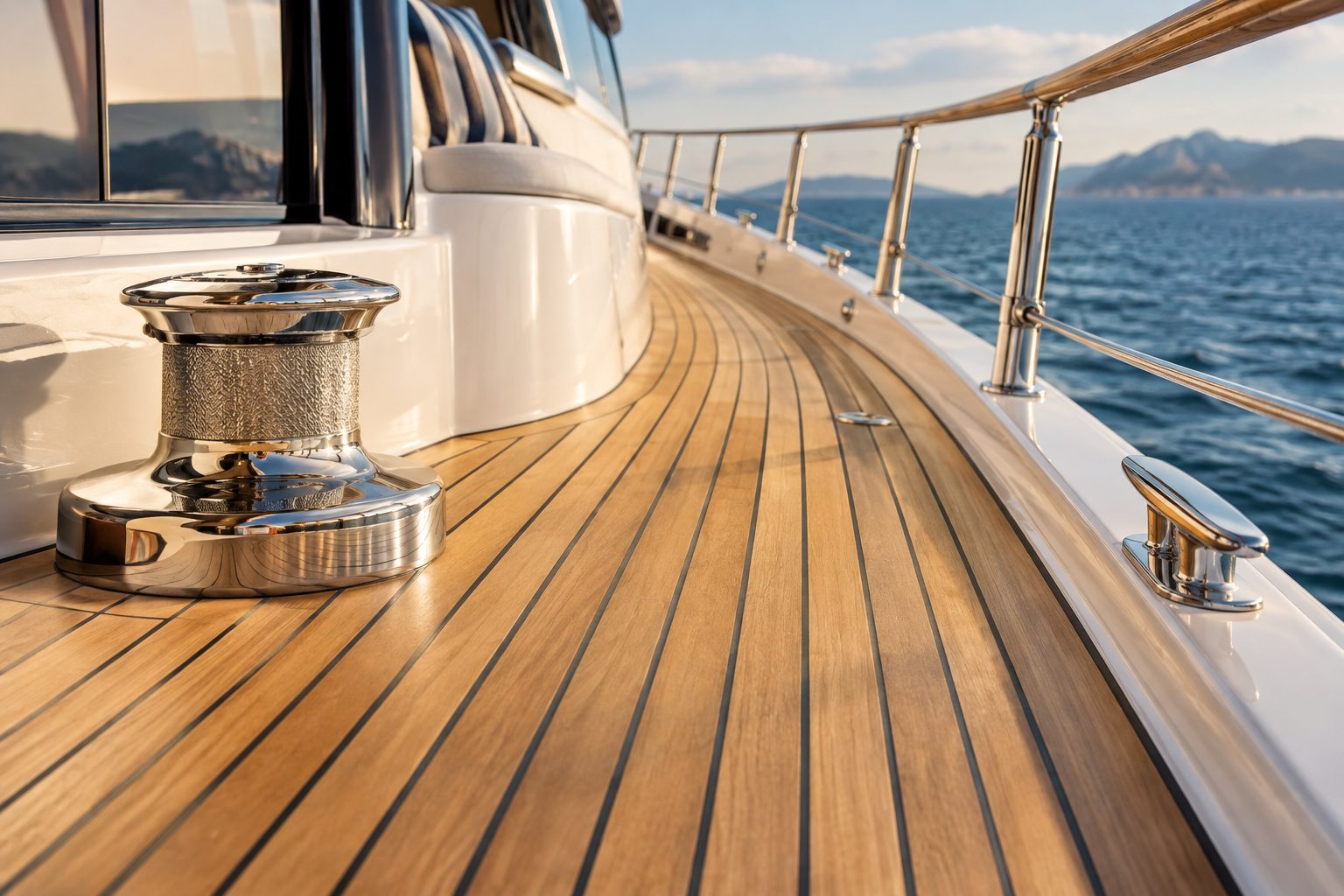
Teak swim platforms are beautiful and demanding. They are constantly wet, sun-baked and walked on by bare, sunscreen-covered feet. They turn gray quickly, develop black spots and collect algae in the grain. They can also become slippery when growth sets in.
Cleaning follows the same principles as teak decks. A gentle cleaner and a soft brush are worked with the grain, never across it, and the surface is rinsed thoroughly. Acidic brighteners may be used when the wood is gray or stained, with careful rinsing so they do not damage surrounding gelcoat. Aggressive scrubbing and hard pressure washing wear away the softer grain and leave a ridged surface.
Sealing and oiling decisions depend on how the platform is used and your preferences. Many owners leave teak natural, and others seal it. Details are on teak and deck care and teak sealing. A platform that is soaked daily behaves differently from one that stays dry.
Composite and synthetic decking
Synthetic teak decking is popular because it resists graying and needs less upkeep than wood. It still needs regular upkeep. It collects sunscreen, oils and dirt in its embossed grain, and stains such as rust, fuel and tannin sit in the seams and texture.
Mild soap, a soft to medium brush and fresh water are the starting point. Stronger stains may need a cleaner recommended by the decking maker. Solvents, acetone and strong acids can soften or discolor the material. Hot pressure washing can warp or melt it, and stiff brushes can scuff it.
Many manufacturers publish care instructions, and technicians follow them. If you have the paperwork or the brand name, it is helpful. Where the brand is unknown, a test in a hidden spot comes first, since synthetic materials vary and a mistake is not reversible.
Sunscreen, fuel and oil on the platform
Sunscreen leaves greasy marks that turn yellow or brown as they bake. On gelcoat they clean with soap and a degreasing cleaner. On teak and composite they soak in and need more patient treatment. The same sunscreen that stains vinyl stains platforms, as discussed on sunscreen stains on upholstery.
Fuel and oil come from fueling mishaps, outboard drips, dinghy motors and bilge discharge. They darken the surface and smell. A degreaser suited to the material breaks them down. The cleaner is applied, left for the stated time, agitated gently and rinsed, and the process is repeated if needed. The details are discussed on oil stains on swim platforms.
Work is done with attention to runoff. Oil and fuel residue rinsed into a marina is a serious concern, and responsible technicians contain and absorb it where needed rather than simply flushing it away. Marina and local rules apply, and they are taken seriously.
Dinghy rub marks and fender scuffs
Tenders and inflatable dinghies tied to the platform leave black rubber marks. Fenders and dock lines leave scuffs and dirt streaks. These marks are rubber or dirt transfer on the surface, not damage to the gelcoat, and they usually come off with the right approach.
A mild cleaner and a soft cloth handle fresh marks. Older marks may need a rubber-mark remover or a light compound, used carefully on gelcoat only. Solvents are avoided around synthetic decking and paint. The related problem on hulls is described on dock line and fender marks.
Prevention is simple. Use proper fenders or chafe guards where the dinghy meets the platform, and position it so it does not rub constantly. A bit of padding saves cleaning time and keeps the gelcoat from being scuffed.
The transom: streaks, soot and spots
Transom streaks come from several sources. Exhaust soot from engines leaves dark gray or black marks, particularly near exhaust outlets. Rain and spray wash dirt down in vertical streaks. Rust from fittings stains below them, and tannin and algae stain near the waterline.
Each of these is treated differently. Soot is oily and needs a degreasing cleaner. Rain streaks lift with soap and a soft pad. Rust uses a chelating cleaner as described on rust stain removal. Waterline staining is covered on waterline stain removal.
Gelcoat on the transom may also chalk, since it is a large flat vertical surface facing the sun in many slips. If it has oxidized, polishing and protection follow the cleaning, with the same cautions as on the rest of the hull. Name decals and hailing port lettering are masked and treated carefully, since they are easily damaged.
Hardware, ladders and gates
Swim ladders, grab rails, gates, transom doors and cleats are part of the stern. They collect salt, corrosion and algae and are touched constantly. Stainless is cleaned and polished, as covered on bright work metals, and hinges and latches are rinsed and checked for smooth operation.
Ladder treads and rubber grips wear and collect slime. Cleaning improves traction, and worn treads are noted for replacement. A ladder that is slippery or wobbly is a safety problem, and an honest report is part of the service.
Transom shower fittings, spray heads and fresh-water connections can scale up with mineral deposits, and a gentle descaling helps. Any leaking or corroded fitting is reported for repair rather than altered.
Keeping the stern clean between visits
A fresh-water rinse after every outing makes the biggest difference. Rinse the platform, the ladder and the transom, and wipe up sunscreen and fuel quickly. Let teak and composite dry and avoid leaving wet towels and gear piled on them.
Use a mild soap and a soft brush for routine cleaning, and avoid strong chemicals and hard brushes. Keep the dinghy padded and off the finish where possible. Avoid pressure washing close to teak and composite.
If algae builds or stains return despite regular cleaning, call rather than scrubbing harder. A recurring service, discussed on recurring maintenance plans, can keep the stern in shape with light, frequent attention.
Safety and footing on a wet platform
A swim platform is one of the most slippery places on a boat. It is wet by design, often covered in a thin film of algae, sunscreen and soap, and people step on it barefoot while carrying gear or climbing from a tender. A fall here can mean a hard blow against the transom or the dock, or a plunge into the water between the boat and the pilings.
Cleaning is part of making it safer. Growth and oily films reduce grip, and removing them restores the texture the platform was designed with. The reverse also applies. Polishes, waxes and slick protectants applied to a platform can make it more dangerous, so products used here must be ones that do not reduce traction.
If a platform has worn smooth, cracked, lifted at the edges or become loose, that is a repair matter. A technician will mention it rather than simply cleaning over it. Ladders that wobble, gates that do not latch and treads that are cracked deserve attention before the next outing, not after.
- Remove algae and oily films that reduce grip
- Avoid waxes and slick dressings on walking surfaces
- Check for lifting, cracking or loose decking and report it
- Check ladder treads, hinges and gate latches for wear
- Rinse sand and grit away so it does not scour the surface
Three examples from different stern setups
A motor yacht with a large teak platform had gone gray with dark spots in the grain and a slick green film along the edges. The wood was sound, so a gentle cleaner, soft brush and careful rinsing brought it back, and the owner chose to leave it natural and rinse it regularly.
A center console with a molded fiberglass platform had black rubber marks and a yellow band of sunscreen near the ladder. A degreasing cleaner handled the sunscreen, and a mild compound on gelcoat only removed the rubber transfer. The tender had been rubbing the same corner for months, so the owner added padding there.
A sportfish with synthetic decking showed dark streaks in the grain where oil had dripped from an outboard. The technician tested a hidden corner first, used a cleaner recommended for that type of decking, and warned the owner that a small shadow might remain. Each stern needed a different plan.
What to have ready when you call
Tell the technician the vessel type and length, the marina, and what your platform is made of if you know. Describe what you see: gray teak, black spots, sunscreen, oil, rubber marks, soot streaks. Mention any care instructions from the decking maker, and whether the platform folds, lifts or carries a tender.
Quotes are given by phone only. A simple platform and transom may be quoted from your description. A larger vessel or a platform with significant staining and wear may need an on-site visit, and there is a service call charge for that visit that is explained on the phone before dispatch.
If you are not sure what your decking is, say so. When you are ready, call and we will talk through the condition of your platform and transom.
Questions people ask
Can I use the same cleaner on teak and synthetic decking?
Not safely. Teak is wood and responds to wood-safe cleaners applied with the grain. Synthetic decking is plastic-based and can be damaged by solvents, strong acids and heat. Identify the material first, follow any maker instructions, and test a hidden spot before using a new product.
How do you remove sunscreen stains from a swim platform?
On gelcoat, soap and a degreasing cleaner usually work. On teak and composite, stains soak in and may need a patient, material-appropriate cleaner and more than one pass. Some stains lighten without fully disappearing. Wiping the platform after use and rinsing prevents most of them.
What causes black marks from my dinghy?
Rubber from the tender, fenders or lines transfers to the surface when they rub. It sits on the surface rather than damaging gelcoat and usually comes off with a mild cleaner, or a rubber-mark remover and gentle compound on gelcoat only. Padding the contact point prevents it.
Why is my transom streaked below the exhaust?
Engine exhaust leaves oily soot that settles on the transom and runs in streaks with water. A degreasing marine cleaner removes it. If the gelcoat has oxidized, soot sticks more tightly, and polishing and protection after cleaning help make future cleaning easier.
Is pressure washing safe on a swim platform?
It can be harmful. Hard pressure erodes teak grain, can warp or melt synthetic decking and can damage gelcoat texture. Fresh water, a suitable cleaner and a soft brush are safer. If pressure is used at all, it is for rinsing from a distance.
How do I get a quote for platform cleaning?
Call and describe the vessel, the marina and what the platform is made of. Quotes are given only by phone. A larger or more complicated job may need an on-site visit first, and there is a service call charge that is explained on the phone before anyone is dispatched.
Describe the situation by phone and we will tell you what the job involves. Quotes are given by phone. Jobs that cannot be quoted without seeing them need a technician on site, and the service call charge is explained on the phone before anyone is dispatched.
(954) 719-3572Related pages
Cleaning around the ladder, the shower and the stern lights
The stern is crowded with small fixtures, and each one affects how the platform is cleaned. Telescoping ladders hold salt in their tracks, transom showers drip rust-colored water down the gelcoat, and stern lights or cleats sit in recesses where grime collects. A good approach is to treat each of these as a mini-task: operate the ladder and wash the tracks, clean the shower fitting and its surround, and wipe the light housings gently. Doing this before the large surfaces get scrubbed prevents dirty water from simply running over a clean platform.
Care is needed around anything with wiring or a seal. Water pressure aimed directly at a light lens, a shower fitting or the edge of a hatch can push water past the gasket. The crew uses a gentler flow in these places and wipes by hand where needed. If a fitting looks cracked or a seal looks tired, it is better to mention it and leave it alone than to test it with a spray. Small leaks at the stern often show up first as staining, so noticing early helps.
Owners can make this work simpler by clearing the platform of towels, toys, lines and gear before the crew arrives, and by letting us know if any item should be treated with particular care. Water toys and boarding steps often hide the dirtiest sections underneath them. If you use the platform for diving or tender launching, tell us, because the grip surface and edges take more abuse and may need extra attention. A tidy start usually means the full area can be done properly in a single visit.
Planning the work around tides, wakes and the neighbors
A swim platform sits right at the water, which makes the working conditions part of the job. A passing wake can send a wave across a wet deck and undo careful rinsing in seconds. The tide changes how close the platform sits to the dock, and in some slips a low tide leaves the platform awkwardly high or hard to reach. Experienced crews check the tide and the traffic before starting, and they sometimes shift to the stern later in the visit so that the busiest boat traffic has passed.
Neighboring boats matter too. A shared finger pier means working beside someone else's lines, ladder and sometimes their dinghy. Cleaning splash and soapy water can drift onto nearby vessels, so the crew keeps runoff in mind and uses covers or towels where needed. In a tight marina this courtesy is as much a part of the job as the cleaning itself, and it avoids awkward conversations with dockmates who have just washed their own boat. South Florida heat and humidity make this detail matter more than people expect.
If your platform is difficult to reach, such as in a tight slip, on a lift or behind a dinghy davit, let us know ahead of time. Sometimes the dinghy needs to be lowered or moved first, or the boat repositioned a little by the captain. Sorting out access in advance is far better than discovering it on the day. A short call or a few photos of the stern usually covers it, and it lets the crew bring the right tools and plan the safest way to work.