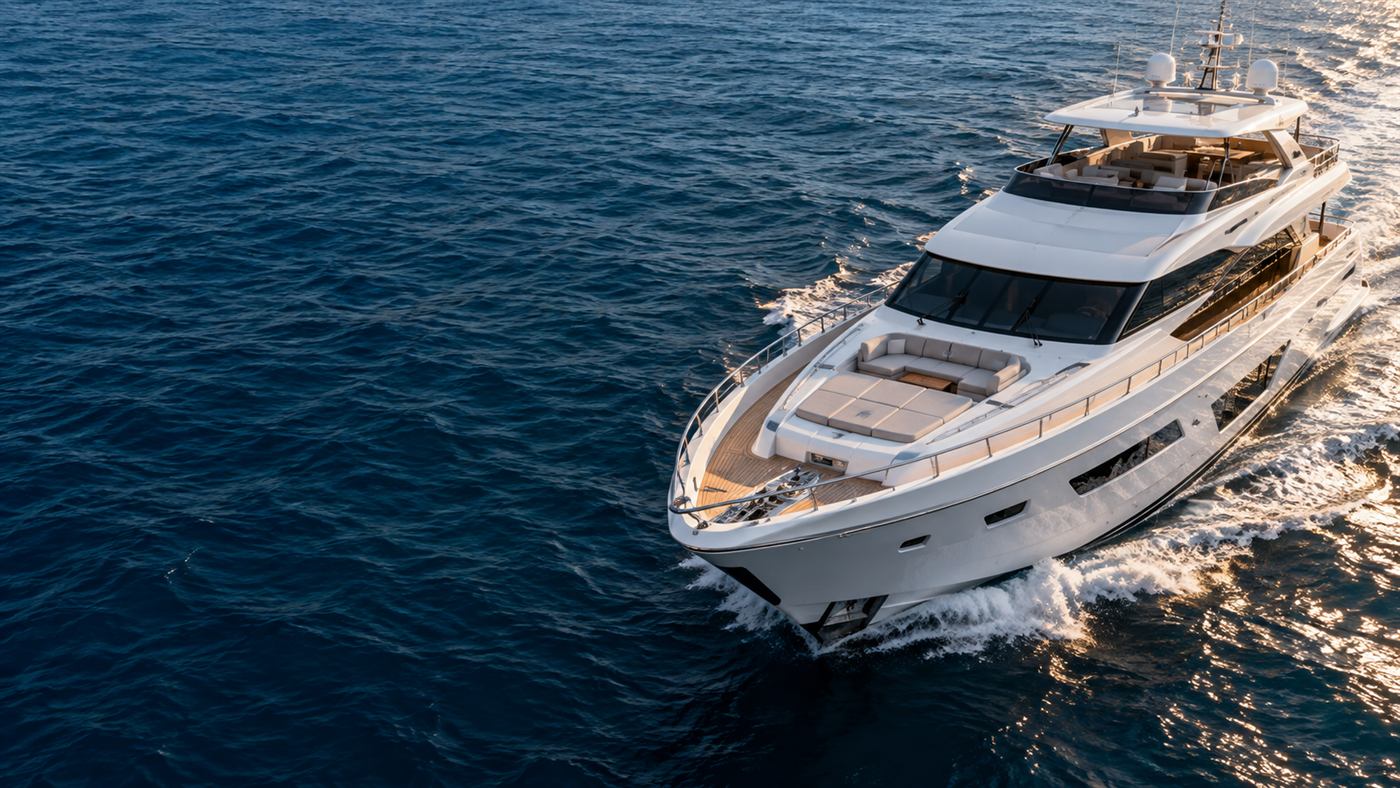
A working river in the middle of a city
The Miami River runs from inland Miami out to Biscayne Bay, and for much of its length it is a working waterway. Commercial vessels, tugs, small freighters and fishing boats use its docks. Boatyards haul, repair and refit vessels along its banks. Between them sit marinas, condominium docks and private slips where yachts and cruisers are kept.
That mix gives the river its character. A yacht kept here shares the water with working boats, passes under a series of bridges and sits close to city streets, construction sites and industrial yards. The air carries more than salt. It carries dust, soot, paint particles and the residue of nearby activity.
The vessels here vary. Some are working boats and commercial craft. Some are cruisers and motor yachts kept for use on Biscayne Bay and beyond. Some are projects in progress at yards, being repaired, painted or refit. Each has its own condition and needs.
This page explains how the river environment affects boats, what that means for cleaning, how to handle shipyard neighbors and bridge schedules, and what to have ready when you call. For nearby areas, see Miami Beach and Coconut Grove.
Soot, dust and the film of a working waterfront
Boats on the river pick up grime that boats in cleaner open-water marinas rarely see. Diesel exhaust from commercial vessels and nearby engines leaves fine black soot that settles on decks, windows, hulls and canvas. Dust from yards, roads and construction coats everything. Sanding and painting at boatyards can send particles through the air.
This film is often oily. Wiping it dry just smears it. A proper wash uses a cleaner that breaks it down, rinsed well, followed by a second pass on stubborn spots. Light-colored hulls and canvas show it most. Dark hulls show the dust.
Soot on transoms, sterns and the sides of boats near exhaust outlets is common, as it is on any boat that runs its own engines. Our page on exhaust soot stains explains how that is removed.
Overspray from nearby yards can also land on boats. Paint overspray feels like tiny rough specks on the gelcoat or glass. It needs specific treatment, and aggressive scrubbing can scratch the surface. Read more in overspray and paint dust. If you suspect overspray, tell us, and we will check how bonded it is before choosing a method.
Rain makes things worse. Storm runoff washes grime off buildings and bridges onto boats below, and as it dries it leaves streaks. After a rain, a rinse helps prevent water spots from setting.
Bridges, clearances and getting a boat to the river
The Miami River has a number of bridges, and most of them are movable. Boats entering or leaving the river must plan around bridge schedules and clearance heights. Taller vessels, such as those with towers, antennas or flybridges, may not fit under every bridge without lowering gear or waiting for an opening.
That matters for detailing in a few ways. A boat that leaves the river regularly is subject to those schedules, so cleaning must be planned around departures. A boat with a tall structure may be kept further downstream near the bay to avoid some bridges. A detailer working on a tower or antenna must account for height and for bridge-related movement.
Bridge operations and river traffic can also affect where a boat is moored and how long a job can run. A boat tied up in a spot that must be cleared for a bridge opening or a commercial vessel may have to move on short notice. Tell us about any known restrictions when you call.
Marinas and docks on the river often have tight spaces between neighboring vessels. Work may need to happen with limited room to move, close to other boats, with care to avoid overspray, splash and dust reaching others.
Our guide to dockside detailing and marina rules covers the usual points. Each river facility has its own rules, and we recommend checking with the dockmaster.
Shipyard neighbors and working vessels
Boats on the Miami River often sit near boatyards and commercial docks, and that shapes the work. Yards haul boats, grind, sand, weld and paint, and those activities can happen on a schedule that is hard to predict. Noise, dust and fumes may be present at times.
For detailing, the key concern is timing. Polishing or applying protective products while a neighbor is sanding or painting is a recipe for contamination. Dust and overspray can land on fresh wax, sealant or coating before it cures. A detailer who knows the area will plan work around yard activity when possible, and will ask the owner about the neighbors.
Working vessels nearby also affect air and water. Tugs and freighters maneuvering in the river stir up wake, and their exhaust drifts across docks. A boat right next to a commercial berth may see more soot and more movement from wakes than one in a quieter marina.
Chafe is another concern. Commercial wakes make boats surge against lines and fenders, leaving marks and wear on hulls and rub rails. Our page on dock line and fender marks explains how those are treated and what needs repair.
If your boat is at a yard for repair or refit, ask the yard what cleaning is allowed. Some yards restrict outside contractors. Cleaning a boat on the hard also involves different rules about washdown water and runoff. Our page on post haul-out detailing explains how detailing fits after time out of the water.
Hulls, waterlines and river water
River water is brackish, a mix of fresh and salt water that changes with tides and rainfall. That affects growth and staining on hulls. Boats that sit in the river build up a film, and waterline bands form. In some stretches, growth can be heavy.
Above-waterline cleaning removes the stained band that can be reached from the dock or a small boat. Growth on the bottom is a job for a diver or a haul-out service. Our page on waterline stain removal explains the boundary, and hull cleaning above the waterline covers the above-water scope.
Brackish water can also leave a brown tinge on fenders and lines, and those stains transfer to hulls. Fenders that sit in the river grow slime. Fender covers and lines should be cleaned or replaced if they are leaving marks on the hull. See sticky dock residue on fenders.
Gelcoat on a river boat gets the same sun as anywhere else in Miami, plus the grime. Oxidation and chalking can hide under a film of soot, and a wash may reveal how much correction is needed. We recommend a wash and a look before deciding on a polish.
Condominium docks, marinas and private slips
Along the river, boats are kept in a variety of places: marinas, condominium docks at residential towers, private slips and yard facilities. Each has its own character.
Condominium docks often have rules set by the association, including who may work on a boat, what hours are allowed and what insurance is required. A property manager may need to approve contractors. Guest parking and loading areas may be limited. Please tell the property manager that a detailer will be coming, and tell us about any rules.
Marinas have dockmasters who set the rules for contractors. Some require check-in, insurance paperwork and the use of environmentally friendly products. Some limit machine polishing at the dock because of dust. Others allow most work. Check with the marina office.
Private slips are more variable. Water and power may or may not be at the dock. Neighbors may be close. Access may involve gates or buildings.
In dense, urban settings, runoff and overspray matter more because neighbors are close. A detailer controls spray, uses gentle products and keeps wash water from reaching neighboring boats and the river. Our guide to environmental practices in yacht detailing describes this.
Interiors in an urban setting
Boats on the river face interior issues too. Dust and soot get into cabins through vents and gaps, and humidity builds up when boats are closed. City noise and smells, including diesel and nearby industry, can seep inside.
Interior cleaning for river boats often focuses on dust removal, upholstery cleaning, air circulation and mildew control. Fabric and carpet can hold odors from exhaust and humidity. Headliners and bulkheads show dust streaks.
A thorough interior clean covers vacuuming, wiping, cushion cleaning, galley and head sanitizing, and checking for hidden mildew. See interior detail and interior mildew treatment for more. Air conditioning systems that pull in dusty air may need filter attention, which belongs to a marine technician, not a detailer.
Boats that are closed for long stretches benefit from ventilation. If you leave a boat for weeks, consider opening vents or hatches within security limits, or using moisture absorbers. These small steps limit mildew.
Seasons and storms along the river
The river's urban setting changes how storms affect boats. Heavy rain washes street and building grime into the water and onto boats. Storm surge and high tides can push water up the river, and boats shift on their lines. Hurricane season brings extra planning for boats on the river, including decisions about where to secure them.
Before a storm, owners and captains secure boats and make decisions about moving them. Cleaning is not the priority. After a storm, debris, mud and grime need prompt cleaning, and an inspection can reveal damage that needs repair. See after a storm yacht cleaning and hurricane season yacht preparation and cleaning.
Winter is the busiest boating season in South Florida. Boats return from summer travels or arrive for the season, and owners want them clean. Plan ahead for the winter rush. See winter high season yacht prep.
Summer sun and humidity are hard on finish and interiors. A protective layer before summer helps, and so does regular rinsing.
What to have ready and how the call goes
When you call about a boat on the Miami River, tell us the type and length, the height of any tower or antenna, and where it is kept. Is it at a marina, a condominium dock, a yard or a private slip? What are the access rules? Where can we park?
Tell us what you see: soot, dust, oily film, overspray, waterline stain, oxidation, mildew or odors. Tell us about neighbors, such as nearby yard work. If your boat is at a yard, tell us what the yard allows.
Quotes are given by phone only. Straightforward jobs can often be quoted on the call. Larger or more complicated jobs may need an on-site visit, and there is a service call charge, which we explain before anyone is dispatched. Our website does not post prices.
We do not promise arrival windows. Traffic, weather, bridge schedules and marina rules can all affect timing. Scheduling is confirmed on the phone.
If your boat lives on the river and carries the grime to prove it, call and tell us what you see. We will talk through the right approach for the location.
Questions people ask
Why is my boat so dirty on the Miami River?
Boats on a working urban river collect diesel soot, dust from nearby yards and roads, paint particles and runoff from bridges and buildings, in addition to salt and sun. That film is often oily, so it smears if wiped dry. A proper wash with a suitable cleaner, rinsed well, usually shows what the finish underneath really needs.
Can you remove overspray from a nearby boatyard?
Sometimes. Overspray feels like tiny rough specks on gelcoat or glass. We check how well it is bonded before choosing a method, because aggressive scrubbing can scratch the surface. Some overspray lifts with gentle treatment, and some needs more careful work. We will tell you honestly what is realistic.
Do bridge schedules affect when you can work?
They can, mostly if your boat leaves the river regularly or has a tall structure. Tell us when the boat needs to move and what it clears. We do not promise arrival windows, since traffic, weather and bridge schedules can shift timing, and scheduling is confirmed on the phone.
Can you work while a neighboring yard is sanding or painting?
It is better to avoid it. Dust and overspray can land on fresh wax, sealant or coating before it cures. We plan around yard activity when possible and ask about your neighbors on the call. Washing and interior work are less affected than polishing and protection.
What are the rules at river marinas and condominium docks?
They vary. Condominium associations may require approval, insurance paperwork and set hours, and marinas may require check-in, product limits or restrictions on machine polishing. Ask the property manager or dockmaster, and tell us what you learn. Our guide on dockside detailing and marina rules covers the usual points.
How do I get a quote?
Quotes are given only by phone. Describe the boat, its condition, where it is kept and what you want done. Simple jobs can often be quoted during the call. Complicated jobs may need an on-site visit, and a service call charge applies, explained before anyone is sent. We do not post prices on this site.
Describe the situation by phone and we will tell you what the job involves. Quotes are given by phone. Jobs that cannot be quoted without seeing them need a technician on site, and the service call charge is explained on the phone before anyone is dispatched.
(954) 719-3572Related pages
Cleaning the underside of the job: waterline and lower hull access
The waterline is where the river leaves its clearest mark. In slow, warm, nutrient-rich water, a band of film and growth can form just at the surface. When the boat is afloat, we can clean what is reachable from the dock, deck or tender with long-handled soft brushes and mild cleaners. Deeper hull work generally requires the boat to be hauled out or serviced by a diver, and we say so rather than overpromise. A realistic discussion about what can be done afloat keeps expectations in line and avoids disappointment.
When the boat is out of the water, the job changes. Before anything is washed, the yard's rules matter: runoff has to be managed, and the yard staff decide what products and methods are acceptable. Pressure washing loosens growth, but too much pressure can damage soft paint or fittings, so the crew chooses with care. Surfaces are then cleaned of any film, and the owner can decide whether to have polishing, coating or bottom paint handled by the appropriate professional. We do not apply paint or perform structural repairs.
Whatever the setting, safety around a working river is part of the plan. Dock edges can be slick, current can move small tenders, and large vessel traffic can create unexpected wakes. The crew secures tenders, wears suitable footwear and watches for passing boats. Hoses and buckets are stowed so they do not become a hazard to others. Owners can help by letting us know of any known issues with the dock, such as loose boards or unusual tie-up arrangements, so no one is surprised. If anything about the plan feels unclear, a quick call before the visit settles it in a few minutes.
Matching the work to a boat that is used for living or working
Some boats on a city river are lived on, some are used for work, and some are stored. Each situation calls for a different approach. A live-aboard needs the crew to work around daily life, protecting belongings and keeping noise and water use within reason. A work boat may prize function over shine, so the focus goes to safe decks, clear drains and working hardware. A stored boat benefits from periodic checks and light cleaning to prevent buildup. A short conversation at the start establishes which category the boat falls into.
With live-aboards, privacy and comfort come first. The crew asks which areas are safe to enter, avoids personal items, and keeps the work contained. Interior cleaning, if requested, is agreed in advance, with clear limits. For working vessels, safety of surfaces matters most, and non-skid, ladders and walkways get extra attention. Products are chosen to avoid slippery residue. For stored vessels, the emphasis is on preventing slow deterioration, such as mildew, algae and staining, through a steady rhythm of modest visits. Small details like these rarely get noticed when done well, but they are what separates a tidy boat from a merely wet one.
In every case, the scope and any quote are explained before work begins, and changes are discussed, not assumed. Owners can reach us by calling, and we will talk through what makes sense for the boat. We avoid pressure, and if a boat needs work that falls outside cleaning and detailing, such as engine service or structural repair, we say so and suggest the owner consult a specialist. That honesty keeps the relationship simple and the results predictable for everyone involved. Owners are welcome to adjust the order or skip a step, and the scope is changed only with their agreement.