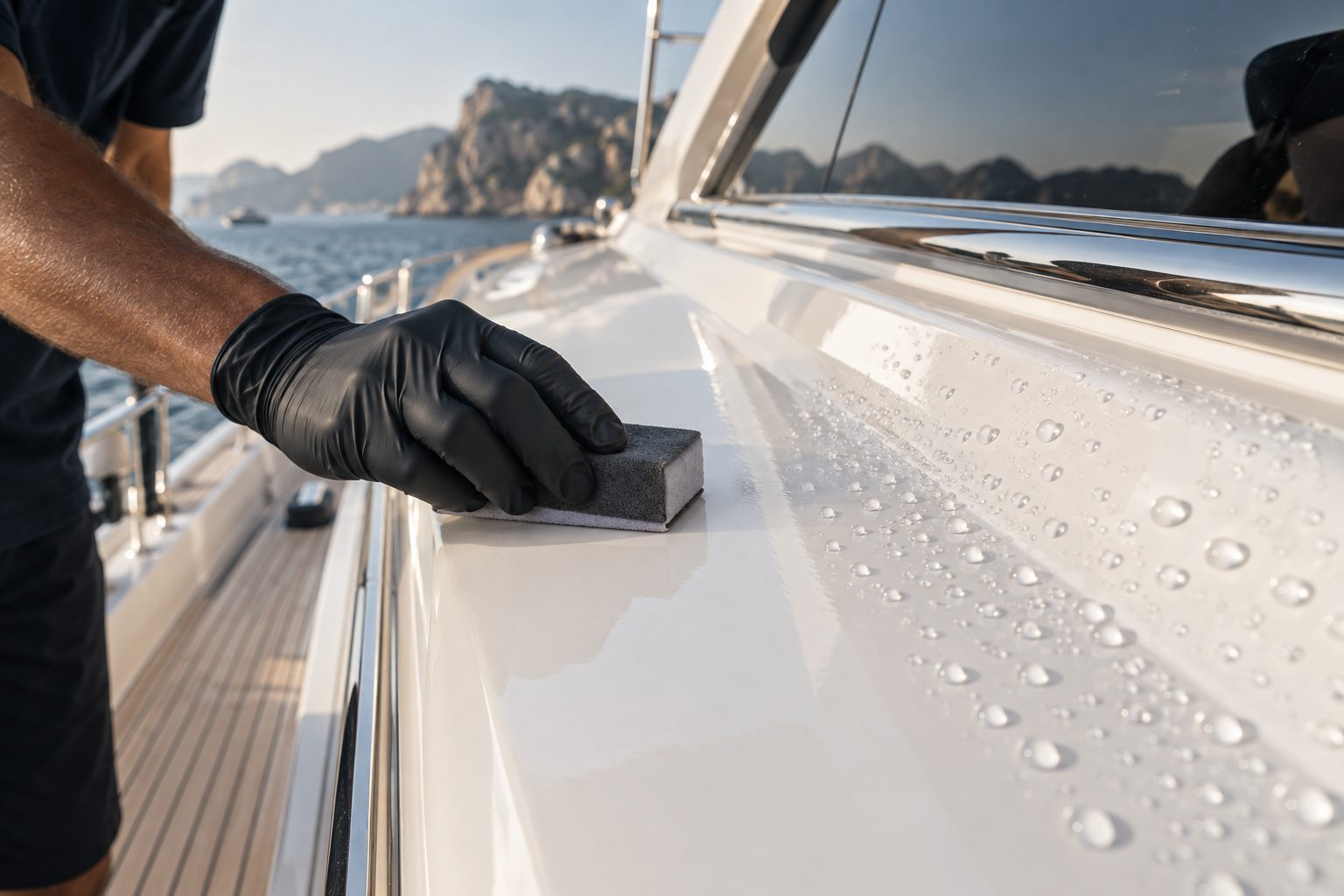
Living inland, keeping a boat on the coast
Pembroke Pines sits well west of the Intracoastal Waterway, with no coastline of its own. Its residents live in neighborhoods of single-family homes and townhouses that are a drive from the nearest marina. Many of them still own boats, and they keep those boats at marinas, dry-stack facilities and private docks in places such as Dania Beach, Hollywood, Fort Lauderdale or farther along the coast.
That arrangement has benefits. A boat at a coastal marina is ready for a day on the water, and an owner who lives inland can enjoy a quiet neighborhood and a boat close to the sea. It also has a catch. The boat is out of sight most of the week. Salt, humidity, birds and sun all work on it while the owner is at home or at work, and by the time it is visited, the effects have had days to build.
The goal of detailing for an inland owner is to take the pressure off. A boat that is cleaned on a rhythm that suits its use is ready when the owner arrives, not waiting for a scrub. It is a different mindset from washing your own car in the driveway. The boat is somewhere else, and a plan has to work without you standing on the dock.
Where inland owners usually keep their boats
Pembroke Pines owners tend to choose a marina for convenience and location, and the choices vary. Some keep boats in wet slips at marinas along the Intracoastal, where the boat stays in the water and can be used at any time. Others use dry-stack storage, where a forklift launches the boat on request and returns it to a rack afterward. A few keep boats at private docks, often owned by relatives or friends.
Each arrangement changes what a detailer needs to know. A wet-slip boat collects salt, growth at the waterline and bird droppings, and it needs regular washing and protection. A dry-stack boat is washed down by the marina after use in some cases, but it still collects dust, mildew and sun damage while it sits on the rack. A boat at a private dock has its own access and neighbors to consider.
Our pages on dry-stack marinas and private dock detailing explain how each setup is handled. When you call, tell us where the boat is kept and we will plan around the real conditions at that address.
Scheduling a visit when you are not there
The most common question inland owners ask is whether a visit can happen without them present. Often it can, with the right arrangements. The owner tells us when and where, the marina or captain provides access and we do the work and report back. Many owners find this easier than meeting a technician at the dock, especially if they work during the day.
To make that work, a few things need to be settled in advance. The marina or dock needs to know that we are coming and to allow access. Someone needs to be able to open the boat or authorize us to board. If an alarm or lock needs to be opened, the owner or captain handles that personally. We do not ask owners to send passwords or access details by text or email to anyone they do not trust, and we will not be offended if you prefer to arrange access through the marina.
If you prefer to be present, that is fine as well. A walk-through at the end of the visit gives you a chance to see what was done and ask questions. Either way, the plan is agreed in advance, and nothing happens on your boat that you did not approve.
Updates, photographs and staying informed
An owner who cannot be on the dock needs a clear picture of what happened. We take photographs of the boat's condition when we arrive and when we finish, and we tell you in plain language what we did and what we noticed. If something needs attention beyond cleaning, such as a worn line, a damp locker or a loose fitting, we will say so, because you would want to know.
Photographs are most useful when they are specific. A close-up of a stain before and after tells you more than a wide shot of a whole boat. A picture of a damp patch under a hatch can help you decide whether to call a repair professional. We keep our notes honest and do not claim results we cannot show.
We also welcome photographs from you. If you noticed a stain, a smell or a scratch on your last visit, send a picture when you call and we will have a clearer idea of what is involved. A few quick photographs often save a long phone conversation.
- Photographs of the boat when the technician arrives
- Photographs of notable problem areas and results
- A plain summary of what was done
- A note of anything outside the scope of cleaning that you may want to look at
What a boat deals with while you are at home
A boat that sits in a coastal marina during the week is constantly exposed. Salt mist from the air settles on every horizontal surface. Birds perch on rails, canvas and the top of the cabin. Sun bakes the gelcoat and fades the vinyl. Humidity builds inside the cabin. Even a boat that never leaves the slip is working through a series of small changes that add up.
Bird droppings are an underrated problem. They are acidic and, when baked on by the sun, they can etch gelcoat and paint. They are easy to remove when fresh and harder to remove after a week in the heat. Our page on bird droppings on boats explains what happens and what to do.
Salt haze on glass and stainless is another quiet one. You may not notice it until you step aboard on a Saturday and everything is a bit cloudy. A regular wash-down keeps ahead of it, and the guide to how often to wash a yacht helps owners think about the right frequency.
Choosing a rhythm that fits weekend use
Many Pembroke Pines owners use their boats mainly on weekends and holidays. The boat is ready on Saturday morning, used through the weekend and left on Sunday night. A rhythm for this kind of use usually puts a detail on a weekday, so that the boat is clean when the owner arrives, and a lighter wash-down after heavy use when salt and sunscreen have built up.
How often depends on how much the boat is used, where it is kept and how much the owner wants to do personally. Some owners prefer a visit every few weeks. Others prefer a larger detail once a season with a light wash in between. Our guide on choosing between weekly and monthly service and the one on maintenance schedules by vessel use explain the trade-offs.
A recurring plan has another advantage: it removes the need to think about it. Once the schedule is set, the boat is cleaned on a rhythm, you get a short report and you can focus on using the boat. Our page on recurring maintenance plans describes how that works.
Getting a boat ready for a trip or a guest weekend
Inland owners often plan around specific occasions: a holiday weekend, a trip to the Bahamas, a family gathering or a day with guests who have not been aboard before. A boat that has sat for two weeks needs more than a quick wipe to look its best, and a plan helps to avoid last-minute stress.
A pre-trip detail usually focuses on the places people will notice: glass, cockpit, seating, deck and the first impression at the swim platform. It can include a fresh water rinse, a wash, a clean of the interior and a check for damp or odor. If the trip is a long one, we may suggest checking hardware, canvas and non-skid for anything that needs attention before you leave.
Tell us the date when you call, and we will say honestly whether it is realistic. We do not promise arrival windows, but we can plan around your date and confirm the day in advance. Calling early is the best way to get a slot before a busy weekend. Our preparing your yacht for detailing guide lists what to clear out so the technician can work quickly.
Storm season for owners who live inland
Hurricane season affects every boat owner in South Florida, and inland owners face a particular challenge: the boat is a drive away when a storm approaches. Decisions about hauling, moving or securing a boat belong to the owner, the marina and the people who know the vessel. Many marinas have their own storm plans and deadlines, and owners should read them well ahead of the season. We do not give safety advice about riding out a storm aboard. Follow official guidance and the marina's instructions.
Cleaning plays a supporting role. Before a storm, a wash-down and the removal of loose gear are part of getting a boat ready. Afterward, once the marina says it is safe and the boat has been assessed and photographed, the cleaning concerns are salt, debris and mildew. Our guides on hurricane season yacht preparation and cleaning and after a storm yacht cleaning set out the sequence in plain language.
An inland owner who cannot get to the marina right after a storm can ask us to check and photograph the boat once access is allowed, but we never promise a date, because conditions after a storm are out of everyone's hands. If the boat has been damaged, photographs and a written record come first and repairs belong to qualified marine professionals. Cleaning comes after that.
Interiors and the closed-up cabin
The interior of a boat that sits closed in a humid place is where problems start quietly. Air does not move, moisture builds and mildew follows on cushions, carpet, headliner and in lockers. The first sign is usually a musty smell as you open the hatch, and by then growth has begun.
An interior detail cleans and sanitizes surfaces and checks for signs of moisture. A technician will tell you if staining or damp suggests a leak, since a leak is a repair rather than a cleaning matter. Our pages on interior mildew treatment and interior detail cover the process.
Between visits, owners can help by using a dehumidifier or air conditioning on shore power, leaving lockers and cushions open for airflow and wiping up spills right away. If the marina allows it, a moisture absorber or a small ventilation fan can make a real difference. The guide on yacht interior humidity control offers simple ideas.
How quotes work and how to start
Quotes are given only by phone. The right answer depends on the boat's size, its condition, the work you want and the access at the marina or dock, and a website cannot answer that honestly. If the job is complicated, we may suggest an on-site visit first. That visit has a service call charge, and we explain it on the phone before anyone is dispatched.
To make the call efficient, have the boat's length and type, the marina or dock, what you want done, any problem areas and a few photographs ready. Tell us whether you will be present or whether a captain or marina contact will provide access. If you have a date in mind, mention it at the start.
If you are weighing options, our guides on how to choose a yacht detailer and what to ask before hiring one will help. When you are ready, call and tell us about your boat and where it is kept, and we will plan a visit that suits your schedule.
Questions people ask
Can you detail my boat if I am not there?
Often yes, with arrangements made in advance. The marina or dock must allow access, and someone you trust, such as a captain or marina staff member, must be able to open the boat. We take photographs when we arrive and finish and send a plain summary. You keep control of access, and nothing is done that you did not approve.
How will I know what was done?
We take photographs of the boat's condition when we arrive and when we finish, and we give you a plain summary of the work. If we notice something outside the scope of cleaning, such as damp in a locker or a worn fitting, we tell you so you can decide what to do about it.
My boat is in dry stack. Does it still need detailing?
Usually, yes. Dry-stack boats avoid constant water contact, but they still collect dust, salt mist, mildew and sun damage while they sit on the rack. They are also handled by forklifts and washed down by marina staff in some cases, which is not the same as a detail. We can plan around the marina's rules.
How often should an inland owner schedule a detail?
It depends on how often the boat is used, where it is kept and what you want it to look like. Many weekend owners prefer a regular visit before the boat is used, with a larger detail once a season. A short call about use and storage lets us suggest a rhythm that fits.
Can I get a price from the website?
No. Quotes are given only by phone, because the right answer depends on the boat, its condition, the work you want and the access at your marina. Complicated jobs may need an on-site visit first, which has a service call charge explained on the phone before anyone is dispatched.
Do you promise a specific arrival time?
No. Traffic, weather, marina access and earlier jobs all affect the day, so we do not promise arrival windows. We confirm the plan in advance, explain what to expect and tell you quickly if something changes. Calling early before a busy weekend gives you the best chance of the day you want.
Describe the situation by phone and we will tell you what the job involves. Quotes are given by phone. Jobs that cannot be quoted without seeing them need a technician on site, and the service call charge is explained on the phone before anyone is dispatched.
(954) 719-3572Related pages
Setting up a remote relationship with the person who cares for your boat
When you live some distance from your boat, trust is the foundation. It starts with a clear first conversation, in which you describe the boat, where it is kept, how you use it and what you want to see when you arrive. We explain how we work, how the scope and any quote are presented before anything begins, and how updates will reach you. Many inland owners find it helpful to name one contact at the dock or marina who can let us in. Having that arrangement settled in advance prevents the common frustration of a crew arriving to a locked gate.
Updates are what keep distance from feeling like absence. A good update says what was done, in plain terms, and what was noticed. It mentions the condition of covers, canvas and cushions, and anything unusual such as a slow drip, a sticking latch or fresh staining. Photos make a difference when they are possible. You decide how much detail you want, and we adjust. If something needs a decision, we describe the options clearly and wait for your answer rather than assuming. No work beyond the agreed scope begins without your say.
Over time, the relationship becomes a routine. You may plan visits around your own trips, around seasons, or on a regular rhythm. You can change the plan whenever your habits change. If you decide to use the boat more, we shift toward pre-trip and post-trip care. If you use it less, we shift toward maintenance. The point is to let you enjoy the boat without needing to be at the dock, knowing that someone attentive keeps it in good order. Call us to talk through what suits your situation.