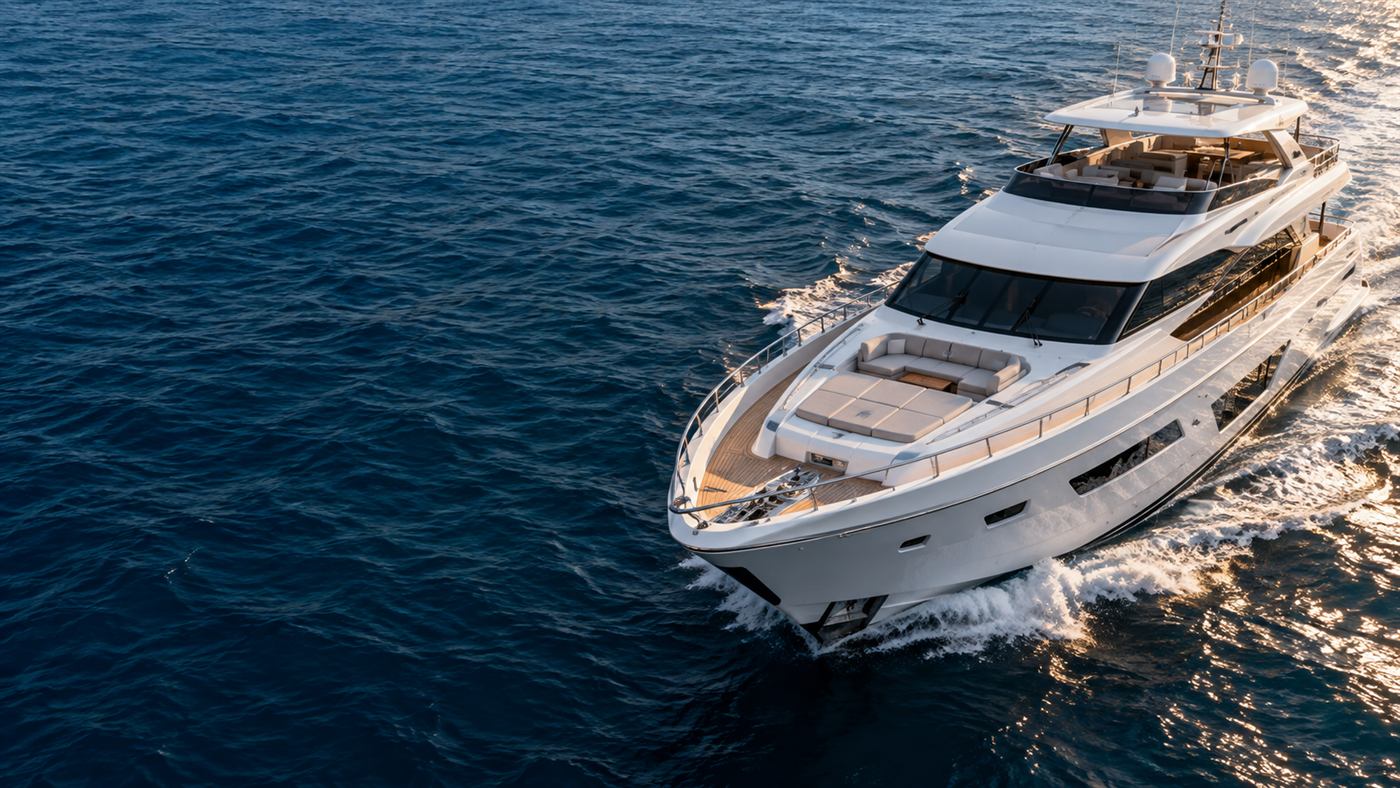
Why shrink wrap leaves anything behind
Shrink wrap is a heavy polyethylene film that is stretched over a frame and heated until it tightens around the boat. It is held in place with strapping, seam tape and adhesive-backed patches. In South Florida, wrap is used less for winter storage than in colder regions, but it is still common for boats on the hard during hurricane season, for long-term yard storage, during refits and when a vessel is being moved.
Most of the film peels away cleanly. The trouble comes from the tape. Seam tape and patch tape use strong pressure-sensitive adhesive designed to hold through heat, sun and wind. When the wrap comes off, the tape backing often leaves a strip of adhesive behind. Sun and heat bake it harder, and dust sticks to it, so the residue turns from a clear tackiness into a gray, gritty line.
Small fragments of film can also stay behind. Where the plastic touched a hot surface during shrinking, a thin layer may have fused to the finish. These leave a faint outline, sometimes called a ghost, where the film's edges lay. The area under the wrap often looks different from the surrounding hull because it was shielded from sun, or because the film trapped moisture against the surface.
Gelcoat and paint react differently
This is the point that matters most before anyone reaches for a solvent. Gelcoat is a hard, relatively tolerant surface. It can handle a range of cleaners, though strong solvents can still dull or stain it over time. Painted topsides, such as polyurethane finishes, are much more sensitive. The clear coat is thinner, and certain solvents can soften, haze or lift it.
That is why a detailer starts by identifying the finish. Tell us whether the area is gelcoat, painted or a mix. Some boats have gelcoat hulls and painted superstructures. Some have a painted hull with gelcoat decks. Residue on a deck, a rail, a hardtop or a windshield frame can involve vinyl, acrylic, aluminum or stainless as well, each with its own limits.
Do not assume that what works on one boat works on yours. A product that lifts adhesive from a fiberglass hull may attack the paint on a neighbor's. Testing on a hidden area first is standard practice, and a professional will do it even when the job looks routine.
What not to use
A short list of tempting shortcuts causes most of the damage. Acetone, lacquer thinner and brake cleaner are strong solvents that can melt or haze paint and soften gelcoat. Razor blades and metal scrapers scratch the surface, even when used at a shallow angle. Heat guns and hair dryers can lift adhesive but can also blister paint and soften plastic trim.
Abrasive pads, coarse sponges and scouring powders remove the residue by removing a thin layer of the finish with it. The area under the tape often ends up looking cleaner than the surrounding hull, but dull and scratched. Household adhesive removers vary widely, and many contain ingredients that are not meant for marine finishes.
If a product's label does not say that it is safe for fiberglass or marine paint, treat it as unsafe until proven otherwise. When in doubt, stop and ask. A few minutes on the phone can save you a repaint.
- Avoid acetone, lacquer thinner and brake cleaner on any painted surface.
- Avoid metal blades, even on gelcoat, unless a professional is guiding the work.
- Avoid heat guns near paint, vinyl, acrylic and rubber seals.
- Avoid scouring pads and powders, which cut into the finish.
How a detailer removes tape adhesive safely
The professional approach is to start gentle and escalate only as needed. First, the surface is washed so that loose grit does not scratch during later steps. Then a marine-safe adhesive remover is applied to a small section, left to dwell for a short time and gently worked with a soft cloth or a plastic scraper held at a low angle. The dissolved adhesive is wiped off before it can smear.
Stubborn patches may need repeated applications. Rather than pressing harder, the detailer lets the product do the work and repeats the step. A plastic razor blade, a soft nylon pad or a rubber eraser wheel on a low-speed tool can help lift thick bands of adhesive when used carefully. Each method is tested on a hidden area first.
After the adhesive is gone, the surface is washed again to remove solvent residue. Leaving solvent on the finish can dull it or attract dirt. At this point the detailer inspects the area for a ghost outline or etching, which tells them whether polishing is needed.
Handling the ghost outline
Even after the adhesive is gone, a faint shape may remain. This can have several causes. The film may have trapped heat and moisture against the surface, leaving the gelcoat slightly more oxidized or stained than the area outside. The adhesive may have left a thin film of plasticizer that dulls the surface. Or the surrounding finish may have aged in the sun while the covered area did not, creating a contrast.
A light polish often blends the difference. By removing a very thin layer from the whole panel, rather than only the outline, the detailer brings the surface back to a uniform finish. On gelcoat this is straightforward. On painted surfaces it is done with care and with the mildest polish that works. You can read about the process in our guide to gelcoat compounding.
Sometimes the ghost reflects a real difference in fading. When the surrounding gelcoat is heavily oxidized and the covered area is not, polishing the whole panel evens it out. When the covered area is damaged, no amount of polishing will match it, and the honest answer is that the area may need restoration or paint. A detailer should tell you which case you are in.
Residue on windows, hatches and trim
Wrap tape often crosses more than the hull. It can touch windshields, hatch frames, hardtop glass, stainless rails and vinyl or rubber seals. Each material has its own limits. Acrylic and polycarbonate can craze or cloud when exposed to the wrong solvent. Rubber seals can soften and swell. Anodized aluminum can stain, and some vinyl dulls with strong solvents.
For clear panels, a detailer uses products designed for marine glass and plastic, and follows with a rinse. For rubber and vinyl, the approach is slower and more conservative, often relying on mild cleaners and repeated gentle passes. Stainless steel handles most adhesive removers well, but should be rinsed and wiped to avoid water spotting.
If an acrylic window has clouded after contact with a solvent, that damage may be permanent. Our related pages on cloudy isinglass and marine window glass cleaning explain what can and cannot be restored.
Planning the removal around the yard
Timing matters. Adhesive that has sat in the sun for weeks is harder to remove than adhesive that was lifted soon after the wrap came off. If the boat is being unwrapped for a launch or a project, plan the cleanup right after, while the surface is accessible and the weather is dry. Working on a hot, sun-baked hull makes solvents evaporate too fast, so shade or early morning is better.
If the hull is going to be repainted, waxed or coated, the adhesive must be fully removed first. Any trace left behind can interfere with paint adhesion or cause a coating to fail unevenly. A detailer or the yard can coordinate so the residue removal comes before any protective layer goes on.
Boat yards often have rules about chemicals and runoff. Some marinas restrict certain solvents or require containment. A detailer who works regularly at South Florida marinas knows how to manage this. Mention the location when you call, and you can read more in our guide to marina rules for dockside work.
Two example boats and how the work differs
Consider a white fiberglass express cruiser that spent several weeks on stands in a yard while the engines were serviced. The wrap went on with seam tape along the flybridge rail and across the hardtop edge. When it came off, a gray, gritty band of adhesive ran along the gelcoat, and a pale outline marked where the film had touched the hot deck. The finish is gelcoat throughout, so the detailer can work steadily: adhesive remover and a plastic scraper first, a wash, then a light polish across each affected panel to blend the outline into the rest of the surface.
Now consider a motor yacht with a painted hull and gelcoat decks. The tape crossed the topside paint just above the boot stripe. Here the same remover is tested on a hidden patch before anyone commits, the dwell time is shorter, the pad is softer, and the polish stage uses the gentlest compound that gives a result. If the test patch shows any haze, the detailer stops and chooses a different product. The painted areas can take twice as long as the gelcoat areas for exactly this reason.
These two boats show why a single instruction on a web page cannot cover every case. The finish, the age of the adhesive, how long the wrap was on and how hot it got all change the answer. That is also why we ask so many questions on the phone, and why the first visit is sometimes a short look rather than a full job.
Sorting out residue from the wrap installer's tools
Residue does not always come from the wrap itself. Installers use heat guns, strapping, wooden or aluminum framing, foam padding, duct tape and sometimes spray adhesive to hold patches. Each of these can leave a different mark. Foam padding may leave a gray transfer on the paint. Duct tape leaves a heavy, rubbery adhesive that smears into long lines. Heat guns can leave a shiny or hazy spot where the gun lingered. Framing lumber can leave tannin stains if it got wet.
A detailer looks for the type of mark first, then picks the cleaner. Tannin stains lift with a different cleaner than adhesive does. A scorched or heat-hazed spot is a surface change, and it is handled with polishing rather than solvent. Treating every mark as adhesive is a common mistake and wastes time.
If you were present when the wrap was installed or removed, tell the detailer what you remember about the tape, the framing and any heat work. It narrows the options quickly.
After the cleanup: protecting the area
Once the residue is off and the finish is level, the area should be protected. Shrink wrap and tape can leave the surface more porous or lightly etched, and a fresh coat of wax or sealant helps it match the rest of the hull. A coating can be considered for areas that see repeated exposure to wrap, canvas straps or cover rubbing.
If you plan to wrap the boat again, tell the installer to avoid placing tape directly on gelcoat or paint where possible. Protective tape designed for marine finishes, a fabric buffer or a layer of painter's film can reduce adhesive contact. A conversation with the wrap installer before the next season is worth the effort.
When you are ready to plan the work, call and describe the boat, the finish and where the residue sits. Quotes are given only by phone, and a larger job may need an on-site visit so the detailer can test a small area. A service call charge applies for that visit and is explained on the phone before anyone is dispatched. Call to talk through the surfaces and set up the next step.
Questions people ask
Can I peel off the sticky strip by hand?
Sometimes the thick backing peels off, but the adhesive layer usually stays behind and can smear. Pulling hard on tape can also lift paint or damage a thin clear coat. A better approach is to soften the adhesive with a marine-safe remover and lift it slowly. If you are unsure of the finish, ask a detailer first.
Is acetone safe for removing shrink wrap adhesive?
It is not a safe choice on most boats. Acetone can haze paint, soften gelcoat and damage vinyl, acrylic and rubber seals. It also evaporates quickly, which makes it easy to smear the adhesive instead of lifting it. A marine-safe adhesive remover tested on a hidden spot is a better route.
Why is there a dull outline where the wrap touched?
The covered area may have been shielded from sun, trapped moisture or picked up a thin film from the tape. That leaves a contrast with the surrounding finish. A light polish across the whole panel often blends it, but if the finish underneath is damaged, polishing may only reduce the outline.
Will removing the residue damage my bottom paint?
Residue removal is normally done above the antifouling line on gelcoat or topside paint. Bottom paint is handled by the yard, and solvents should not be used on it without guidance. If tape adhesive reaches the bottom paint, ask the yard before treating it.
Can residue affect a new coat of wax or coating?
Yes. Adhesive and solvent residue can stop wax, sealant or coating from bonding evenly, leaving blotchy spots or early failure. The surface should be fully cleaned and, if needed, polished before any protection goes on. Rushing the order of steps usually means redoing the work.
How do I get a quote for adhesive removal?
Quotes are given only by phone. Tell us the finish, the surfaces involved, how long the wrap was on and how much residue you see. Larger jobs may need an on-site visit so a small area can be tested, and the service call charge for that visit is explained on the phone before dispatch.
Describe the situation by phone and we will tell you what the job involves. Quotes are given by phone. Jobs that cannot be quoted without seeing them need a technician on site, and the service call charge is explained on the phone before anyone is dispatched.
(954) 719-3572Related pages
Testing a small patch before treating the whole surface
The first step when leftover wrap adhesive shows up on a hull or deck is to pick a small, low visibility spot and test the planned method there before anything touches the areas people see. That might be a lower corner of a locker lid or a patch of hull behind a fender. The test shows how the adhesive responds, whether the surface dulls, and how much dwell time the residue needs before it softens. It also shows whether the film left a thin rubbery layer or a thick tacky one, because those call for different handling. Owners can help by pointing out the areas that matter most and by mentioning any products already tried.
Once the test patch behaves, the work moves in sections rather than all at once. A technician softens one manageable area, lifts the residue with a soft tool or a clean towel, and then wipes the section clean before moving on. Working in small sections keeps the softening product from drying on the surface and prevents the crew from smearing dissolved adhesive across clean gelcoat. Towels are changed often, because a towel loaded with dissolved glue simply redeposits it. This steady rhythm feels slow to watch, but it is the reason the finish comes out even instead of streaked or hazy in places.
After the section work, the whole area is checked in changing light, from the side and from above, because leftover film often hides until the sun hits at an angle. Any faint haze is treated again before the surface is washed with a gentle boat soap and rinsed. If a dull patch remains where the adhesive sat for a long time, the technician explains that a light polish may be the next step and why. The scope and any quote are explained before that extra work begins, so nothing about the plan changes without the owner knowing first.