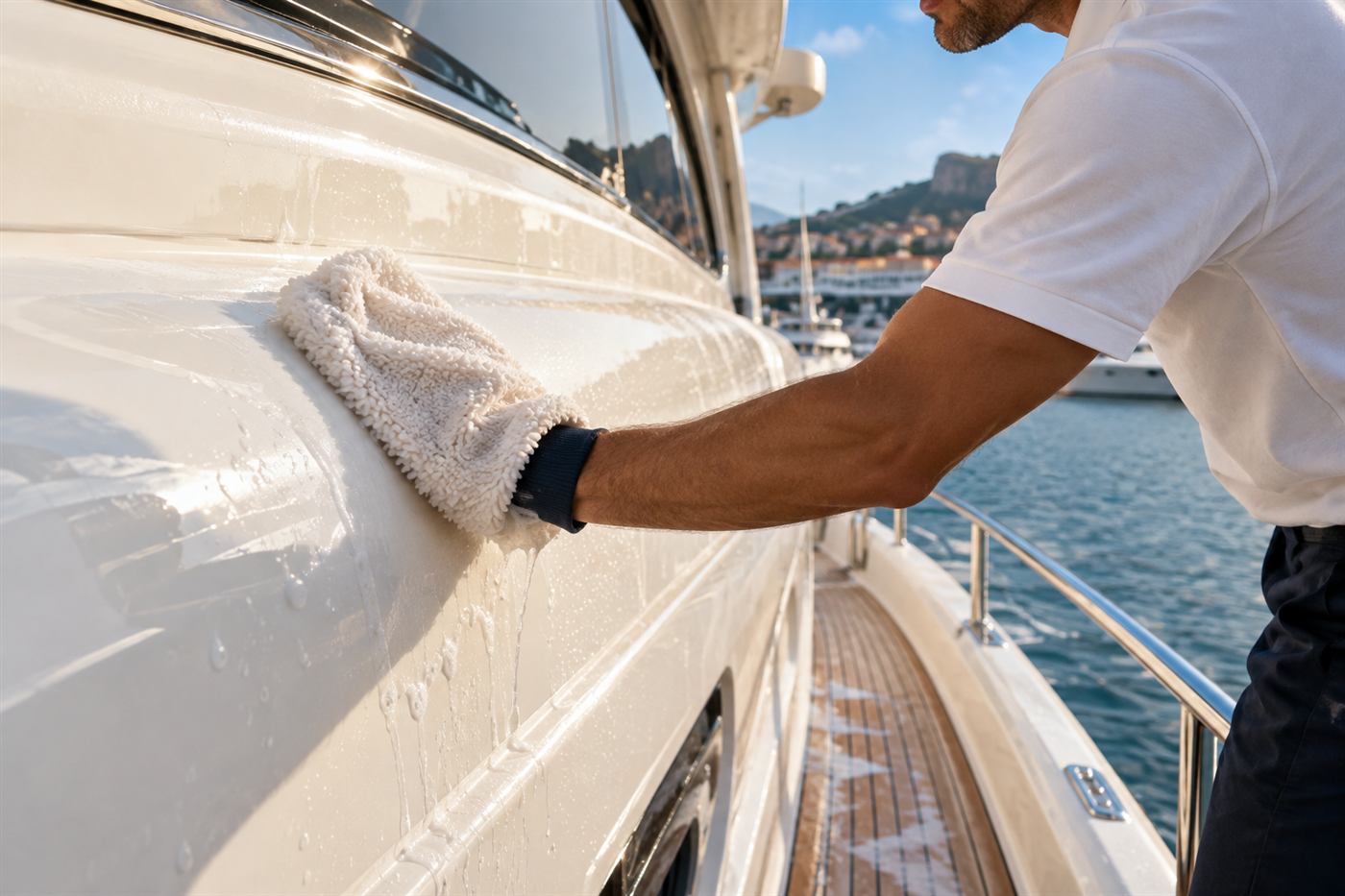
A canal neighborhood with boats at the back door
Rio Vista is one of Fort Lauderdale's well-known residential neighborhoods, built around a network of canals that connect to the New River and, from there, to the Intracoastal Waterway. Many of the houses have private docks, and it is common to see a boat tied up behind a home, often a mid-sized motor yacht, a cruiser or a sportfish boat. The water is sheltered, the neighborhood is leafy, and boating is part of everyday life.
For the boat, the setting is milder than the oceanfront in some ways and harsher in others. There is less breaking-wave salt spray and less open exposure to wind, but there is also less air movement, more shade, higher humidity near the water and a steady supply of organic material from trees, canal water and wildlife. Boats in neighborhoods like this often look dirtier than boats at the beach even though they get less salt.
Our approach in Rio Vista is therefore built around organic grime, shade-related mildew and the quiet, steady staining that comes from living in brackish canal water. It is less about dramatic damage and more about a series of persistent small problems that need to be handled regularly.
New River influence and the color of the water
The New River winds through Fort Lauderdale, and the canals that connect to it carry a mix of fresh and salt water. After heavy rain, more fresh water flows through, and the water often turns dark and tea-colored from tannins washed out of vegetation. In dry weather, the tide brings in more salt. The result is brackish water whose character changes through the year.
That water leaves a mark. At the waterline, tannins and silt form a brown stripe on the hull that thickens and darkens with time. Lines and fenders stain, and the lower part of a transom can look dingy even on a clean boat. The stain is usually organic, so it responds to marine cleaners, but if left it can bond into the gelcoat and require polishing to remove.
A technician tests the stain to confirm what it is, then selects a cleaner and a pad that suit the finish. Heavy growth below the waterline is a bottom-cleaning matter, and we will tell you when it needs a diver or a yard. See waterline stain removal and the New River area for related information.
Trees, shade and the damp that follows
Rio Vista has large trees, and many docks sit beneath branches. Shade keeps the boat cooler, which owners appreciate, but it also keeps surfaces wet after rain or dew and slows evaporation. Damp surfaces grow green algae, black mildew and slimy film, and the effect is strongest on teak, non-skid, canvas and the sides of the boat that never see the sun.
Leaves, flowers, seed pods and sap fall onto the deck and stick to the finish. Tree sap is particularly stubborn, and a spot left through a hot week can harden into a resin that scratches if it is scraped. Pollen coats surfaces in a sticky yellow film for part of the year. Birds nest in trees and perch on rails, and their droppings are acidic enough to etch gelcoat if left in sun.
We address these with regular washing, targeted cleaners for sap and algae and a protective layer that reduces how firmly grime bonds. We also advise owners on trimming back branches where possible, or at least positioning a cover so debris does not accumulate. Our pages on green algae on deck, bird droppings on boats and boat storage and cover care cover the details.
Mildew in canvas, cushions and cabins
Humidity and shade together make mildew an almost constant concern in a canal neighborhood. It appears first on canvas, in the folds and seams, then on cushions, then in the cabin: dark spots on headliners, a sour smell in carpet, gray bloom on wood and fabric. It spreads because mildew spores are always present in the air, and they only need a damp surface to take hold.
Cleaning mildew means more than removing the visible spots. The surface needs to be cleaned with a product that kills growth and lifts the stain, then rinsed so no residue remains, and then dried completely. If any moisture stays behind, the mildew returns. We also look for the source of moisture: a leaking hatch, a clogged drain, condensation in a closed cabin, or covers put on damp.
Prevention includes ventilation, dehumidifiers or moisture absorbers in closed spaces, and keeping canvas and cushions dry before storing them. Read our pages on interior mildew treatment, pink mold on boat canvas, mildew in boat carpet and interior humidity control.
Calm water and what it means for finish care
Calm, sheltered water has some advantages for detailing. A boat that does not rock much is easier and safer to work on, and the surface is less likely to be splashed during polishing. There is less salt aerosol landing on the finish, so metal parts often last better than they would on the oceanfront. These benefits make routine care more effective.
They do not remove the need for it. Sun still oxidizes gelcoat, and a boat on a canal dock is often fully exposed during the middle of the day, even in a shady neighborhood. Oxidation shows as a chalky haze and a loss of gloss on the sides and decks that face the sun. It builds slowly and is easy to overlook until the contrast between a shaded and a sunlit side becomes obvious.
We correct oxidation with compounding and polishing, then protect. Which method suits your boat depends on how much oxidation there is and what the gelcoat thickness allows. See gelcoat oxidation removal, chalky white gelcoat and gelcoat compounding explained.
Teak, brightwork and non-skid in a damp setting
Teak on a shaded canal boat tends to turn dark rather than gray, with black spots where moisture sits. The cause is organic growth in the wood, and the usual remedy is cleaning and brightening, followed by a decision about whether to seal the surface. Heavy scrubbing does more harm than good, because it wears away the soft wood between the grain lines and leaves the surface ridged.
Non-skid surfaces, designed to give grip, also hold dirt and algae in their texture. A soft-bristle brush and the right cleaner reach into the pattern without wearing it away. Aggressive stiff brushes and high-pressure water can damage the texture and force water into places it should not go. We use a gentler combination and rinse thoroughly.
Stainless and chrome suffer less salt attack than at the beach, but brackish water still causes brown staining, and moisture trapped under rail bases leads to corrosion. We clean and protect these as part of the routine. See teak deck care, teak black spots and non-skid deck cleaning.
Working at a private canal dock
Many Rio Vista docks are narrow, and some are shared with a neighbor. Access is through the house or along the side yard, which means we need to know where to park, where to carry equipment and where to find water and power. Neighbors are close, so noise and hours matter. Compounding and power washing are loud, and we plan them for reasonable times of day.
We keep our equipment neat and keep wash water out of the canal where practical. We use products appropriate for work beside water and take care not to leave residue on a neighbor's dock or seawall. Where a boat is on a lift, we work around it and ask the owner to confirm that lowering or raising will not interrupt a step. The result should be a clean boat and a clean dock.
If you are not home during the visit, we coordinate with a captain, housekeeper or property manager and send photographs afterward. Read more at private dock detailing and environmental practices in yacht detailing.
Lifts, covers and boats that sit for weeks
Plenty of canal-side owners travel for part of the year, and their boats sit for weeks at a time. A boat on a lift stays out of the water and avoids the waterline staining and bottom growth that come with constant immersion, which is a real advantage. A boat tied to a dock stays in the water and keeps the film and growth that go with it. Either way, long idle periods create their own problems.
A boat that is closed up in summer heat and humidity can develop mildew inside within a few weeks, and canvas and covers that stay damp grow it faster. Rainwater collects on flat surfaces and in the folds of covers, leaving stains and encouraging algae. Birds treat an unattended boat as a perch. Batteries, bilges and drains need to be looked at by someone who knows the systems, and a detailer is not that person, though we can tell you what we see on the surface and flag anything that looks wrong.
A sensible plan for a boat that sits is a periodic visit while you are away: a wash, a check of covers and canvas, a look at the interior for damp, and a note on anything that needs attention from a qualified marine technician. When you return, the boat is ready to use rather than waiting for a cleanup. Our page on boat storage and cover care and the overview of recurring maintenance plans explain how that works.
Hurricane season and canal docks
Canal docks are sheltered, but the neighborhood is not immune to storms, and many owners prepare their boats before hurricane season each year. That preparation includes checking lines and fenders, securing loose items, removing canvas and covers and sometimes moving the boat. It is also a good time for a clean, because a boat that is clean and protected before a storm weathers it better and is easier to restore afterward.
After a storm, a boat often carries leaves, debris, salt, mud and storm-driven grime. Fresh-water rinsing as soon as it is safe prevents salt and silt from drying into the surface. We handle post-storm cleaning and can advise on what to inspect before you take the boat out. See hurricane season yacht preparation and cleaning and after a storm yacht cleaning.
We do not make safety decisions for you, and nothing on this page replaces guidance from local authorities, your insurer or a qualified marine professional. If a storm is approaching, follow official instructions first.
What to have ready when you call
To plan a visit, tell us the boat's length and type, the finish if you know it, and what you want done. Describe the problems you see: waterline stain, mildew, green growth on deck, dull gelcoat, smell below. Mention whether the dock is under trees, whether the boat is on a lift and who will give us access. If you have photographs, say so.
Quotes are given only by phone. We do not post prices online and do not give figures by message. A larger or more complicated job needs an on-site visit first, and if a service call charge applies, we explain it before dispatching anyone. We will tell you honestly if a problem would be better handled by a rigger, canvas maker, marine electrician or yard.
When you are ready, call. We will find a time that suits the dock and the weather, and we will leave the boat cleaner and better protected than we found it.
Questions people ask
Why does my boat look dirty even though it stays in calm water?
Calm canal water means less salt spray, but more shade, humidity, tree debris and organic film. Pollen, leaves, sap and bird droppings land on the boat, and damp surfaces grow algae and mildew. Regular washing with the right products and a protective layer keeps this from building up and bonding.
What causes the brown stripe at my waterline?
Tannins and silt from canal water settle at the waterline and darken in sun. The stain is usually organic and responds to a marine hull cleaner if tackled early. Left for long periods it can bond to the gelcoat and need polishing. Heavy growth below the line is a diver or yard matter.
Can you remove tree sap from my deck?
Usually. Fresh sap lifts with a suitable solvent-based or marine cleaner, while hardened resin needs patience and care to avoid scratching. We test a small area first and avoid scraping. Positioning a cover or trimming branches where possible reduces how much lands on the boat.
How do I keep mildew from coming back?
Remove the moisture. Clean and fully dry surfaces, ventilate closed spaces, use dehumidifiers or moisture absorbers, and store canvas and cushions dry. Cleaning without fixing the damp source only works for a while. A technician can help you identify where moisture is entering or being trapped.
Do you work around my lift and my neighbors?
Yes. We confirm with you whether the boat is on a lift and plan around it. We keep noisy work to reasonable hours, equipment off shared walkways and wash water away from the canal and neighboring docks. Tell us about any association or neighbor concerns when you call.
Are prices posted on your site?
No. Quotes are given only by phone after we hear about the boat, its location and the work you want. Complicated jobs need an on-site visit first. If a service call charge applies, we explain it before anyone is dispatched, so you know the terms in advance.
Describe the situation by phone and we will tell you what the job involves. Quotes are given by phone. Jobs that cannot be quoted without seeing them need a technician on site, and the service call charge is explained on the phone before anyone is dispatched.
(954) 719-3572Related pages
Following the water: how canal runoff and rain affect the cleaning plan
Canals in older, tree-lined neighborhoods collect rain runoff, leaf litter and stirred-up sediment, and these find their way onto the boat. After a heavy rain, decks may be streaked with brown or gray, and cushions left out may show spotting. We time visits to follow a rainy stretch where possible, because the surface is already wet and the crew can lift the film more easily. A wash after rain also prevents stains from settling, which is far simpler than treating them once they have dried and aged.
Drains and scuppers are the first things the crew checks. Leaves and silt can block them, causing water to pool on the deck, which leads to staining, mildew and added weight. We clear what is reachable and report blockages that are beyond our scope. Gutters on a nearby house or boat shed can also drop water and debris onto a boat, so we look at where drips fall and whether a different mooring position or cover arrangement might help. Such observations are suggestions only. Asking questions at any point is welcome, and the crew would rather explain a step than have an owner wonder about it.
Mud and silt on lines and fenders can transfer to white surfaces, leaving gray marks. We wash these items as part of a visit if requested, and we suggest the owner rinse fenders and lines periodically. Ladders and dock steps near the waterline can be slippery with growth, and the crew takes care to avoid falls. At the end of a visit, a final rinse leaves everything clear. Owners get a short summary describing what was cleared and what we noticed, so the next heavy rain does not come as a surprise.
Cushions, canvas and covers: a practical care routine
Fabrics on a boat live hard lives. They are rained on, baked by sun, and often stored in damp air. The first rule is to let them dry. Cushions that are put away damp will grow mildew, and covers that sit wet can stain the surface beneath. When we clean fabrics, we use moderate moisture and a cleaner suited to the material, then allow time and airflow for drying. We avoid soaking foam, which can hold water for days. If a fabric is in poor condition, we say so and suggest an upholsterer.
Stains need a patient approach. Mildew spots, food, sunscreen and tannin marks each respond to different treatments, and using the wrong product can set a stain or fade the color. We test in a hidden spot and work up gradually. Canvas and clear panels need soft cloths and gentle handling to avoid scratches and cracking. Zippers and snaps are rinsed and checked. Anything worn out or ripped is noted for repair, since cleaning cannot restore damaged fabric or stitching. If anything about the plan feels unclear, a quick call before the visit settles it in a few minutes.
Owners can extend the life of their fabrics with simple habits. Store cushions upright and ventilated, keep covers fitted properly so water runs off, and rinse salt and dirt off canvas now and then. If the boat sits for weeks, consider taking cushions home. When we plan a visit, tell us which fabric items you want included and which are fragile or special. We explain the process and any limits upfront, so you know what to expect before work begins and how the items should be stored afterward.