A small town with the ocean at its doorstep
Lauderdale-By-The-Sea has a relaxed, small town feel. The main road runs along the coast, the beach and pier are a short walk from most places, and the streets behind the oceanfront are lined with low buildings, homes and canals. That geography matters for boats in a very direct way. Many of the vessels here are kept on residential canals that connect to the Intracoastal Waterway, and even those tucked behind the town sit closer to the open Atlantic than boats in many inland marinas.
Closeness to the ocean means closeness to salt. Wind off the water carries fine salt aerosol across the beach, over the buildings and onto whatever is parked or docked nearby. A boat in a canal block or two from the ocean receives a lighter dose than a boat on the beach, but it still collects a fine, sticky film over days and weeks. The film is hard to see until the sun hits it at an angle, and then it appears as a hazy coating over glass, gelcoat and metal.
Understanding this exposure is the starting point for any plan here. The cleaning is not mostly about visible dirt. It is about removing salt before it dries, builds up, and begins to attack the finish and hardware. A boat that is rinsed and washed on a sensible schedule keeps its shine far longer than one that is left alone between rare heavy cleanings.
What salt air does to a vessel
Salt itself is not especially harsh on gelcoat, but it is hygroscopic, which means it pulls moisture from the air. A dried salt film stays slightly damp for much of the day, and that dampness keeps surfaces reactive. Metal is the first place the effect shows. Stainless steel, which is resistant to rust but not immune, develops tea colored staining and small rust blooms where salt and moisture sit. Aluminum clouds and pits. Chrome plating on older fittings can flake once the plating is breached.
Glass and clear vinyl show it next. A salt film on a windshield or isinglass panel turns into a hazy veil that scatters light and makes night glare worse. Wiping with a dry cloth makes things worse, because salt crystals scratch. Panels should be rinsed with fresh water first so the crystals are lifted away, then cleaned with a soft cloth and a product designed for the material.
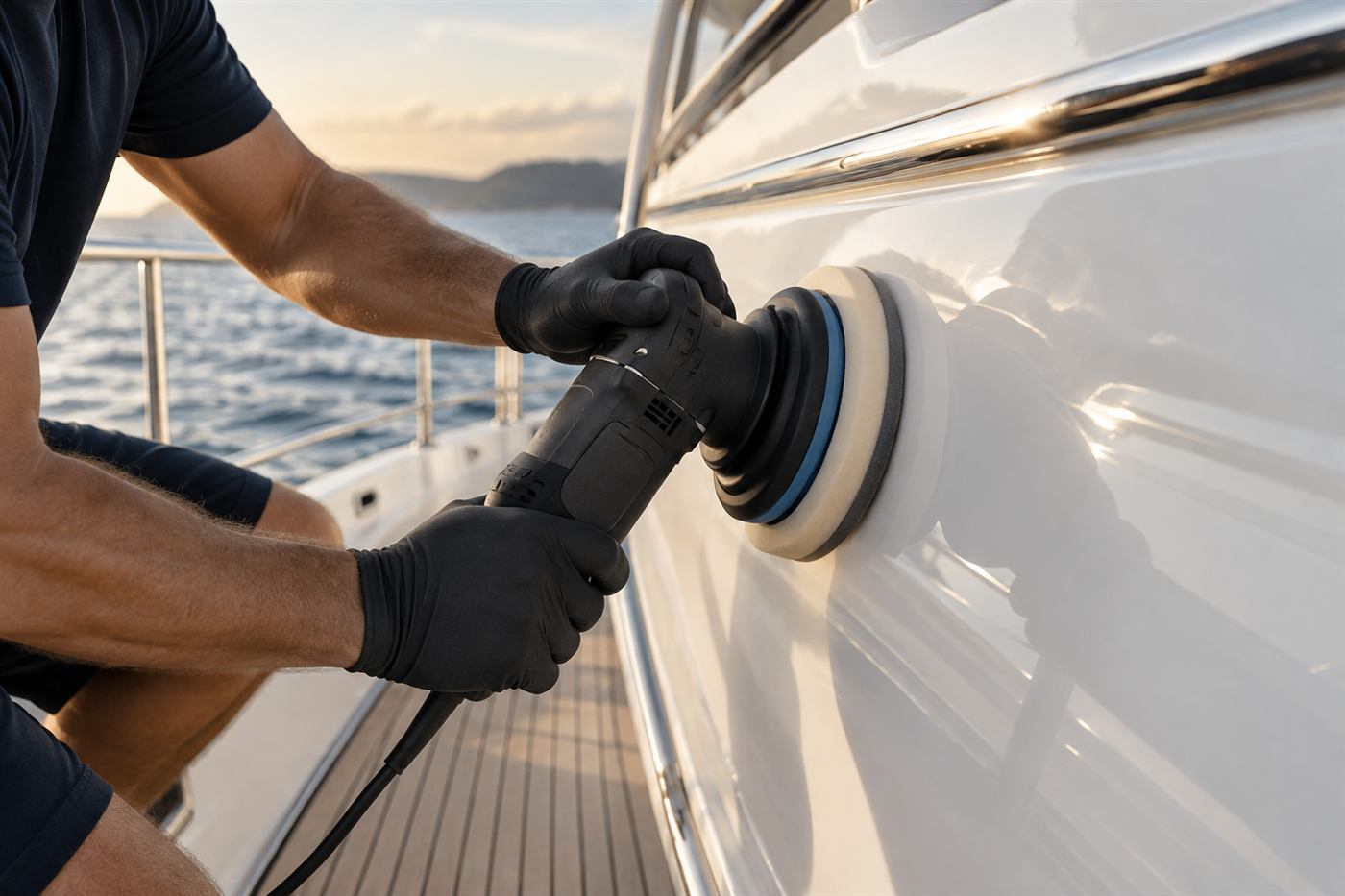
Painted and gelcoated surfaces gradually lose gloss under repeated salt and sun cycles. Oxidation appears as a chalky haze that is usually most severe on the surfaces facing the sun. Frequent washing slows the process but does not stop it, and correction with compound and polish restores the finish when it gets dull. Protection afterward, in the form of a sealant or a ceramic coating, helps the surface shed salt and dirt more easily. The page on exterior wash-down describes the regular wash that keeps the film from building.
Canals behind the ocean
Behind the oceanfront, a network of canals offers private dockage for homes and small residential communities. These canals are sheltered from open water, so the boats tied up here do not face waves or heavy chop. They do face salt in the air, bird traffic on rooflines and docks, and the usual combination of sun and rain. Because the water is calm and often shallow, algae and slime can build at the waterline faster than on an open stretch of the Intracoastal.
The boats found on these docks include center consoles, small to mid-size cruisers, dive and fishing boats, and sometimes larger yachts with a long dock behind a waterfront property. Many are used on weekends, and many sit for stretches in between. A boat that moves regularly keeps its running gear and waterline cleaner than one that sits still, so a detailer asks about use before suggesting a plan.
Access along the canals is usually straightforward. Most docks sit behind a house with street access nearby. Power and water are often available at the seawall, though not always. The first call should cover where the dock is, how the crew gets there, and what services the dock offers. Details like these save time on the day. See the guide on dockside detailing and marina rules for what to confirm if the boat is at a shared or managed dock.
Dive boats, fishing boats and working surfaces
The town is known for easy beach access to near-shore reef, and diving is a major part of local boating culture. Dive boats and fishing boats are working vessels, and they pick up a different kind of dirt than a pleasure yacht. Tanks, weight belts, wet gear and dive bags leave marks on decks. Salt water that dries on cushions and benches turns stiff. Fish blood, bait and sunscreen build up on cockpit surfaces and in non-skid, where they leave stains and odor.
Cockpit cleaning on a working boat is its own skill. Non-skid has to be scrubbed with a stiff brush and a cleaner that lifts oils without making the surface slick afterward. Fish blood and bait residue need enzyme style products that break down organic matter instead of just covering the smell. Coolers, fish boxes and livewells get cleaned and sanitized inside. Rod holders, tackle storage and gear lockers are cleared and wiped down so nothing rots away unseen.
The related pages non-skid deck cleaning and center console detailing go deeper on these surfaces. A boat that works hard benefits from a short, regular wash after every trip. Even a quick rinse of the deck and hardware with fresh water prevents the worst of the build-up and makes the next detailing visit shorter and more effective.
Bright work and hardware near the beach
Because of the salt exposure, metal fittings are a priority here. Rails, cleats, hinges, ladders, tower legs, outriggers and engine hardware all show the effects. The first sign of trouble is usually tea staining on stainless. It looks like a light brown tint and wipes off easily at first. Left alone, it deepens into a rust bloom, and eventually into pitting that remains even after polishing.
The sensible approach is to treat stainless and aluminum as items that need regular, light maintenance. Cleaning removes surface contamination, polishing restores shine where the metal allows, and a protective layer slows the return of staining. Pitting that has already formed can be cleaned, but it cannot be polished out. The honest answer on heavily pitted hardware is sometimes that replacement is the better route, and a technician will say so.
Fasteners and the areas around them deserve attention. Crevice corrosion starts where two metals meet or where water is trapped, such as under a rail base or behind a hinge. A close inspection catches early signs. The bright work metals page and the guide on stainless hardware describe what can be done and what should be left to a rigger or a repair shop. Hardware that is loose, cracked or structurally compromised is not a polishing issue.
Wind, sand and the beach environment
A beach town brings another contaminant that marinas farther inland do not: sand. Wind carries fine sand from the beach, and it lands on decks, in cockpit corners, and on glass. Sand is abrasive. Wiping a sandy panel with a dry cloth leaves fine scratches, and walking on a sandy deck grinds the grit into the finish. A good wash starts with a thorough rinse so grit is flushed away before any mitt touches the surface.
Construction and road dust is a lesser concern but not absent. A small oceanfront town goes through cycles of building and renovation, and dust can settle on nearby boats. Sunscreen and tanning oils leave their own residue on cushions, rails and decks, and these oils attract dirt. Vinyl upholstery in particular benefits from regular cleaning so oils do not break down the surface.
A simple routine that helps between professional visits:
- Rinse the whole boat with fresh water after use, starting from the top and working down.
- Let the boat drip dry or blot glass with a clean microfiber after the grit is gone.
- Wipe down stainless and chrome with a damp cloth, then a dry one.
- Keep cushions and canvas dry and aired between uses.
- Cover or close the boat to limit sand and sun exposure when it is idle.
Teak, canvas and interiors
Teak is common on boats of all sizes, from trim on a small cruiser to full decks on a larger vessel. In a beach setting it faces strong sun, salt and sand. Sand scours the wood during cleaning if the technician is careless, so teak is rinsed thoroughly before any scrubbing. Light cleaning, followed by brightening and sealing when needed, helps the wood keep its color and strength. The pages on teak deck care and teak sealing explain the options and the tradeoffs.
Canvas and cushions live in strong sun, so fading and brittleness are more common than mildew on boats kept in open air. Stitching degrades under ultraviolet light, and old thread can fail even when the fabric looks fine. A technician cleans canvas but is honest about what cleaning cannot fix: sun-rotted thread and faded color remain once they are gone. A canvas shop handles restitching and repair.
Interiors are generally in good shape on boats that are used and ventilated, and in worse shape on those left shut. Salt air enters a closed cabin and brings moisture with it, so a musty smell can still develop even in a sunny location. A full interior detail covers upholstery, hard surfaces, galley and head, and any treatment needed for mildew. The interior detail page lists what is typically included.
Storms, tides and seasonal rhythm
Hurricane season runs through the summer and fall, and every owner on this coast has a plan, or should. Detailing is not protection, and it does not replace securing the boat, adding lines, or hauling out when that is the right call. After a storm, though, cleaning is a real need. Wind-driven salt spray, mud, debris and leaves coat everything, and the sooner the boat is rinsed and washed, the less damage the salt can do. The after a storm guide explains the sequence.
King tides and heavy rains sometimes push water over seawalls and into canals. Boats can sit differently on their lines when levels change, and fenders may need to be adjusted. A detailer is not a dockmaster, but owners should check lines and fenders whenever water levels shift, so the boat does not rub against the dock and scuff the gelcoat.
Seasonally, the winter months bring more boating and drier air, and summer brings heat, humidity and fast growth of mildew and algae. A flexible plan helps. Many owners choose a light recurring wash through the busy months, with deeper correction and protection scheduled in a quieter stretch. The page on recurring maintenance plans describes how a plan is shaped around the boat.
Planning the work and the first call
The first call is a conversation about the boat. A technician asks what the vessel is, where it is kept, how it is used and what concerns you most. The aim is to understand the condition and build a reasonable plan. Quotes are given by phone only. Boats vary so much that a number without the details would be a guess. More complicated work may need an on-site visit, and there is a service call charge for that visit, explained on the phone before dispatch.
Having a few details ready makes the call quicker. Mention the boat type and length, the dock location and access, any water or power at the dock, and what you see on the surface: haze, staining, spotting, or dull metal. If the boat is used for diving or fishing, say so, since cockpit cleaning is a separate part of the job. If you are preparing the boat for a trip, a sale or a season of heavy use, mention that too. The goal shapes the scope.
Call when you are ready
Boats near the beach are worth looking after, and a simple plan keeps salt from doing lasting harm. Describe the vessel and where it is kept, and the technician will talk through what makes sense. Call when you are ready, and the next step will be a straightforward conversation about your boat in Lauderdale-By-The-Sea.
Questions people ask
How much does ocean salt affect a boat kept on a canal behind the beach?
Even a block or two from the ocean, wind carries fine salt that settles on the boat and stays slightly damp, which keeps metal and glass reactive. The dose is lighter than on a beachfront boat, but it adds up. A regular fresh water rinse and wash slows the effect much more than occasional heavy cleaning.
Can sand scratch my boat during cleaning?
Yes, if the surface is wiped dry. Sand and grit scratch gelcoat, glass and clear vinyl. A proper wash starts with a thorough rinse to lift the grit before any mitt or cloth touches the surface. A technician follows that order. Owners can help by rinsing glass before wiping and avoiding dry dusting.
Do you clean dive boats and fishing boats?
Yes. Cockpits, non-skid, tackle areas, fish boxes and cushions get cleaned with products suited to oils, bait and salt residue. Enzyme style cleaners break down organic matter that causes odor. A short rinse after every trip makes the next detail easier. Mention the boat's use on the phone so the plan includes those surfaces.
Is stainless supposed to rust in salt air?
Marine stainless resists rust but is not immune. Salt and trapped moisture cause tea staining and small rust blooms, especially around fasteners and welds. Early cleaning and polishing removes them. Deep pitting cannot be polished out, and badly pitted hardware may need replacing. A technician will tell you honestly which situation you have.
Does cleaning replace storm preparation?
No. Detailing is a cleaning service, not storm protection. Owners remain responsible for securing the boat with proper lines, following marina and insurer guidance, and hauling out when that is the right choice. A detailer can help clean the boat before a storm and clear debris, salt and mud afterward.
How do I get a quote?
Quotes are given by phone only, after questions about the boat, the dock and your goals. Larger or more complicated jobs may need an on-site visit, and there is a service call charge for that visit, explained on the phone before dispatch. Call, describe the vessel, and the technician explains the next step.
Describe the situation by phone and we will tell you what the job involves. Quotes are given by phone. Jobs that cannot be quoted without seeing them need a technician on site, and the service call charge is explained on the phone before anyone is dispatched.
(954) 719-3572