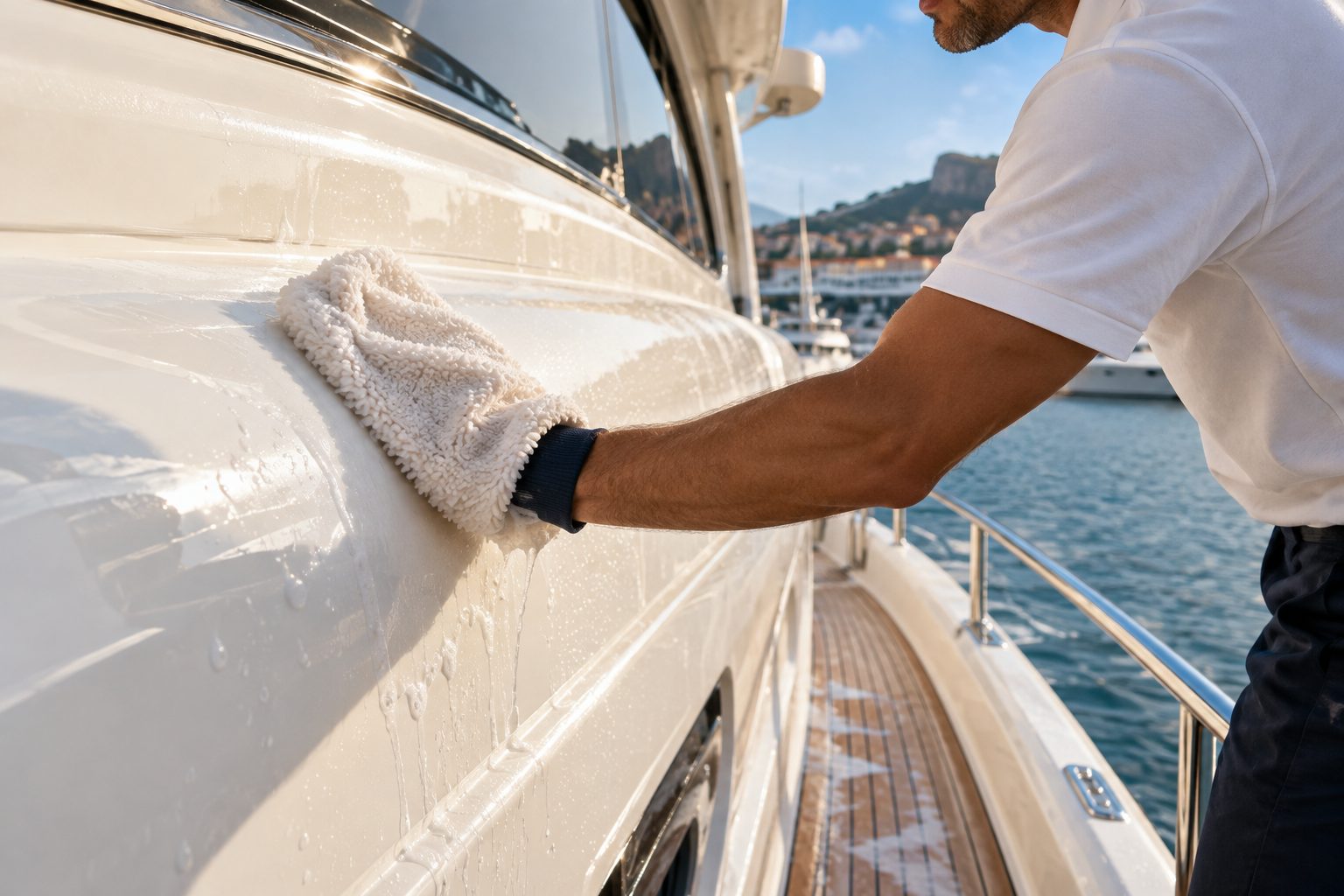
An island with water on every side
Key Biscayne is a barrier island at the southern end of the chain that includes Miami Beach. To the east is the open Atlantic, and to the west is Biscayne Bay. Boats kept on the island's bay side, in nearby marinas and at private docks along the shoreline are exposed to a particular mix of conditions.
The ocean side brings strong sun, steady wind and salt spray when boats run out through the cut. The bay side is calmer but warmer, with more algae and growth in the water. Boats that run both ways pick up both kinds of dirt: salt from the ocean, silt and organic film from the bay. Many owners notice that the same boat looks different after a bay day and an ocean day.
The island's character matters too. Key Biscayne is largely residential, with homes, condominiums and parks. Many boats belong to residents who use them on weekends and holidays. Others are kept at marinas on or near the island by owners who live elsewhere. The boating population includes center consoles, sportfish boats, cruisers, sailboats and some larger yachts.
This page covers the exposure conditions, the logistics of getting to boats on the island, the effect of sandbar weekends, the vessel types common here, and what to have ready when you call. For nearby areas, see Coconut Grove and Miami Beach.
Bay and ocean exposure: two kinds of dirt
Ocean exposure is the harder of the two. Wind-driven spray carries salt over the bow and onto windshields, hardtops, towers and hardware. In sunshine, that salt dries into a crust that scratches when wiped dry and attracts moisture overnight. Boats that run offshore regularly need prompt freshwater rinsing.
Bay exposure adds a different layer. The water has more suspended material and more biological activity. Waterline staining, algae on swim platforms and slime on docks and fenders are more common. Boats at slips on the bay side develop a dark band at the waterline and a film on the lower hull.
Both environments bring rain spots, pollen, dust and bird droppings. Summer storms roll in off the water and leave streaks as they dry. Dark hulls show everything, and light hulls show yellowing and staining over time.
Gelcoat and paint take the same sun in both places. Oxidation, chalking and fading follow. Our guides to understanding oxidation and how gelcoat ages explain what is happening to the finish. Stainless and aluminum respond to salt quickly, and corrosion starts at joints, fasteners and anywhere salt sits. See bright work metals for how that is addressed.
Getting to the boat: causeway, parking and island logistics
Access is a practical issue on Key Biscayne. The island is reached by a causeway, and traffic on weekends can be heavy, especially on nice days when beachgoers, boaters and visitors all head the same way. Plan for it when scheduling any job on the island.
Parking can be tight at marinas and on residential streets. Some marinas have limited lots, and residential areas may restrict parking or equipment staging. A detailer who arrives with supplies and machines needs a place to park near the dock, a way to carry equipment to the boat and permission to be on the property.
Gates and security are common. Condominium docks and private communities may require advance notice, names on a list or a call from the resident to let someone in. Please tell us about any access rules when you call, and make sure the property manager or dockmaster knows we are coming.
Timing matters. A job that needs several hours should be planned around traffic, tide and the dock's own activity. We do not promise arrival windows, and weather, traffic and marina schedules can all shift timing. Scheduling is confirmed on the phone.
Our guide to dockside detailing and marina rules explains common requirements.
Sandbar weekends and heavy-use boats
South Florida's sandbars and anchorages are popular on weekends and holidays, and boats from around Key Biscayne are part of that crowd. Boats raft up, people swim, drinks flow and the cockpit becomes a gathering place.
The mess that follows is predictable: sunscreen on seats and swim platforms, sand and silt in the cockpit, spilled drinks in seams, fish slime or bait if fishing was involved, and salt drying on every surface. After a busy weekend, a boat can look a lot rougher than it did on Friday.
The best habit is a freshwater rinse and wipe-down as soon as the boat returns, before anything dries. Hose off the platform, seats, windshield and hardware. Open lockers so they dry. A proper cleaning on top of that, done every few weeks during busy months, keeps stains from setting.
Sunscreen is a particular problem for upholstery. It stains vinyl and can discolor cushions if not removed promptly. Our page on sunscreen stains on upholstery describes what works. For swim platforms, see swim platform cleaning.
Boats that rarely go out are a different case. They pick up bird droppings, dust and algae, and mildew grows below deck. A quiet boat still needs regular attention.
Boats we see around the island
Key Biscayne's boat population leans toward practical, family-friendly vessels. Center consoles are common and fill the docks, along with bay boats, sport fishers and small cruisers. Larger motor yachts sit in some marinas, and sailboats are part of the mix.
Center consoles take a heavy amount of salt and sun, with exposed helm stations, leaning posts and wide decks. See center console detailing for how those are handled. Sportfish and fishing boats bring bait, slime and tower hardware. See sportfish boat detailing.
Cruisers and motor yachts have interiors that need attention, including carpets, upholstery, heads and galleys. A cabin that is closed for long stretches develops a musty smell. See interior detail for scope.
Tenders and small boats are common as well, since many yachts keep a tender for trips to shore. Tubes, hulls and consoles need gentle care. See RIB and tender detailing.
Each vessel type has its own approach, but the goals are the same: remove salt, restore the finish where possible, protect surfaces and tell the owner what is repair rather than cleaning.
Gelcoat, canvas and teak under island sun
The sun is the most constant force on any boat in this part of Florida. On an island with little shade, the exposure is nearly continuous. Gelcoat chalks and fades, canvas stiffens and tears, vinyl cracks, teak grays and plastic hardens.
Protection is a major part of a good detail. Wax or sealant on gelcoat buys time. A ceramic coating, applied on a well-prepared surface, offers longer-lasting protection against UV and contamination, with limits that our guide to whether ceramic coating is worth it for boats explains. Canvas can be treated with products that restore water repellency. Vinyl benefits from UV protectants made for marine use.
Covers help too, if they are used properly. A cover that fits well and is dry underneath keeps UV and dust off cockpit surfaces. A cover that is wet or loose can trap moisture, grow mildew and rub the finish. Care for covers is described in boat storage and cover care.
Teak, where present, is vulnerable. Direct sun and salt turn it gray and dry. Gentle cleaning and sealing slows the process. See teak deck care.
Building an upkeep rhythm for an island boat
Because Key Biscayne boats move between bay and ocean, owners often ask how to build a routine that does not take over their weekends. The answer is to separate what an owner does after each outing from what a professional does a few times a year.
After each outing, the owner or crew rinses the boat with fresh water from top to bottom, wipes the helm and seats while they are still damp, empties and dries the cockpit, and opens lockers. This takes a short time and prevents most of the damage that salt, silt and sunscreen do. Rinse the engine area according to the engine maker's advice, and leave mechanical flushing to the people who service the engines.
Every few weeks in the busy months, a proper wash with a boat-safe soap removes the film that a rinse leaves behind. Canvas, glass and stainless benefit most from this. A wash is also the moment to look at the boat closely and notice small changes: a lifting decal, a stained seam, a weeping fitting.
A few times a year, a professional detail resets the finish. That may include compounding and polishing where the gelcoat has dulled, a fresh protective layer, stainless and bright work cleaning, teak care and an interior clean. How often depends on how hard the boat is used, where it sits and what protection is already on it. Our page on maintenance schedules by vessel use lays out the factors.
Boats that sit on a lift or in a dry-stack rack stay cleaner below the waterline, though they still collect dust, pollen and bird droppings above it. Boats that sit in the water collect growth and staining at the waterline. Either way, a recurring plan, described under recurring maintenance plans, spreads the work so no visit is overwhelming.
Hurricane season and storm cleanup
Key Biscayne is exposed in hurricane season, and boat owners here take storm planning seriously. Preparation is mostly about securing the boat, removing loose items, checking lines and moving the boat if the plan calls for it. Cleaning is not the priority before a storm.
After a storm, boats can carry debris, salt, mud, leaves and storm-driven grime. Boats that were hauled or moved may have marks from straps, stands or neighboring vessels. Prompt cleaning prevents salt and organic matter from setting, and an inspection of the boat after a storm can reveal damage that needs repair.
We do not repair storm damage. We clean, restore surfaces where possible and point out damage for the right professional. Our guides on hurricane season yacht preparation and cleaning and after a storm yacht cleaning explain the sequence in more detail.
If a storm is approaching, follow official guidance and your marina's instructions first. Cleaning can wait.
What to have ready and how the call goes
When you call about a boat around Key Biscayne, tell us the type, length and location. Is it at a marina, a condominium dock or a private dock? What are the access rules? Where can we park and unload? Is the owner or captain aboard?
Describe what you see: chalky gelcoat, salt crust, algae on the platform, waterline stain, sticky teak, stained upholstery, mildew or odors. If you have a particular event or trip coming up, tell us the date.
Quotes are given by phone only. Straightforward jobs can often be quoted on the call. Larger or more complicated jobs may need an on-site visit, and there is a service call charge, which we explain before anyone is dispatched. Our website does not post prices.
If you own a boat near Key Biscayne and want it clean, protected and ready for the weekend, call and tell us about it. We will talk through the plan with you.
Questions people ask
Do you work on boats at condominium and private docks on the island?
Often yes, subject to access. Condominium and private communities may need advance notice, a name on a list or a call from the resident. Tell us on the call what the access rules are, where we can park and unload, and whether water and power are available at the dock.
How does bay and ocean exposure change what my boat needs?
Ocean runs bring salt spray and crust. Bay time adds silt, algae and waterline staining. Boats that do both pick up both kinds of dirt. A freshwater rinse after each outing helps most, and a periodic detail resets the finish, cleans metal and treats waterline bands that can be reached from the dock or dinghy.
What should I do after a sandbar weekend?
Rinse the whole boat with fresh water as soon as you return, paying attention to the swim platform, seats, windshield and hardware. Wipe sunscreen off vinyl before it sets. Open lockers to dry. A professional clean every few weeks during busy months keeps stains from setting and the finish in better shape.
Do you promise arrival times given the causeway traffic?
No. Traffic, weather, tides and marina schedules can all shift timing, so we do not promise arrival windows. Scheduling is confirmed on the phone. Tell us about your deadline when you call, and we will explain what we can realistically fit.
Can you protect my boat from the sun?
We can apply protection to many surfaces: wax or sealant on gelcoat, ceramic coating on prepared surfaces, UV protectants on vinyl and treatments for canvas and teak. Protection slows damage but does not stop it, and shade and covers matter too. We will explain the tradeoffs on the call.
How do I get a quote?
Quotes are given only by phone. Describe the boat, its condition, where it is kept and what you want done. Simple jobs can often be quoted during the call. Complicated jobs may need an on-site visit, and a service call charge applies, explained before anyone is sent. We do not post prices on this site.
Describe the situation by phone and we will tell you what the job involves. Quotes are given by phone. Jobs that cannot be quoted without seeing them need a technician on site, and the service call charge is explained on the phone before anyone is dispatched.
(954) 719-3572Related pages
Step by step: preparing a boat before a storm
When a storm is forecast, a clean boat is the least of anyone's concerns, but some preparation tasks overlap with cleaning. Loose canvas, cushions, fasteners, and portable gear are removed and stored securely. Decks are cleared so nothing becomes a projectile or blocks drains. Hatches and ports are checked closed. We can assist with the cleaning side, such as rinsing off salt and debris before covers go on, but we are not a storm-preparation or insurance service, and safety decisions belong to the owner, captain and marina. Following their instructions comes first.
If the boat is staying in the water, ask the marina or your captain about the mooring plan, extra lines and fender placement. If it is coming out, the yard will have its own procedures. Whatever the plan, a fresh-water rinse helps remove salt that would otherwise sit through the humid days after a storm. We do not promise to be available during an event, and the safest course is to plan early, well before a storm approaches, with the people responsible for the boat. Owners are welcome to adjust the order or skip a step, and the scope is changed only with their agreement.
After the storm passes, only go aboard when it is safe and the marina allows it. Look first, touch carefully, and photograph anything that looks damaged before cleaning, since your insurer or surveyor may want to see it as found. Only after that is it sensible to start cleanup. We can help with rinsing, removing debris and organic matter, and washing surfaces, always starting with a clear scope. Anything involving structural damage, electrical systems or water in the hull should go to qualified professionals, not to a detailing visit.
What a thorough interior reset looks like on an island boat
Interiors on a boat that lives in warm, humid air need more attention than owners often expect. The reset starts by opening the cabin and letting it breathe, then removing cushions and loose items so every surface can be reached. Dust is lifted from vents, ledges and under berths. Hard surfaces are wiped with a cleaner that suits their finish, while fabrics are treated according to their material. The crew pays attention to corners and seams where moisture lingers, because mildew likes dark, undisturbed places. Findings are described plainly, with a note about anything that looks like more than surface staining.
Heads, galleys and lockers have their own habits. Drains and sumps can hold odors, and cleaning them thoroughly, without harsh chemicals that damage seals, is a careful job. Refrigerators and coolers should be emptied and aired by the owner before a visit. Windows and ports are cleaned inside as well as outside, and the tracks and gaskets are wiped. Throughout, the crew avoids soaking electronics or wood veneers and uses moisture sparingly, since leaving a cabin damp would defeat the purpose of cleaning it. None of this requires special equipment from the owner, only a little notice and a willingness to describe how the boat is used.
The finish of the visit is air movement. If the boat has power and air conditioning, running it afterward helps dry fabrics and reduce the stale smell. If not, leaving hatches cracked in safe, secure conditions may help. Owners who plan to leave the boat for a while can ask about moisture absorbers and cushion positioning, which are simple measures with real effect. It is a modest routine, but across a season it helps keep an island boat feeling fresh rather than shut in. Taking the time to do it in the right sequence also tends to reduce the total effort across the season.