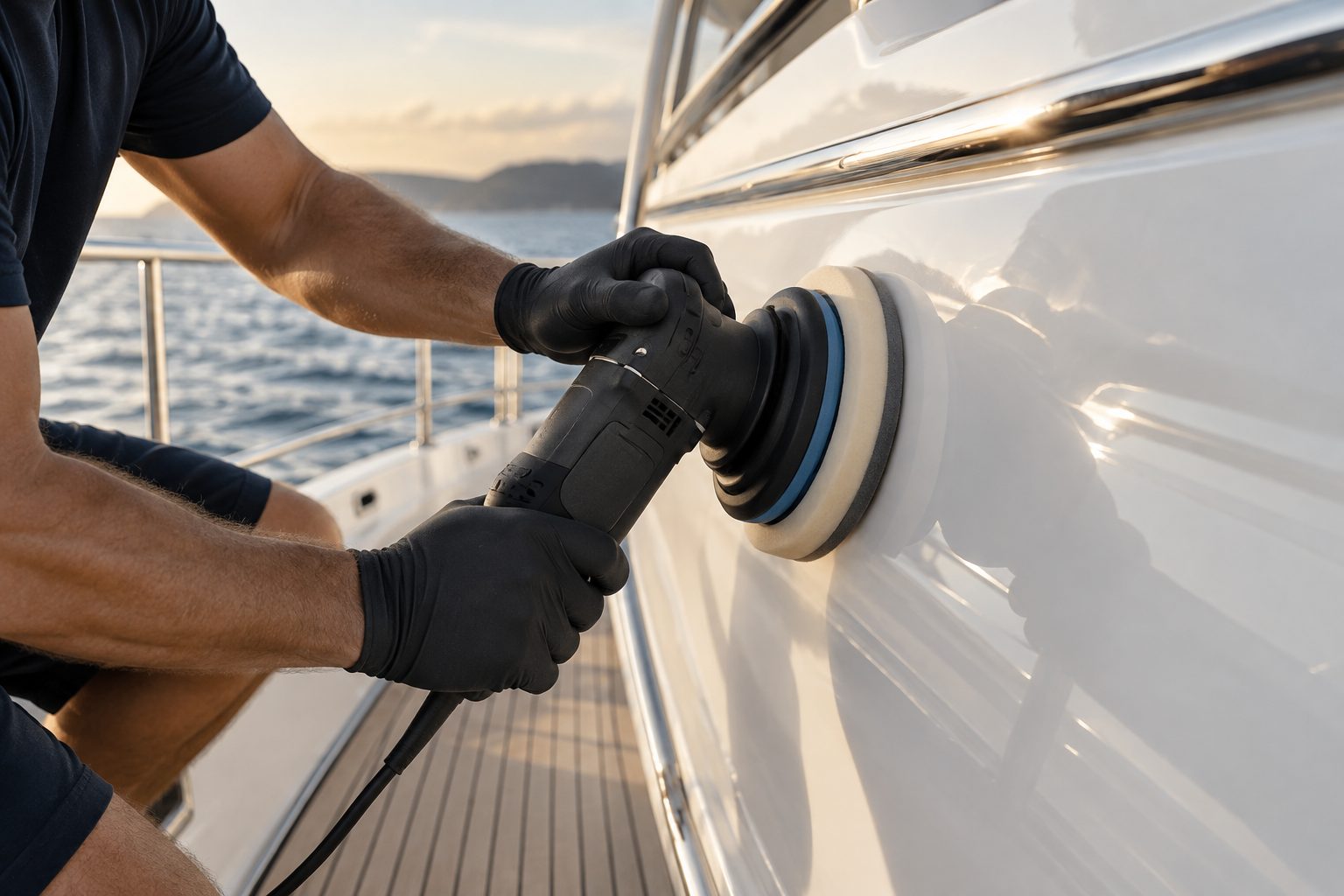
What boat care looks like in North Miami Beach
North Miami Beach is mostly an inland city, but the name covers a wider area in how boat owners use it. Many people who live in or near the city keep their boats on residential docks along the Intracoastal Waterway and the connecting canals in the northeast part of Miami-Dade County, or at marinas a short drive away. Their boats tend to be small to mid-sized: center consoles, express cruisers, bay boats and the occasional motor yacht that fits a private dock behind a waterfront home.
Compared with the open-ocean marinas nearer the inlets, the water here is calmer and the exposure to breaking-wave salt spray is lower. That does not make it an easy environment. Boats in calmer, shaded and humid sites often develop mildew and green growth faster than those on a windy oceanfront dock, and standing water on decks and in canvas stays wet for longer. The finish also tends to collect a different mix of grime: tree debris, bird droppings from waterfront perches, and film from the water itself.
Because owners here often use the boat on weekends and leave it sitting during the week, the pattern is intermittent use followed by long idle stretches. That pattern matters more than any single detail, and it is the starting point for how we plan care at a North Miami Beach dock.
Intracoastal docks: sheltered water, constant film
The Intracoastal Waterway carries steady boat traffic, and the water is brackish to salty depending on tide and season. Boats that sit at a residential dock for extended periods pick up a thin film on the hull at and just above the waterline. In calm water the film often forms a visible line, brown or greenish, which gets darker and harder to remove the longer it sits in the sun. On a white boat it can look like a bathtub ring.
A technician will test the hull to see what the stain is made of before choosing a product. Light brown film from tannins and silt generally responds to a marine hull cleaner and a soft pad. Rust-colored marks may need a different, mild acidic product, and we use those carefully because they can affect nearby metal. Heavy marine growth in the water below the line is not something a detailer removes from above; that is a hull cleaning matter for a diver or a haul-out, and we will tell you so.
For a boat that sits most of the week, regular washing prevents the film from bonding. See waterline stain removal and above-waterline hull cleaning for details of the process.
The Oleta area and river influence
The Oleta River flows into Biscayne Bay in the northeast corner of the county, bordered by mangroves and a large state park. Water in and around that area is influenced by the river, and boats that run there pick up different material than those that stay in open Intracoastal water. Tannins from mangroves and vegetation can tint the water a tea color, and the film they leave on a hull can be stubborn. Mud and organic matter settle on lines, fenders and the lower transom.
Boats that visit the area for paddling, anchoring or fishing also pick up small insects and pollen, particularly in warm months, and spider webs and bird droppings collect around rails and canvas when the boat is moored near trees. These small things look minor, but acidic bird droppings left on gelcoat in sun can etch the surface, and tannin staining on white fenders and lines can set permanently.
We recommend washing soon after river or mangrove trips and wiping down fenders and lines with a gentle cleaner. Our page about bird droppings on boats explains how etching happens and how to reduce it, and dock line and fender marks covers the lower-hull issues that come with docking.
Bridges, clearance and the work around them
The Intracoastal in this part of Miami-Dade passes under several bridges, some fixed and some that open on a schedule. For boat owners this affects how far and how often they go out, and for a detailing crew it can affect access. A larger vessel that needs to pass a bridge may be limited to specific times, and a boat with a tall flybridge or tower needs to check clearances before moving. We do not move boats, but we do coordinate around owners' travel plans.
Bridges also mean traffic. Road noise, vehicle exhaust and dust collect on boats moored near them, and you sometimes see a gray film on the topsides that is road grime rather than water. That film is mostly oily particulates and it clings, so a plain rinse does not remove it. A proper wash with the right soap does, followed by a protective layer that makes the next removal easier.
If you keep your boat close to a bridge or a busy road, mention it when you call. It helps us choose products and tells us what the surface may be carrying before we touch it.
Shade, trees and humidity on residential docks
Many residential docks sit under or beside mature trees, which is lovely for the owner and difficult for the boat. Shade keeps surfaces damp for longer, which encourages mildew and green algae on decks, canvas and cushions. Falling leaves, flowers, fruit and sap land on the boat and stain the finish. Pollen coats everything for part of the year and combines with humidity into a sticky film.
Mildew on canvas starts as faint gray-green spots and develops into dark patches. On white vinyl it can look like pink or black freckles. Inside the cabin, closed spaces without airflow develop a musty smell, and carpet and headliners hold moisture. The answer is a mix of cleaning, drying and ventilation, and we advise owners on practical steps such as leaving hatches cracked where safe, using moisture absorbers and keeping covers dry before storing them.
We clean mildewed surfaces with products suited to the material and then rinse thoroughly, because leftover residue feeds the next round of growth. Read our pages on interior mildew treatment, green algae on deck and interior humidity control.
Mineral spots and hard water on glass and metal
When owners wash their own boats at a residential dock, they often use city water from a garden hose. In many parts of South Florida that water carries dissolved minerals, and when it dries on glass, polished metal and dark gelcoat it leaves white spots. Left in sun, those spots etch into the surface and no longer wipe off. Window glass can look permanently hazy as a result.
The best prevention is simple: wash and rinse in shade or in the cooler hours, dry glass and metal by hand with a clean microfiber cloth, and do not let water air-dry in sun. Where spotting has already set, a technician can use a mild acid-based glass product or a polish designed for marine glass, and we test first to avoid damaging coatings or nearby seals. Our page on water spots on windows and marine window glass cleaning go into more detail.
Black and dark hulls show water spots most clearly, and owners with dark gelcoat often benefit from a protective layer that makes the surface shed water so it dries in beads that are easier to remove.
Gelcoat, canvas and teak at a calmer site
Away from the ocean, sun is still the main aging factor. Gelcoat oxidizes in the same way, and a boat that sits on a lift or at a dock with few waves can still show a chalky surface after a few seasons. The difference is that salt contributes less, and organic stains contribute more. When we correct oxidation we pay particular attention to remaining staining and to the way the surface cleans up afterward.
Teak in shaded sites often stays damp, and damp teak turns dark and develops black spots. We brighten and clean it with products that are gentle on the wood and avoid pressure that raises the grain. Our teak brightening and teak black spots pages explain what causes the problem and what can be done.
Canvas near trees collects sap and pollen. We clean it with soft brushes and marine canvas cleaner, rinse well, and let it dry fully in the open before it is stored or put back up. A cover stored damp is the most common cause of mildew we see.
A boat that sits all week: the idle-boat routine
The most common pattern we see in this area is the weekend boat. It is used on Saturday and Sunday, hosed down in a hurry on Sunday evening, and then left alone until the following weekend. Five days of idle time in humid air is long enough for damp surfaces to start growing mildew, for salt residue to dry into the gelcoat and for a thin film of pollen and dust to settle over the rest. None of this is dramatic in a single week. Over a season it adds up to a boat that looks dull and smells stale despite regular use.
A simple routine makes a large difference. After each outing, rinse the boat with fresh water, concentrating on glass, metal and the places where water pools. Open lockers and hatches where it is safe so air can move, and make sure any towels, life jackets and cushions are dry before they are stowed. Wipe condensation from interior surfaces. Empty and prop open the ice box so it can air out. Keep covers dry, and if a cover must go on a wet boat, use one that breathes.
A professional visit fits into that routine as the deeper layer. Between visits, the owner keeps the boat tidy. At each visit, we remove what the quick rinse cannot reach, restore the protective layer on the finish, and check for the early signs of trouble: mildew starting in a seam, a hatch seal that has begun to leak, or a spot of corrosion on a fastener. Catching these early keeps the work smaller and the boat in better condition. Our maintenance schedule by vessel use page explains how often different kinds of boats usually benefit from attention.
How a visit works at a residential dock
At a private dock, we need to know a few practical things beforehand: where to park, where to access water, whether power is available, and whether neighbors or building rules limit working hours. Most visits start with a walk-around so we can see the boat as it is. We explain what we found and what we recommend, and we start with the most pressing item, whether that is stain removal, a full wash or a corrective polish.
We protect the dock and the surroundings, keep hoses and cords out of walkways and avoid sending polish residue into the water. If a homeowner association or neighbor has concerns, we explain our approach and keep the work tidy. At the end of the visit we walk the boat with you, or send photographs if you are not there, and note anything else we saw that deserves attention.
For information about marinas and docks in nearby areas, see private dock detailing.
What to have ready before you call
A short conversation is usually all it takes to start. Tell us the boat's length and type, where it is kept, and what you want done. Mention how long it has been since the last detail and what condition you think the finish is in. If the boat sits under trees or near a bridge, say so. Photographs help if you have them, though a larger job will need a visit before we can quote.
Quotes are given only by phone and we never post prices online. Complicated work needs an on-site visit, and if a service call charge applies, we explain it before anyone is dispatched. We also never promise a result we cannot deliver; if something is better replaced than restored, we will say so.
When you are ready to talk, call the number on this page. We will find a time that works for the dock and for you, and answer any questions before you commit to anything.
Questions people ask
Do you service boats on residential docks, not just marinas?
Yes. Many of our visits are at private docks behind homes. We ask about parking, water and power access, and any rules from a homeowner association or neighbors. We keep hoses and cords clear of walkways, protect the dock surface and avoid letting wash water or polish residue run into the waterway.
Why does my boat grow mildew faster than my neighbor's?
Shade, trees and low airflow keep surfaces damp, and damp surfaces grow mildew. A boat under a canopy of branches or stored with a cover that was put away wet will mildew faster than one in open sun. Cleaning thoroughly, rinsing away residue and letting canvas dry before storing it all help.
Can you remove the tea-colored line near the waterline?
Often, yes. Tannin and silt film from river and mangrove water usually lifts with a marine hull cleaner if it has not been left to set for months. We test a small area first. Heavy growth below the waterline is a separate hull cleaning matter that a diver or yard handles, and we will tell you if that is the case.
My windows have white spots that will not wipe off. What are they?
They are most likely mineral deposits from hard water that dried in sun. Fresh spots wipe away, but older ones etch into the glass. A technician can treat them with a marine glass product, testing first to protect coatings and seals. Washing in shade and drying by hand prevents most of the problem.
Do you work around bridge openings and travel plans?
We do not move the boat, but we plan around your schedule. If you intend to take the boat out through the Intracoastal on a particular day, tell us and we will aim to finish before then so the boat leaves clean and the finish has time to set after any protective step.
How do I get a quote?
Call. We give quotes only by phone, after hearing about the boat and the work. Larger or more complex jobs need an on-site visit first. If a service call charge applies, we explain it on the phone before anyone is dispatched. We do not list prices on the website.
Describe the situation by phone and we will tell you what the job involves. Quotes are given by phone. Jobs that cannot be quoted without seeing them need a technician on site, and the service call charge is explained on the phone before anyone is dispatched.
(954) 719-3572Related pages
A careful look at the glass, rails and fittings after a long idle spell
When a boat has sat for weeks, the first visit is usually a reset rather than a routine wash, and glass is where neglect shows most. Dust, pollen and water spots build into a hazy film that normal wiping only smears. The crew rinses generously first to float away grit, then cleans with a product suited to marine glass and soft cloths, working in straight, overlapping strokes. Clear vinyl is handled even more gently, since it scratches easily. If a window shows etching that will not clean off, that is described honestly, because no wash will remove permanent damage.
Rails, cleats and hardware follow. Stainless that has sat in humid, shaded air may show light surface rust spots or brown tea-colored staining. Mild cleaning and polishing can lift surface staining, but deep pitting is metal loss and cannot be buffed away. The crew points out the difference. Hinges, latches and locks are rinsed and wiped so they move freely, and any that are stiff or corroded are noted for a technician. Fasteners that look loose are reported, not tightened without discussion. Conditions on the day can shift the plan slightly, and the crew explains any change before acting on it.
The visit ends with a walk-around under good light, looking at the boat from several angles to catch streaks and missed spots. Anything that still looks off is addressed or explained. The owner receives a short summary of what changed and what remains, so a boat that has been neglected has a clear path back to good condition. From there, a modest recurring schedule is usually enough to keep it that way, and the owner can adjust the rhythm as habits change. What matters most is that the work suits this particular boat and this particular dock, not a generic checklist.