A downtown waterfront, not a quiet cove
West Palm Beach has one of the more urban waterfronts on the coast. Flagler Drive runs along the water, with parks, a promenade, apartment towers and offices facing the Intracoastal. Across the water sits the island of Palm Beach, and bridges connect the two. Boats tied up along this stretch are in full view of walkers, cyclists and drivers, and the city rhythm carries onto the water: tour boats, water taxis, private yachts, charter vessels and delivery runs all use the same channel.
That visibility shapes expectations. A yacht on a downtown dock is a public presence, and owners and captains want it to look right at all times. It also shapes the working conditions. Dock space is shared, walkways are busy, and the crew must keep the work area tidy and safe for passersby. A detailer who works in a setting like this thinks about pedestrians, tripping hazards, noise and appearance as much as polish and wax.
The vessels in the area range from modest day boats to large motor yachts. Many larger vessels are managed by professional captains and crew who coordinate maintenance in detail. Others belong to owners who handle arrangements themselves. Either way, the first conversation covers the dock, the access, the timeline and the scope, since those practical points decide how the visit runs.
Working at a busy dock
City docks and larger marinas come with procedures. Contractors are often required to check in at the office, show proof of insurance, wear identification, and follow rules about chemicals, water use, noise and working hours. Some facilities have a list of approved vendors, and others require advance notice. The guide on dockside detailing and marina rules lists the usual questions.
Dock space is also tight. There may be little room to set up equipment beside the boat, and walkways must stay clear. A tidy setup means hoses coiled, cords managed and covered where people walk, buckets and products staged on the vessel rather than on the dock, and any wet area dried or marked. Wash water is handled carefully so that runoff does not soak a neighboring boat or carry soap onto a promenade.
Details worth settling before a visit to a downtown dock:
- Whether the dock office requires check-in or contractor paperwork
- Where equipment can be loaded and where a vehicle can stop or park
- Whether water and shore power are available at the slip
- Quiet hours and rules for pressure washing, polishing and chemicals
- Whether the boat will be occupied, in use or locked during the work
- Who on board or on the management team authorizes the scope
City dust, construction and traffic fallout
An urban waterfront collects urban dirt. Construction in a growing downtown puts dust, concrete fines and sometimes paint overspray into the air. Road traffic adds brake dust and exhaust film. Bus and boat diesel exhaust leaves fine black soot that settles on white surfaces. The result is a gray or yellowish film on decks, glass and topsides that looks different from the salt film on an ocean-side boat.
Some of this fallout is sticky and responds to ordinary washing. Some of it, such as fine metallic dust from brake pads or industrial work, embeds in the surface and rusts. Tiny orange or brown specks on white gelcoat are a common sign. They are surface contamination, not rust from the hull, and they come off with a proper iron removing treatment applied before any polishing. Polishing over them drags them across the finish, so the order of work matters.
Soot from diesel exhaust is oily. It smears when wiped dry and spreads across a panel instead of lifting off. A degreasing wash solution and soft mitts handle it better. Where soot has settled on canvas and clear vinyl, gentle products designed for those materials are used, since harsh solvents damage both. The page on exterior wash-down describes a typical wash sequence, and canvas and isinglass cleaning covers the soft surfaces.
Wake, traffic and the wear it causes
Boat traffic along the central Intracoastal is steady. Tour boats, sportfish, cruisers and large yachts pass at all hours, and bridge openings create clusters of boats. Wake rolls into docks and rocks vessels against fenders and pilings. Over weeks and months, the motion wears lines, loosens fenders and rubs the hull.
Rub marks on a hull come in two types. Surface transfer, where rubber or paint from a fender or piling sits on top of the gelcoat, cleans off with a gentle solvent and a soft pad. Abrasion, where the surface has actually been worn or cut, may polish out partly or fully, depending on depth. Deep scratches that reach the fiberglass need repair. A technician inspects the marks and explains which kind they are before work begins.
Good fenders, properly placed, are the best protection. Chafe guards on lines help too. These are matters for the captain or owner, not the detailer, but a technician who sees repeated marks in the same place may mention them. The page on compound and polish explains how marks are treated once they have formed.
Large yachts and crew coordination
Some of the vessels along this stretch are large enough to have a full-time captain and crew, and the crew often has a maintenance schedule of its own. A detailer working with a crew is a partner to that schedule. The crew knows what has been done, what is planned, and when the boat is needed. Clear communication about timing, scope and access prevents overlap and keeps the vessel ready for its owner.
On larger boats, detailing is usually divided into parts: exterior wash and protection, hull and topsides correction, bright work, teak, canvas, and interior. Each part is planned and scheduled according to the vessel's use and the season. Some jobs, such as hull polishing, need good weather and a stable dock. Others, such as interiors, can be done in any conditions. See the page on captain and crew support for how detailing supports an onboard team, and motor yacht detailing for the vessel type itself.
Management companies sometimes coordinate several vessels, and for them a reliable, communicative detailer is valuable. The page on yacht management company detailing describes how that works. Whoever makes the arrangements, the call begins the same way, with the boat, the dock and the scope.
Sun, salt and the central Palm Beach climate
Palm Beach County is sunny for most of the year, and the sun is hard on a finish. Gelcoat oxidizes, paint dulls, canvas fades and teak grays. West Palm Beach sits on the inside of the barrier island, so ocean spray is lighter than at the beach, but salt air still carries over the water and settles on the boat. A salt film builds up on glass and metal, and it keeps surfaces damp and reactive.
A wash on a regular schedule keeps this film from building. The frequency depends on how the boat is used and where it sits. A boat that sees little shade and a lot of sun benefits from more frequent attention to canvas and teak. A boat that is under cover most of the day may need less. The guide on how often to wash a yacht goes through the factors.
When the surface is dull after washing, correction with compound and polish restores it. Correction is staged, starting with the gentlest option, so the finite gelcoat layer is preserved. Painted surfaces follow the paint maker's guidance and may need different handling, as described in painted hull care. After correction, a sealant or ceramic coating helps hold the finish. See ceramic coating for what to expect.
Bright work, teak and canvas on display
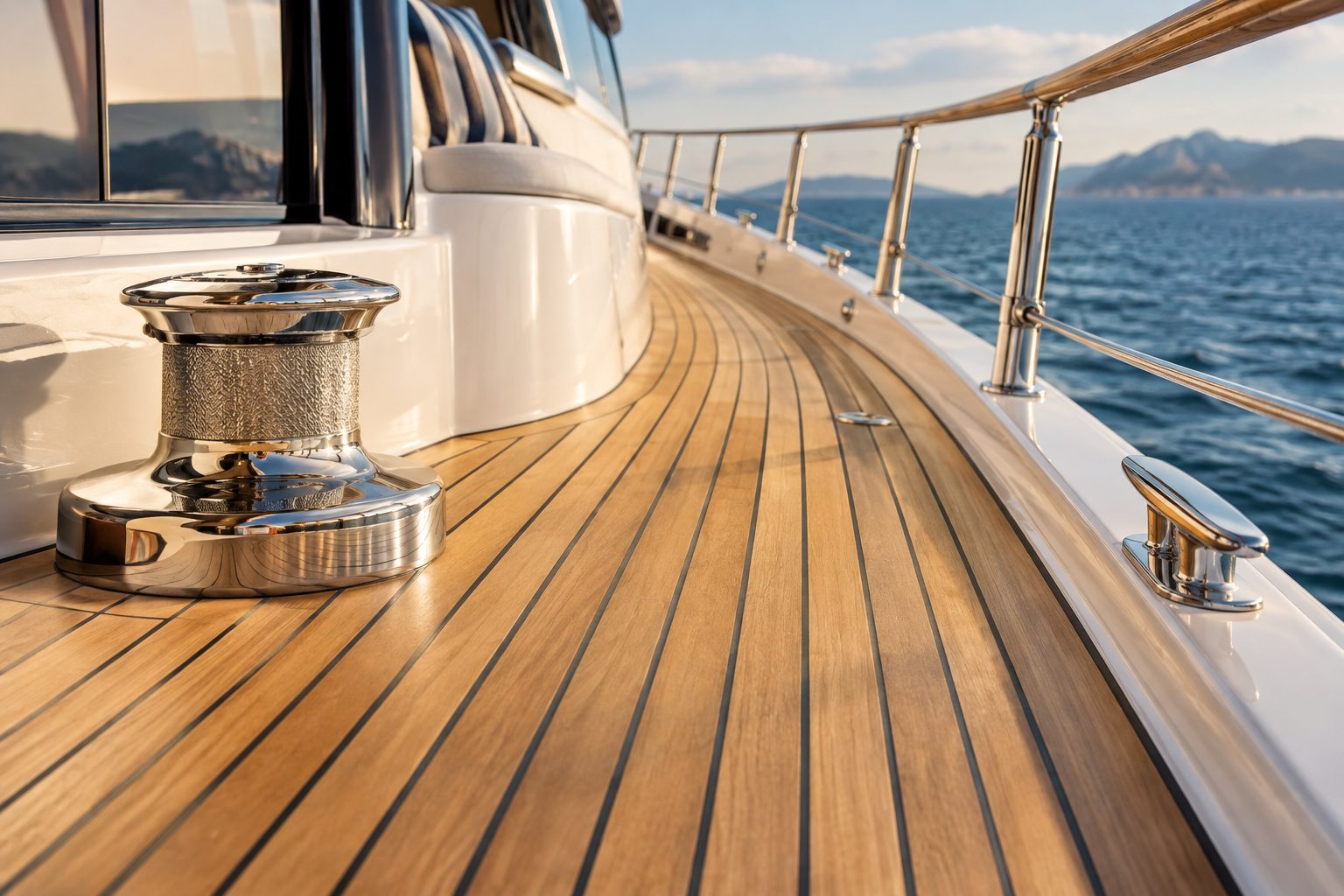
On a downtown dock, bright work gets noticed. Polished stainless rails, ladders, cleats and hardware are part of the look of a yacht, and tea staining or dullness stands out. Regular cleaning and polishing keeps the metal bright. Pitting and corrosion that have already formed cannot be polished out, and a technician is honest about that. Where fittings are structurally weak, a rigger or mechanic should look at them. See bright work metals.
Teak decks, rails, swim platforms and trim need regular attention to stay in good condition. Sun grays teak, and foot traffic wears it. A measured cleaning, with brightening and sealing when needed, preserves the wood. Heavy sanding or harsh chemicals thin it. The pages on teak deck care and teak sealing explain the options.
Canvas and clear vinyl take sun, soot and moisture. They are cleaned with products matched to the fabric, with attention to stitching, zippers and seals. Dirty or cloudy clear panels are rinsed first to lift grit, then cleaned with a soft cloth, never wiped dry. Cleaning cannot fix sun rot or lost color, and a canvas shop handles repairs.
Interiors on yachts that are used in bursts
Many yachts in an area like this are used in bursts: a long weekend, a charter, a season, then days or weeks of sitting. Interiors on such vessels face a pattern of heavy use followed by closed-up quiet. Cushions, carpet, headliners and wood trim take in moisture while the boat is shut, and mildew or odor follows if ventilation is limited. Shore power and air conditioning help when they run consistently, but a lapse in either can lead to a damp cabin.
A full interior detail covers upholstery, carpet, hard surfaces, galley, head and lockers. The technician looks for moisture and odor sources, since cleaning alone will not hold if the cause remains. If a leak or other defect is found, the owner or captain is told so that it can be addressed by the right professional. Pages on interior detailing, mildew treatment and odor removal explain the steps.
Between visits, crew and owners can help by keeping the air moving, running dehumidification where possible, and keeping surfaces dry. Leaving the boat closed and damp for long periods is the biggest risk, and a simple routine of opening and airing the cabin on a regular basis goes a long way.
Storms, seasons and planning
Hurricane season requires plans. Detailing is not storm protection, and owners and captains remain responsible for securing the boat, following marina and insurer guidance, and deciding whether to leave the dock or haul out. A detailer can help with the cleaning that goes with it: rinsing salt, clearing loose items and cleaning up debris and mud afterward. See storm prep wash-down.
The winter months bring more boats, more events and higher demand for dock time and labor. Summer is quieter on the water but hotter and wetter, with fast mildew growth and frequent afternoon storms. Recurring plans help smooth the seasons. Many vessels benefit from regular, lighter visits throughout the year with deeper work scheduled around the owner's use. The page on recurring maintenance plans describes how a plan is built.
Booking ahead helps, especially before a charter, a sale, or a busy event. Mention the timeline on the first call, so the plan fits the dates.
Starting with a call
The first call is a conversation about the vessel, the dock and the scope. Quotes are given by phone only, because a number without details would be a guess. More complicated work may need an on-site visit, and there is a service call charge for that visit, explained on the phone before dispatch. Have the boat type and length, the dock or marina, access and contractor rules, and your main concerns ready.
Whether you are an owner, a captain or a manager, the next step is simple. Describe the vessel, say where it is, and talk through what needs doing. Call when you are ready to start the conversation for your yacht in West Palm Beach.
Questions people ask
Can you work at a downtown dock with public foot traffic?
Often yes, with planning. Many city docks and marinas require check-in, proof of insurance and compliance with rules on noise, chemicals and water use. The crew keeps walkways clear, manages hoses and cords, and controls runoff. Call the dock office first and share the requirements when you schedule.
What are the orange specks on my white decks?
In an urban or industrial setting they are usually metal particles from brake dust, construction or yard work that landed on the surface and rusted in damp air. They are contamination, not rust from the hull. An iron removing treatment applied before polishing lifts them. If they keep returning from one spot, a technician checks for a source.
Do you coordinate with a yacht captain and crew?
Yes. Detailing is planned around the crew's schedule and the vessel's use, with clear communication on timing, scope and access. Larger yachts often split the work into exterior, hull, bright work, teak, canvas and interior parts. A captain or manager can call to set up a plan for the whole vessel.
How do I get rid of diesel soot on white surfaces?
Soot is oily and smears if wiped dry. A degreasing marine wash solution, plenty of water and soft mitts lift it. Canvas and clear vinyl need gentler products suited to the material. A technician identifies the surface first and tests a small area. Regular washing keeps soot from building up.
Can scuffs from wake and fenders be removed?
Surface transfer from fenders or pilings usually cleans off with a gentle solvent. Abrasion may polish out partly or fully, depending on depth. Deep scratches that reach the fiberglass need repair. A detailer inspects the marks and tells you honestly which type you have before starting.
How do I get a quote for my yacht?
Quotes are given by phone only, after questions about the vessel, the dock and your goals. Larger or more complicated jobs may need an on-site visit, and there is a service call charge for that visit, explained on the phone before dispatch. Call with a description of the boat and the technician explains the process.
Describe the situation by phone and we will tell you what the job involves. Quotes are given by phone. Jobs that cannot be quoted without seeing them need a technician on site, and the service call charge is explained on the phone before anyone is dispatched.
(954) 719-3572Related pages
Planning around bridges, traffic and a working waterfront
A downtown waterfront has more moving parts than a quiet residential marina. Streets near the water fill with commuters, delivery vehicles, and event traffic, and the dock itself may be shared by visiting yachts, charter boats, and residents. When a cleaning visit is planned, the crew thinks about how they will reach the slip, where equipment can be staged, and which times of day are calmer. Owners can help by telling us about gate codes, dock rules, and whether a dockhand needs to be informed, so the crew does not wait at a locked entrance.
Bridges and boat traffic matter even for work done while the boat stays tied up. Passing vessels and bridge openings can create surge and wake that makes standing on a swim platform uncomfortable and can splash a freshly rinsed hull. Where possible the crew works the exposed side of the boat when the water is calmest and lets the passing wakes subside before wiping down low areas. Safety is also part of the plan, so footing on wet decks, working near the edge of a pier, and using a tender all get attention before the first rinse.
Visiting yachts and larger vessels add a coordination layer. A captain or mate may have a daily routine, guests aboard, or deliveries arriving, and a cleaning crew must fit into that without getting in the way. We prefer to talk with the captain directly, agree on which areas can be worked at what point, and keep noisy tasks away from guest spaces. If plans change, the crew adjusts. The scope is explained before work begins, and any quote is shared first, so the person responsible for the vessel always knows what is being done and what is not.